

black-collared starling vs siamese pied starling
Gracupica nigricollis versus Gracupica floweri
Jogue um quiz com black-collared starling e siamese pied starling
 black-collared starling
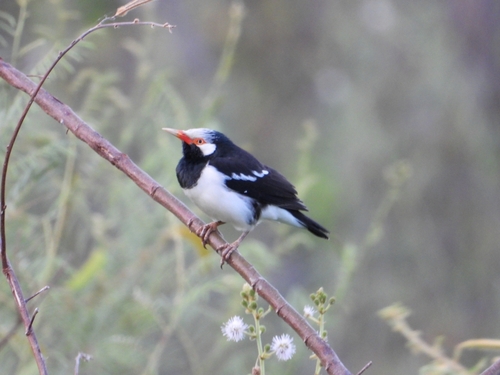 siamese pied starling
Em resumo
A marca de campo mais confiável entre black-collared starling e siamese pied starling é a extensa pele amarela nua ao redor do olho no black-collared, em comparação com a pele facial vermelho-alaranjada mais limitada no siamese pied. Ambos têm plumagem preta e branca com um colar preto, mas o black-collared starling é visivelmente maior e mais robusto, com uma cabeça strikingly white e um jizz mais robusto. Os juvenis do black-collared starling são mais marrons e não têm um colar completo, o que pode causar confusão, mas o tamanho geral e a cor da pele facial permanecem chave. No campo, concentre-se na cor da pele facial, no padrão da cabeça e no tamanho geral para separar esses dois, especialmente em bandos mistos ou habitats urbanos.
Dicas de identificação
- Cor e Extensão da Pele Facial: O black-collared starling tem uma grande mancha nua amarela brilhante ao redor do olho, que é diagnóstica em todas as idades. O siamese pied starling tem uma mancha nua vermelho-alaranjada que é menos extensa. Esta é a marca de campo mais confiável.
- Cor e Padrão da Cabeça: O black-collared starling apresenta uma cabeça strikingly white em adultos, contrastando fortemente com o colar preto. A cabeça do siamese pied starling também é branca, mas muitas vezes menos pura, com mais listras brancas na testa e menos contraste geral.
- Tamanho e Estrutura: O black-collared starling é muito maior e mais robusto, com um bico mais pesado e um corpo mais robusto. O siamese pied starling é menor, mais esbelto e mais delicado na construção. O tamanho é especialmente aparente quando ambas as espécies estão presentes.
- Colar: Ambas as espécies têm um colar preto, mas no juvenil black-collared starling o colar está ausente ou incompleto, substituído por listras. Isso pode causar confusão com o siamese pied starling, mas a cor da pele facial e o tamanho ainda os separam.
- Padrão de Asa e Cauda: Em voo, o black-collared starling mostra mais branco nas asas e na cauda, com penas de voo com ponta branca e coberturas primárias totalmente brancas. O siamese pied starling tem branco nas asas, mas menos extenso e menos ousado.
- Plumagem Juvenil: Os juvenis do black-collared starling são mais marrons com pescoço e peito listrados, e não têm um colar completo. A pele facial amarela ainda está presente, ajudando a separá-los dos juvenis do siamese pied starling.
- Bico e Pernas: O black-collared starling tem um bico preto e pernas cinza-pálido. A cor do bico é menos distintiva no siamese pied starling, mas geralmente semelhante; concentre-se na pele facial e no padrão da cabeça em vez disso.
- Vocalizações: O black-collared starling é muito mais vocal, com uma ampla gama de chamadas e canções altas e variadas. Se você ouvir uma canção complexa, alta e variada, especialmente com exibição de puffing do peito, suspeite do black-collared starling.
- Habitat e Distribuição: Se estiver no sul da China, Taiwan, Malásia ou Cingapura, você está quase certamente vendo o black-collared starling. No sul de Mianmar, Tailândia ou Laos, ambas as espécies são possíveis; use as marcas de campo com cuidado.
- Comportamento: O black-collared starling é mais conspícuo, frequentemente forrageando em áreas abertas e associando-se a gado. O siamese pied starling é mais reservado e menos robusto em comportamento.
- Diferenças Sexuais: Ambas as espécies mostram pouca ou nenhuma dimorfismo sexual em plumagem ou tamanho, então todas as marcas de campo se aplicam a ambos os sexos.
- Armadilhas: Os juvenis imaturos do black-collared starling que não têm um colar completo podem ser confundidos com o siamese pied starling, mas a pele facial amarela e o tamanho maior permanecem confiáveis. Sempre verifique essas características em aves jovens.
- Visões Empoleiradas vs. em Voo: Em voo, concentre-se na extensão do branco nas asas e na cauda (mais no black-collared starling). Quando empoleirado, a pele facial e a cor da cabeça são mais úteis.
- Bandos Mistos: Em áreas de sobreposição, ambas as espécies podem ocorrer juntas. Compare indivíduos diretamente quanto ao tamanho, padrão da cabeça e cor da pele facial.
- Sazonalidade: Nenhuma diferença sazonal forte na plumagem é descrita para nenhuma das espécies, então essas marcas são confiáveis durante todo o ano.
Tamanho
O black-collared starling é substancialmente maior, medindo 26–30 cm de comprimento, e parece mais robusto com uma construção mais pesada. O siamese pied starling é menor e mais esbelto, com uma presença menos imponente. Essa diferença de tamanho é frequentemente aparente quando ambas as espécies são vistas juntas ou comparadas a aves urbanas comuns. Ambos os sexos são semelhantes em tamanho dentro de cada espécie.
Plumagem
- Adultos: O black-collared starling apresenta uma cabeça branca brilhante com um colar preto ousado e extensa pele nua amarela ao redor do olho. As costas, asas e manto são marrons escuros a quase pretos, com pontas brancas proeminentes na cauda e penas de voo, e as coberturas primárias são totalmente brancas. As partes inferiores são brancas com uma possível lavagem cinza-marron. O siamese pied starling também tem plumagem preta e branca e um colar preto, mas a pele facial é vermelho-alaranjada e menos extensa, e o branco na cabeça é menos puro e menos extenso, com mais listras brancas na testa.
- Juvenis: Os juvenis do black-collared starling são mais marrons no geral, com pescoço e peito listrados, e mostram uma mancha ocular, mas não têm um colar completo. Os detalhes do juvenil siamese pied starling não são especificados, mas espere menos contraste e pele facial menos extensa.
- Padrão de Voo/Asa: Ambas as espécies têm branco nas asas e na cauda, mas o branco do black-collared starling é mais extenso e o pássaro parece ter um padrão mais ousado em voo. Nenhum marco único de asa superior para o siamese pied starling é descrito.
Comportamento
O black-collared starling é frequentemente visto forrageando no chão, às vezes ao redor do gado, e é muito vocal e conspícuo. Pode ser encontrado em pares ou pequenos grupos, frequentemente em habitats abertos ou semi-abertos. O siamese pied starling compartilha hábitos de forrageamento semelhantes, mas é geralmente menos robusto em movimento e presença. Ambas as espécies são sociais, mas o tamanho maior e as vocalizações mais altas do black-collared starling fazem com que se destaque em bandos mistos.
Habitat
O black-collared starling ocupa uma faixa mais ampla, encontrado no sul da China, na maior parte do sudeste asiático continental, e introduzido em Taiwan, Malásia e Cingapura. Frequenta campos, florestas secas e assentamentos humanos, adaptando-se bem a ambientes urbanos e rurais. O siamese pied starling é mais restrito ao sul de Mianmar, Tailândia e Laos, e é tipicamente encontrado em habitats abertos semelhantes, mas com uma faixa mais limitada. A sobreposição é possível em partes da Tailândia e Laos, então atenção cuidadosa às marcas de campo é necessária nessas áreas.
Voz
O black-collared starling é notavelmente vocal, produzindo uma variedade de chamadas agudas, ásperas e melodiosas, incluindo um 'kraak kraak' semelhante a um gaio, um 'prrü' assobiado, e um 'pü-pü-pü-pü.' Sua canção é alta e complexa, muitas vezes entregue com o pássaro puffando o peito. Nenhuma vocalização específica é descrita para o siamese pied starling nas fontes, mas é provável que seja menos variada e menos alta do que a do black-collared starling. No campo, a presença vocal do black-collared starling pode ajudar a confirmar a identificação.
black-collared starling · siamese pied starling · Minhas aves difíceis