

Motmot

クビワムクドリ 対 Siamese Pied Starling

Gracupica nigricollis 対 Gracupica floweri

クビワムクドリとSiamese Pied Starlingのクイズ

クビワムクドリ (Gracupica nigricollis) クビワムクドリ
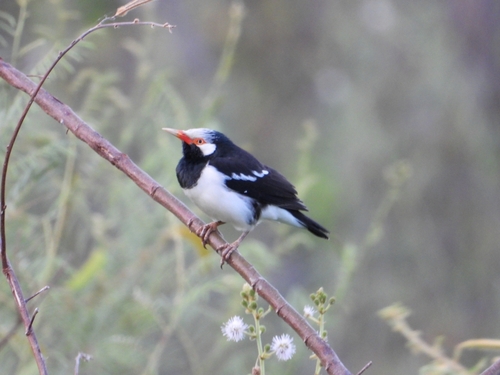
Siamese Pied Starling (Gracupica floweri) Siamese Pied Starling

メディア

読み込み中…

要点

クビワムクドリとSiamese Pied Starlingの間で最も信頼できるフィールドマークは、クビワムクドリの目の周りの広範囲な黄色の裸肌と、Siamese Piedのより限られた赤橙色の顔の肌です。両者は黒と白の羽毛を持ち、黒い襟がありますが、クビワムクドリは明らかに大きくてずんぐりしており、目を引く白い頭とより頑丈な体型をしています。クビワムクドリの幼鳥は茶色がかっており、完全な襟が欠けているため混乱を招くことがありますが、全体的なサイズと顔の肌の色は依然として重要です。フィールドでは、特に混合群れや都市の生息地で、顔の肌の色、頭のパターン、全体的なサイズに注目してこれら二種を区別してください。

識別のコツ

  1. Facial Skin Color and Extent: クビワムクドリは目の周りに大きく明るい黄色の裸の斑点があり、これはすべての年齢で診断的です。Siamese Pied Starlingは、より限られた赤橙色の裸の斑点を持っています。これは最も信頼できるフィールドマークです。
  2. Head Color and Pattern: クビワムクドリは成鳥で目を引く白い頭を示し、黒い襟と鋭く対照的です。Siamese Pied Starlingの頭も白いですが、しばしば純度が低く、額により多くの白い筋があり、全体的にコントラストが少ないです。
  3. Size and Structure: クビワムクドリははるかに大きくてずんぐりしており、より重いくちばしとより頑丈な体を持っています。Siamese Pied Starlingは小さく、細身で、より繊細な体型です。サイズは両種が存在する際に特に顕著です。
  4. Collar: 両種は黒い襟を持っていますが、幼鳥のクビワムクドリでは襟が欠けているか不完全で、筋模様に置き換えられています。これはSiamese Pied Starlingとの混乱を招く可能性がありますが、顔の肌の色とサイズは依然としてそれらを区別します。
  5. Wing and Tail Pattern: 飛行中、クビワムクドリは翼と尾により広範囲な白を示し、白い先端の飛行羽と完全に白い初級羽覆いを持っています。Siamese Pied Starlingは翼に白がありますが、より限られたものであり、より大胆ではありません。
  6. Juvenile Plumage: 幼鳥のクビワムクドリは茶色がかっており、首と胸に筋模様があり、完全な襟は欠けています。黄色の顔の肌は依然として存在し、Siamese Pied Starlingの幼鳥との区別に役立ちます。
  7. Bill and Legs: クビワムクドリは黒いくちばしと淡い灰色の足を持っています。くちばしの色はSiamese Pied Starlingではあまり特徴的ではありませんが、一般的には似ています。代わりに顔の肌と頭のパターンに注目してください。
  8. Vocalizations: クビワムクドリははるかに声が大きく、さまざまな大きく多様な呼び声や歌を持っています。特に胸を膨らませたディスプレイを伴う複雑で大きな歌を聞いた場合、クビワムクドリを疑ってください。
  9. Habitat and Range: 南中国、台湾、マレーシア、シンガポールにいる場合、ほぼ確実にクビワムクドリを見ています。南ミャンマー、タイ、またはラオスでは、両種が可能ですが、フィールドマークを注意深く使用してください。
  10. Behavior: クビワムクドリはより目立ち、しばしば開けた場所で餌を探し、家畜と関連しています。Siamese Pied Starlingはより控えめで、行動があまり頑丈ではありません。
  11. Sex Differences: 両種は羽毛やサイズにおいてほとんどまたは全く性的二形性を示さないため、すべてのフィールドマークは両性に適用されます。
  12. Pitfalls: 完全な襟が欠けた未熟なクビワムクドリはSiamese Pied Starlingと間違えられることがありますが、黄色の顔の肌と大きなサイズは依然として信頼できます。若い鳥でこれらの特徴を常に確認してください。
  13. Perched vs. Flight Views: 飛行中は、翼と尾の白の広がりに注目してください(クビワムクドリの方が多い)。止まっているときは、顔の肌と頭の色が最も役立ちます。
  14. Mixed Flocks: 重複する地域では、両種が一緒に発生する可能性があります。サイズ、頭のパターン、顔の肌の色を直接比較してください。
  15. Seasonality: 両種に対して強い季節的な羽毛の違いは記載されていないため、これらのマークは年間を通じて信頼できます。

大きさ

クビワムクドリはかなり大きく、全長26〜30 cmで、ずんぐりした体型に見えます。Siamese Pied Starlingは小さく、より細身で、印象が薄いです。このサイズの違いは、両種が一緒に見られる場合や一般的な都市の鳥と比較される場合にしばしば顕著です。両性は各種内でサイズが似ています。

羽色

行動

クビワムクドリはしばしば地面で餌を探しているのが見られ、時には家畜の周りで、非常に声が大きく目立ちます。ペアまたは小さな群れで見られることが多く、しばしば開けたまたは半開けた生息地にいます。Siamese Pied Starlingは似たような餌の習慣を共有しますが、一般的には動きと存在感があまり頑丈ではありません。両種は社交的ですが、クビワムクドリの大きなサイズと大きな声は混合群れの中で目立ちます。

生息環境

クビワムクドリはより広い範囲を占め、南中国、東南アジア本土のほとんど、台湾、マレーシア、シンガポールに導入されています。草原、乾燥した森林、人間の居住地によく出没し、都市や農村の環境に適応しています。Siamese Pied Starlingは南ミャンマー、タイ、ラオスにより制限されており、通常は似たような開けた生息地に見られますが、範囲はより限られています。タイとラオスの一部では重複が可能であるため、これらの地域ではフィールドマークに注意を払う必要があります。

声

クビワムクドリは特に声が大きく、さまざまな鋭い、粗い、メロディックな呼び声を生成し、ジャイのような「クラーク・クラーク」、笛のような「プルー」、および「プー・プー・プー・プー」を含みます。その歌は大きくて複雑で、しばしば鳥が胸を膨らませて歌われます。Siamese Pied Starlingのための特定の声は資料に記載されていませんが、クビワムクドリよりも多様性が少なく、声が小さい可能性があります。フィールドでは、クビワムクドリの声の存在が同定を確認するのに役立ちます。

より良い説明を送る

比較と同じ項目を使ってください。文章はすぐに公開されます。

The most reliable field mark between Black-collared Starling and Siamese Pied Starling is the extensive yellow bare skin around the eye in Black-collared, versus the more limited red-orange facial skin in Siamese Pied. Both have black-and-white plumage with a black collar, but Black-collared Starling is noticeably larger and bulkier, with a strikingly white head and more robust jizz. Juveniles of Black-collared Starling are browner and lack a full collar, which can cause confusion, but the overall size and facial skin color remain key. In the field, focus on facial skin color, head pattern, and overall size to separate these two, especially in mixed flocks or urban habitats.

  1. Facial Skin Color and Extent: Black-collared Starling has a large, bright yellow bare patch around the eye, which is diagnostic at all ages. Siamese Pied Starling has a red-orange bare patch that is less extensive. This is the single most reliable field mark.
  2. Head Color and Pattern: Black-collared Starling shows a strikingly white head in adults, contrasting sharply with the black collar. Siamese Pied Starling's head is also white but often less pure, with more white streaking on the forehead and less contrast overall.
  3. Size and Structure: Black-collared Starling is much larger and bulkier, with a heavier bill and more robust body. Siamese Pied Starling is smaller, slimmer, and more delicate in build. Size is especially apparent when both species are present.
  4. Collar: Both species have a black collar, but in juvenile Black-collared Starling the collar is absent or incomplete, replaced by streaking. This can cause confusion with Siamese Pied Starling, but the facial skin color and size still separate them.
  5. Wing and Tail Pattern: In flight, Black-collared Starling shows more extensive white on the wings and tail, with white-tipped flight feathers and entirely white primary coverts. Siamese Pied Starling has white in the wings but less extensive and less bold.
  6. Juvenile Plumage: Juvenile Black-collared Starlings are browner with streaked neck and breast, and lack a full collar. The yellow facial skin is still present, helping separate them from Siamese Pied Starling juveniles.
  7. Bill and Legs: Black-collared Starling has a black bill and pale grey legs. Bill color is less distinctive in Siamese Pied Starling but generally similar; focus on facial skin and head pattern instead.
  8. Vocalizations: Black-collared Starling is much more vocal, with a wide range of loud, varied calls and songs. If you hear a complex, loud, and varied song, especially with chest-puffing display, suspect Black-collared Starling.
  9. Habitat and Range: If in southern China, Taiwan, Malaysia, or Singapore, you are almost certainly seeing Black-collared Starling. In southern Myanmar, Thailand, or Laos, both species are possible; use field marks carefully.
  10. Behavior: Black-collared Starling is more conspicuous, often foraging in the open and associating with livestock. Siamese Pied Starling is more retiring and less robust in behavior.
  11. Sex Differences: Both species show little or no sexual dimorphism in plumage or size, so all field marks apply to both sexes.
  12. Pitfalls: Immature Black-collared Starlings lacking a full collar can be mistaken for Siamese Pied Starling, but the yellow facial skin and larger size remain reliable. Always check for these features in young birds.
  13. Perched vs. Flight Views: In flight, focus on the extent of white in the wings and tail (more in Black-collared Starling). When perched, the facial skin and head color are most useful.
  14. Mixed Flocks: In areas of overlap, both species may occur together. Compare individuals directly for size, head pattern, and facial skin color.
  15. Seasonality: No strong seasonal plumage differences are described for either species, so these marks are reliable year-round.

Black-collared Starling is substantially larger, measuring 26–30 cm in length, and appears bulkier with a heavier build. Siamese Pied Starling is smaller and more slender, with a less imposing presence. This size difference is often apparent when both species are seen together or compared to common urban birds. Both sexes are similar in size within each species.

  • Adults: Black-collared Starling shows a bright white head with a bold black collar and extensive yellow bare skin around the eye. The back, wings, and mantle are dark brown to almost black, with prominent white tips on the tail and flight feathers, and the primary coverts are entirely white. Underparts are white with a possible grey-brown wash. Siamese Pied Starling also has black-and-white plumage and a black collar, but the facial skin is red-orange and less extensive, and the white on the head is less pure and less extensive, with more white streaking on the forehead.
  • Juveniles: Juvenile Black-collared Starlings are browner overall, with streaked neck and breast, and show an eye-patch but lack a full collar. Juvenile Siamese Pied Starling details are not specified, but expect less contrast and less extensive facial skin.
  • Flight/wing pattern: Both species have white in the wings and tail, but Black-collared Starling's white is more extensive and the bird appears more boldly patterned in flight. No unique upperwing marks for Siamese Pied Starling are described.

Black-collared Starling is often seen foraging on the ground, sometimes around livestock, and is very vocal and conspicuous. It may be found in pairs or small groups, often in open or semi-open habitats. Siamese Pied Starling shares similar foraging habits but is generally less robust in movement and presence. Both species are social, but Black-collared Starling's larger size and louder vocalizations make it stand out in mixed flocks.

Black-collared Starling occupies a wider range, found in southern China, most of mainland Southeast Asia, and introduced to Taiwan, Malaysia, and Singapore. It frequents grasslands, dry forests, and human settlements, adapting well to urban and rural environments. Siamese Pied Starling is more restricted to southern Myanmar, Thailand, and Laos, and is typically found in similar open habitats but with a more limited range. Overlap is possible in parts of Thailand and Laos, so careful attention to field marks is needed in these areas.

Black-collared Starling is notably vocal, producing a variety of shrill, harsh, and melodious calls, including a jay-like 'kraak kraak,' a whistling 'prrü,' and a 'pü-pü-pü-pü.' Its song is loud and complex, often delivered with the bird puffing out its chest. No specific vocalizations are described for Siamese Pied Starling in the sources, but it is likely less varied and less loud than Black-collared Starling. In the field, Black-collared Starling's vocal presence can help confirm identification.

変更を破棄しますか?

保存していない編集があります。今離れると失われます。

クビワムクドリ · Siamese Pied Starling · 苦手な鳥