

black catbird vs thick-billed seed-finch
Melanoptila glabrirostris versus Sporophila funerea
Jogue um quiz com black catbird e thick-billed seed-finch
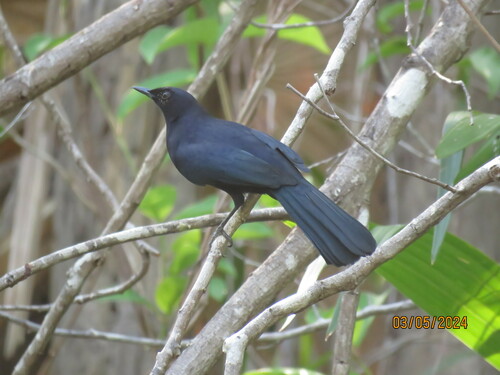 black catbird
 thick-billed seed-finch
Em resumo
A marca de campo mais confiável é o bico: black catbird tem um bico preto, reto e esguio, enquanto thick-billed seed-finch apresenta um bico cônico, profundo e grosso, com um culmen arredondado. O macho adulto de black catbird é preto brilhante com um brilho purpúreo ou esverdeado, enquanto o macho de thick-billed seed-finch é preto fosco e não possui iridescência. Juvenis e fêmeas também são separáveis: os juvenis de black catbird são cinza-acastanhados com manchas embaixo, enquanto as fêmeas e juvenis de seed-finches são marrons a canela, sem manchas. Black catbird é muito maior e com cauda mais longa, com uma aparência mais esbelta e de mimídeo, enquanto o seed-finch é compacto e de cauda curta. Essas espécies raramente se sobrepõem em habitat, mas onde o fazem, a atenção cuidadosa à forma do bico e à estrutura geral é fundamental.
Dicas de identificação
- A forma do bico é a verificação mais rápida: black catbird tem um bico preto, reto e esguio, com um culmen geralmente reto, apenas ligeiramente curvado na ponta. Thick-billed seed-finch tem um bico cônico muito profundo, com um culmen arredondado, parecendo grosso e atarracado de qualquer ângulo. Isso é diagnóstico em todas as idades.
- Tamanho e estrutura: black catbird é quase duas vezes mais longo e muito mais pesado, com uma cauda longa e uma postura esbelta e ereta. Seed-finch é compacto, de cauda curta e corpo arredondado, frequentemente parecendo sem pescoço.
- Plumagem do macho adulto: catbird é preto brilhante com brilho purpúreo ou esverdeado, especialmente na cauda e nas coberturas das asas; seed-finch é preto fosco, sem iridescência. Em boa luz, o brilho é uma forte pista para catbird.
- Plumagem de fêmea/juvenil: fêmea e juvenil de black catbird são cinza-acastanhados com manchas embaixo, não marrons uniformes. Fêmea e juvenis de seed-finches são marrons a canela, sem manchas e com uma aparência mais uniforme. Isso é mais útil em machos não adultos.
- Cor da íris: o adulto de black catbird tem uma íris vermelho-escura (pode ser difícil de ver), enquanto a íris do seed-finch é sempre preta. O juvenil de catbird tem uma íris cinza.
- Cor das pernas: ambos têm pernas escuras, então isso não é útil.
- Comprimento da cauda: a cauda do catbird é relativamente longa e frequentemente aberta ou agitada; a cauda do seed-finch é curta e quadrada.
- Padrão das asas: seed-finch tem coberturas brancas sob as asas (ambos os sexos) e bases brancas nas penas de voo (apenas machos), mas essas raramente são visíveis em campo. Catbird não tem branco nas asas.
- Brilho vs. fosco: em luz intensa, a plumagem do catbird mostra brilho iridescente, enquanto o seed-finch permanece preto ou marrom fosco.
- Comportamento: catbird empoleira-se ereto, frequentemente canta de locais expostos e se move com confiança lenta. Seed-finch é nervoso, agita as asas e a cauda, e forrageia baixo na cobertura.
- Contexto de habitat: catbird está ligado a arbustos densos na Península de Yucatán e ilhas próximas; seed-finch é mais amplamente distribuído na América Central, preferindo arbustos abertos, gramados e bordas.
- Vocalizações: a canção do catbird é complexa, variada e frequentemente inclui notas ásperas e metálicas. Seed-finch emite chamadas simples e agudas e canções curtas, não semelhantes a mimídeos.
- Sobreposição geográfica: a sobreposição é limitada a partes de Belize e Guatemala; em outros lugares, a distribuição pode ajudar, mas não confie nela em zonas de sobreposição.
- Dimorfismo sexual: os sexos do catbird são semelhantes (fêmea menos brilhante), enquanto o seed-finch é fortemente dimórfico: machos pretos, fêmeas marrons/canela.
- Confusão juvenil: se você ver um pássaro acastanhado com manchas embaixo, pense em juvenil de catbird; um pássaro marrom/canela simples, sem manchas, é provavelmente uma fêmea ou juvenil de seed-finch.
Tamanho
Black catbird é substancialmente maior, com cerca de 19–20,5 cm de comprimento e 35 g de massa [wikidata], tornando-se o menor mimídeo, mas ainda muito maior que o thick-billed seed-finch, que mede apenas 10,7–12,5 cm de comprimento e pesa 12,8–13,9 g [wikipedia]. O catbird é mais esguio, com uma cauda mais longa e um corpo proporcionalmente mais longo, enquanto o seed-finch é compacto e atarracado, com uma cauda curta e um bico notavelmente grosso e profundo.
Plumagem
- Juvenis: os juvenis de black catbird são cinza-acastanhados acima com manchas embaixo, sem os tons marrons ou canela uniformes dos juvenis e fêmeas de seed-finch. Juvenis e fêmeas de seed-finches são marrons a canela (variando por subespécies), sem manchas e com coberturas brancas sob as asas.
- Machos adultos: os machos de black catbird são pretos brilhantes com um brilho purpúreo ou esverdeado, especialmente na cauda e nas coberturas das asas, e remiges preto-acastanhados mais opacos. Os machos de thick-billed seed-finch são pretos foscos, com bases brancas nas penas de voo e coberturas brancas sob as asas (o branco raramente é visível em campo).
- Fêmeas: a fêmea de black catbird é semelhante ao macho, mas menos brilhante, permanecendo overall acastanhada. As fêmeas de seed-finches são marrons a canela, com a cabeça e as partes superiores mais escuras que as partes inferiores, e sem brilho. Ambas as espécies têm pernas escuras e íris escuras, mas a íris do adulto de catbird é vermelho-escura, enquanto a do seed-finch é preta.
Comportamento
Black catbird frequentemente canta de poleiros expostos e se move com a confiança típica de mimídeos, empoleirando-se ereto e usando sua longa cauda para equilíbrio. É mais provável que seja visto sozinho ou em pares, frequentemente em arbustos densos. Thick-billed seed-finch forrageia nervosamente em coberturas densas, agitando suas asas e cauda, e geralmente é visto sozinho, em pares ou em pequenos bandos com outros comedores de sementes. Seus movimentos são mais nervosos e menos eretos do que os do catbird.
Habitat
Black catbird é endêmico da Península de Yucatán e ilhas próximas, preferindo arbustos densos e matas. Está ausente da maior parte da distribuição continental do thick-billed seed-finch, que prefere arbustos de segundo crescimento, bordas de florestas, gramados altos e áreas com ervas daninhas, às vezes perto da água. A sobreposição é possível no norte de Belize e Guatemala, mas black catbird está mais ligado a vegetação densa e baixa, enquanto o seed-finch é mais frequentemente encontrado em habitats abertos ou de borda.
Voz
Black catbird tem uma canção variada de frases repetidas, variando de áspera e arranhada a semelhante a flauta, frequentemente com zumbidos metálicos. Suas chamadas podem se assemelhar às do gray catbird, incluindo 'rriah' áspero, 'chrrh' nasal e 'tcheeu' estridente. As vocalizações do thick-billed seed-finch não são descritas em detalhe aqui, mas como um Sporophila, geralmente emite chamadas simples e agudas e canções curtas e não musicais, bem diferentes do repertório complexo e variado do catbird.
black catbird · thick-billed seed-finch · Minhas aves difíceis