

Black Catbird vs Thick-billed Seed-Finch
Melanoptila glabrirostris contro Sporophila funerea
Fai un quiz con Black Catbird e Thick-billed Seed-Finch
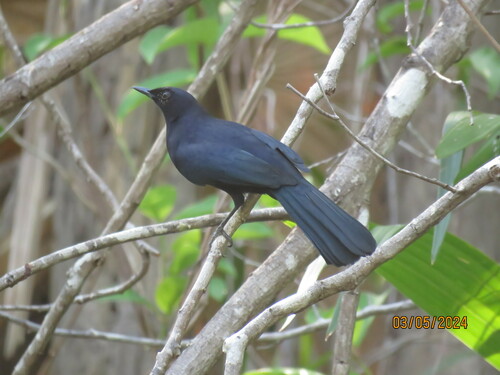 Black Catbird
 Thick-billed Seed-Finch
In breve
Il segno distintivo più affidabile è il becco: il Black Catbird ha un becco nero, dritto e sottile, mentre il Thick-billed Seed-Finch mostra un becco conico, molto profondo e spesso, con un culmine arrotondato. Il Black Catbird maschio adulto è nero lucido con riflessi violacei o verdognoli, mentre il maschio del Thick-billed Seed-Finch è nero opaco e privo di iridescenza. Anche i giovani e le femmine sono separabili: i giovani Black Catbird sono grigio-bruni con macchie sotto, mentre le femmine e i giovani seed-finches sono bruni fino a cannella senza macchie. Il Black Catbird è molto più grande e ha una coda più lunga, con un aspetto più snello e mimid, mentre il seed-finch è compatto e con coda corta. Queste specie raramente si sovrappongono nell'habitat, ma dove lo fanno, prestare attenzione alla forma del becco e alla struttura generale è fondamentale.
Consigli di identificazione
- La forma del becco è il controllo più veloce: il Black Catbird ha un becco nero, dritto e sottile con un culmine generalmente dritto, solo leggermente curvato all'estremità. Il Thick-billed Seed-Finch ha un becco conico molto profondo con un culmine arrotondato, che appare spesso e tozzo da qualsiasi angolazione. Questo è diagnostico a tutte le età.
- Dimensioni e struttura: il Black Catbird è quasi il doppio della lunghezza e molto più pesante, con una coda lunga e una postura snella e eretta. Il seed-finch è compatto, con coda corta e corpo rotondo, spesso apparendo senza collo.
- Piumaggio del maschio adulto: il Catbird è nero lucido con riflessi violacei o verdognoli, specialmente sulla coda e sulle copritrici delle ali; il seed-finch è nero opaco e privo di iridescenza. In buona luce, il riflesso è un forte indizio per il catbird.
- Piumaggio femminile/giovanile: la femmina e il giovane Black Catbird sono grigio-bruni con macchie sotto, non di un marrone uniforme. La femmina e i giovani seed-finches sono bruni fino a cannella, senza macchie e con un aspetto più uniforme. Questo è più utile nei maschi non adulti.
- Colore dell'iride: il Black Catbird adulto ha un'iride rosso scuro (può essere difficile da vedere), mentre l'iride del seed-finch è sempre nera. Il giovane catbird ha un'iride grigia.
- Colore delle zampe: entrambi hanno zampe nerastre, quindi questo non è utile.
- Lunghezza della coda: la coda del catbird è relativamente lunga e spesso aperta o scossa; la coda del seed-finch è corta e quadrata.
- Schema delle ali: il seed-finch ha copritrici bianche sotto le ali (entrambi i sessi) e basi bianche per le penne di volo (solo maschi), ma queste sono raramente visibili sul campo. Il catbird non ha alcun bianco nelle ali.
- Lucido vs. opaco: in luce brillante, il piumaggio del catbird mostra un riflesso iridescente, mentre il seed-finch rimane nero o bruno opaco.
- Comportamento: il catbird si posa eretto, spesso canta da posti esposti e si muove con lenta sicurezza. Il seed-finch è nervoso, scuote le ali e la coda, e cerca cibo in basso nella vegetazione.
- Contesto dell'habitat: il catbird è legato a folti cespugli nello Yucatán e nelle isole vicine; il seed-finch è più diffuso in America Centrale, preferendo cespugli aperti, erba e bordi.
- Vocalizzazioni: il canto del catbird è complesso, vario e spesso include note dure e metalliche. Il seed-finch emette richiami semplici e acuti e canti brevi, non simili a quelli dei mimidi.
- Sovrapposizione geografica: la sovrapposizione è limitata a parti del Belize e del Guatemala; altrove, la distribuzione può aiutare, ma non fare affidamento su di essa nelle zone di sovrapposizione.
- Dimorfismo sessuale: i sessi del catbird sono simili (la femmina è meno lucida), mentre il seed-finch è fortemente dimorfico: maschi neri, femmine brune/cannella.
- Confusione giovanile: se vedi un uccello bruno con macchie sotto, pensa al giovane catbird; un uccello bruno/cannella uniforme senza macchie è probabilmente una femmina o un giovane seed-finch.
Taglia
Il Black Catbird è sostanzialmente più grande, con una lunghezza di circa 19–20,5 cm e una massa di 35 g [wikidata], rendendolo il più piccolo dei mimidi, ma comunque molto più grande del Thick-billed Seed-Finch, che è lungo solo 10,7–12,5 cm e pesa 12,8–13,9 g [wikipedia]. Il catbird è più snello, con una coda più lunga e un corpo proporzionalmente più lungo, mentre il seed-finch è compatto e tozzo, con una coda corta e un becco notevolmente spesso e profondo.
Piumaggio
- Giovani: i giovani Black Catbird sono grigio-bruni sopra con macchie sotto, privi delle tonalità uniformi brune o cannella dei giovani e delle femmine di seed-finch. I giovani e le femmine di seed-finches sono bruni fino a cannella (variando per sottospecie), senza macchie e con copritrici bianche sotto le ali.
- Maschi adulti: i maschi Black Catbird sono neri lucidi con riflessi violacei o verdognoli, specialmente sulla coda e sulle copritrici delle ali, e remiganti di un nero-bruno più opaco. I maschi del Thick-billed Seed-Finch sono neri opachi, con basi bianche per le penne di volo e copritrici bianche sotto le ali (il bianco è raramente visibile sul campo).
- Femmine: la femmina del Black Catbird è simile al maschio ma meno lucida, rimanendo nel complesso nerastra. Le femmine di seed-finch sono brune fino a cannella, con la testa e le parti superiori più scure delle parti inferiori, e senza lucentezza. Entrambe le specie hanno zampe nerastre e iridi scure, ma l'iride dell'adulto catbird è rosso scuro, mentre quella del seed-finch è nera.
Comportamento
Il Black Catbird canta spesso da posatoi esposti e si muove con la tipica sicurezza dei mimidi, posandosi eretto e usando la sua lunga coda per l'equilibrio. È più probabile vederlo da solo o in coppia, spesso in cespugli fitti. Il Thick-billed Seed-Finch cerca cibo nervosamente in copertura fitta, scuotendo le ali e la coda, ed è solitamente visto singolarmente, in coppie o in piccoli gruppi con altri mangiatori di semi. I suoi movimenti sono più nervosi e meno eretti rispetto a quelli del catbird.
Habitat
Il Black Catbird è endemico della penisola dello Yucatán e delle isole vicine, preferendo cespugli e cespugli fitti. È assente dalla maggior parte dell'areale della terraferma dell'America Centrale del Thick-billed Seed-Finch, che preferisce cespugli di seconda crescita, bordi forestali, erba alta e aree infestanti, a volte vicino all'acqua. La sovrapposizione è possibile nel Belize settentrionale e in Guatemala, ma il Black Catbird è più legato a vegetazione densa e bassa, mentre il seed-finch è più spesso in habitat aperti o di bordo.
Voce
Il Black Catbird ha un canto vario di frasi ripetute, che vanno da toni duri e graffiati a suoni simili a flauto, spesso con ronzio metallico. I suoi richiami possono assomigliare a quelli del Gray Catbird, inclusi 'rriah' duro, 'chrrh' nasale e 'tcheeu' graffiante. Le vocalizzazioni del Thick-billed Seed-Finch non sono descritte in dettaglio qui, ma come Sporophila, emette tipicamente richiami semplici e acuti e canti brevi e non musicali, molto diversi dal repertorio complesso e vario del catbird.
Black Catbird · Thick-billed Seed-Finch · I miei uccelli difficili