

black-and-yellow silky-flycatcher vs cambacica
Phainoptila melanoxantha versus Coereba flaveola
Jogue um quiz com black-and-yellow silky-flycatcher e cambacica
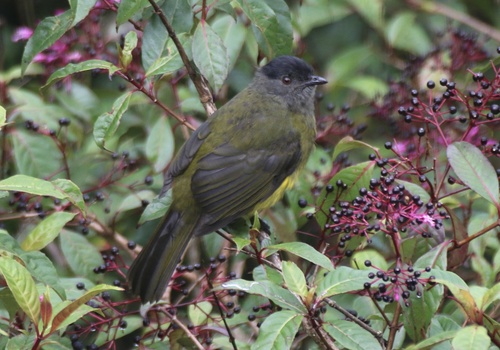 black-and-yellow silky-flycatcher
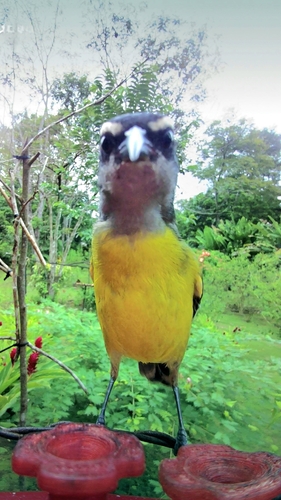 cambacica
Em resumo
A marca de campo mais confiável para separar o black-and-yellow silky-flycatcher da cambacica é o tamanho e a estrutura geral: o silky-flycatcher é muito maior e mais robusto, com uma cauda larga e arredondada e uma aparência robusta, enquanto a cambacica é minúscula, esbelta e ativa. Os machos adultos de silky-flycatcher apresentam um padrão preto e amarelo impressionante, com cabeça e costas pretas, ao contrário de qualquer cambacica. A cambacica sempre apresenta uma faixa ocular branca proeminente e um bico esbelto e fortemente curvado, que o silky-flycatcher não possui. Os juvenis de ambas as espécies são mais apagados, mas o silky-flycatcher permanece muito mais volumoso e não possui o padrão facial da cambacica. Fique atento à combinação de tamanho, forma da cauda e padrão da cabeça para uma identificação confiante.
Dicas de identificação
- Tamanho e forma: O silky-flycatcher é muito maior e mais pesado que a cambacica; use isso como seu primeiro verificador, especialmente se você tiver alguma referência de tamanho (por exemplo, pássaros próximos, galhos).
- Forma da cauda: O silky-flycatcher tem uma cauda larga e arredondada, enquanto a cauda da cambacica é curta e mais quadrada; a diferença é óbvia em voo ou quando empoleirada.
- Estrutura do bico: A cambacica tem um bico esbelto e fortemente curvado, adaptado para se alimentar de néctar; o silky-flycatcher tem um bico mais grosso e reto. A forma do bico é diagnóstica a curta distância.
- Padrão da cabeça: A cambacica sempre apresenta uma faixa ocular branca ousada (supercílios) e uma coroa preta; o silky-flycatcher nunca tem uma faixa ocular branca e, em vez disso, tem uma cabeça preta simples (macho) ou cinza sujo (fêmea/juvenil).
- Partes inferiores: Os machos de silky-flycatcher têm uma mistura de preto, verde-oliva, cinza e amarelo brilhante nas partes inferiores; a cambacica tem um peito e barriga amarelos limpos com um ventrículo branco, nunca os tons mistos ou oliva do silky-flycatcher.
- Rabo e flancos: O silky-flycatcher apresenta um rabo e flancos amarelos brilhantes, contrastando com as costas pretas; o amarelo da cambacica está na barriga e no peito, com o rabo não tão distintamente marcado.
- Confusão juvenil: Os juvenis de silky-flycatcher são mais apagados, mas retêm a coroa suja e os flancos oliva; os juvenis de cambacica também são apagados, mas sempre mostram alguma forma da faixa ocular branca/amarela e não possuem flancos oliva.
- Diferenças sexuais: Os sexos da cambacica são semelhantes; os machos de silky-flycatcher têm padrões mais vívidos que as fêmeas, mas ambos os sexos são muito maiores e não possuem o padrão facial da cambacica.
- Comportamento: A cambacica é muito mais ativa, voando e se alimentando acrobaticamente entre as flores; o silky-flycatcher é mais lento, mais deliberado e frequentemente se empoleira ereto.
- Contexto do habitat: Em florestas de montanha acima de 1.500 m na Costa Rica ou Panamá, espere encontrar o silky-flycatcher; em jardins, parques ou áreas de baixa altitude, a cambacica é muito mais provável.
- Estilo de voo: O silky-flycatcher voa de forma direta e constante; o voo da cambacica é rápido, muitas vezes com mudanças rápidas de direção.
- Cor da íris: O silky-flycatcher tem uma íris vermelha apagada (adultos); a íris da cambacica é escura, mas isso raramente é visível em campo.
- Pernas e pés: O silky-flycatcher tem pernas e pés pretos com solas amarelas; as pernas da cambacica são escuras, mas as solas não são uma marca de campo.
- Variação de subespécies: A cambacica apresenta variação de plumagem regional (por exemplo, gargantas brancas em algumas formas caribenhas), mas sempre mantém a faixa ocular branca e o bico curvado; as subespécies de silky-flycatcher diferem principalmente na cor do peito, mas nunca se aproximam do padrão da cambacica.
- Vocalizações: Não são diagnósticas para separação; ambas as espécies têm chamadas variáveis, mas a separação em campo é melhor feita visualmente.
Tamanho
O black-and-yellow silky-flycatcher é substancialmente maior, medindo cerca de 20 cm de comprimento e pesando cerca de 58–60 g [wikidata]. Em contraste, a cambacica é muito menor, com comprimentos variando de 10–13 cm e pesos de 5,5–19 g [wikipedia]. Em campo, essa é uma diferença dramática: o silky-flycatcher parece ter um corpo pesado, cauda larga e quase do tamanho de um tordo, enquanto a cambacica é um pássaro minúsculo, rápido, semelhante a um chapim. Mesmo à distância ou em luz fraca, a diferença de tamanho é geralmente óbvia se ambas as espécies forem familiares.
Plumagem
- Juvenis e imaturos: O juvenil black-and-yellow silky-flycatcher se assemelha às fêmeas adultas, mas é mais apagado, com uma coroa suja, listras de peito esmaecidas e flancos verde-oliva. Os juvenis de cambacica também são mais apagados que os adultos, com sobrancelhas e garganta parcialmente amarelas, mas sempre mostram uma faixa ocular branca (ou amarelada) e não possuem a coroa suja e os flancos oliva do silky-flycatcher.
- Machos adultos: Os machos de silky-flycatcher têm cabeça, costas, asas e cauda pretas, com um rabo e flancos amarelos brilhantes, peito verde-oliva e centro da barriga cinza. A cambacica nunca mostra esse padrão; em vez disso, tem partes superiores de cinza escuro a preto, uma coroa preta, uma faixa ocular branca e partes inferiores amarelas.
- Fêmeas adultas: As fêmeas de silky-flycatcher são cinza escuro a sujo na cabeça e garganta, misturando-se ao verde-oliva no peito, com flancos e subcauda amarelos. As fêmeas de cambacica se parecem com os machos, com a mesma faixa ocular branca e partes inferiores amarelas, e nunca mostram os tons sujos ou oliva do silky-flycatcher.
- Contraste chave: O silky-flycatcher nunca mostra uma faixa ocular branca, e a cambacica nunca mostra uma cabeça preta com um rabo e flancos amarelos.
Comportamento
O black-and-yellow silky-flycatcher é robusto e frequentemente se empoleira ereto ou se move deliberadamente através da folhagem, às vezes atacando frutas ou insetos. Seu voo é direto e constante, combinando com sua construção robusta. A cambacica é extremamente ativa, voando rapidamente entre flores e folhagens, frequentemente pendurada de cabeça para baixo ou pairando brevemente (mas não como um beija-flor), e visitando frequentemente alimentadores ou tigelas de açúcar em jardins. Sua forrageação é inquieta e acrobática, e raramente fica parada por muito tempo.
Habitat
O black-and-yellow silky-flycatcher é restrito a florestas e bordas de montanha na Costa Rica e Panamá, tipicamente acima de 1.500 m de altitude. Ele prefere florestas montanhosas úmidas e musgosas e bordas florestais. A cambacica é amplamente distribuída nos Neotrópicos, encontrada do sul do México através do Caribe e grande parte da América do Sul, em uma ampla gama de habitats abertos a semi-abertos, incluindo jardins, parques e bordas florestais, mas evita florestas densas e altitudes acima de 2.000 m. Se você estiver em um jardim de baixa altitude, a cambacica é muito mais provável; em florestas de nuvens de montanha, o silky-flycatcher é a espécie esperada.
black-and-yellow silky-flycatcher · cambacica · Minhas aves difíceis