

Motmot

セグロレンジャクモドキ 対 マミジロミツドリ

Phainoptila melanoxantha 対 Coereba flaveola

セグロレンジャクモドキとマミジロミツドリのクイズ
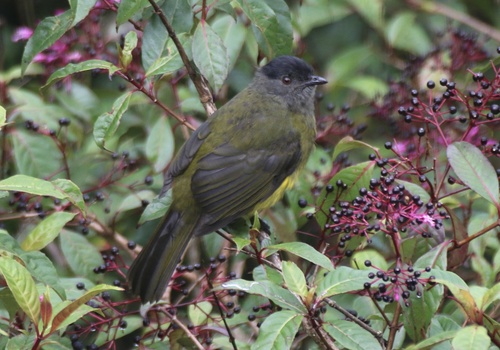
セグロレンジャクモドキ (Phainoptila melanoxantha) セグロレンジャクモドキ
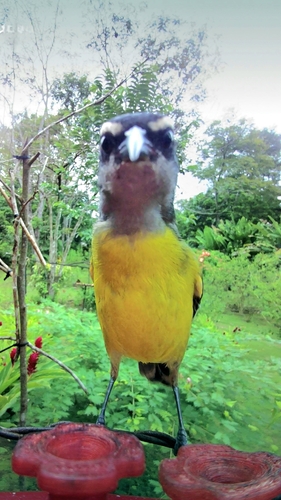
マミジロミツドリ (Coereba flaveola) マミジロミツドリ

メディア

読み込み中…

要点

ブラックアンドイエローレンジャクモドキとマミジロミツドリを区別する最も信頼できるフィールドマークは、全体のサイズと構造です:レンジャクモドキははるかに大きく、体重も重く、広く丸い尾とがっしりとした外観を持っていますが、マミジロミツドリは小さく、細身で活発です。成鳥のオスのレンジャクモドキは、黒い頭と背中を持つ目を引く黒と黄色のパターンを示し、マミジロミツドリとは異なります。マミジロミツドリは常に目立つ白いアイストライプと細長く強く曲がったクチバシを示し、レンジャクモドキにはそれがありません。両種の幼鳥はより地味ですが、レンジャクモドキははるかにがっしりとしており、マミジロミツドリの顔のパターンが欠けています。自信を持って識別するために、サイズ、尾の形、頭のパターンの組み合わせに注意してください。

識別のコツ

  1. サイズと形状: レンジャクモドキはマミジロミツドリよりもはるかに大きく、重いです。特にサイズの参考がある場合(例:近くの鳥、枝)には、これを最初のチェックとして使用してください。
  2. 尾の形状: レンジャクモドキは広く丸い尾を持っていますが、マミジロミツドリの尾は短く、より四角いです。飛行中または止まっているときにその違いは明らかです。
  3. クチバシの構造: マミジロミツドリは蜜を吸うために適応した細長く強く曲がったクチバシを持っていますが、レンジャクモドキはより厚く、まっすぐなクチバシを持っています。クチバシの形状は近距離での診断に役立ちます。
  4. 頭のパターン: マミジロミツドリは常に大胆な白いアイストライプ(スーペリシリウム)と黒い冠を示しますが、レンジャクモドキは白いアイストライプを持たず、代わりに単純な黒(オス)またはすすけた灰色(メス/幼鳥)の頭を持っています。
  5. 腹部: レンジャクモドキのオスは、腹部に黒、オリーブグリーン、灰色、明るい黄色の混合を持っていますが、マミジロミツドリは清潔な黄色の胸と腹部を持ち、決してレンジャクモドキの混合またはオリーブのトーンを持ちません。
  6. 尾と側面: レンジャクモドキは明るい黄色の尾と側面を示し、黒い背中と対照的です。マミジロミツドリの黄色は腹部と胸にあり、尾はそれほど明確にマークされていません。
  7. 幼鳥の混乱: 幼いレンジャクモドキはより地味ですが、すすけた冠とオリーブの側面を保持しています。幼いマミジロミツドリも地味ですが、常に何らかの形の白/黄色のアイストライプを示し、オリーブの側面は欠けています。
  8. 性差: マミジロミツドリのオスとメスは似ていますが、レンジャクモドキのオスはメスよりも鮮やかなパターンを持っていますが、両方の性別ははるかに大きく、マミジロミツドリの顔のパターンが欠けています。
  9. 行動: マミジロミツドリははるかに活発で、花の間を飛び回り、アクロバティックに餌を食べます。レンジャクモドキは遅く、より意図的で、しばしば直立して止まります。
  10. 生息地の文脈: コスタリカやパナマの1,500 m以上の高地の森ではレンジャクモドキを期待してください。庭、公園、または低地では、マミジロミツドリの方がはるかに可能性が高いです。
  11. 飛行スタイル: レンジャクモドキは直接的で安定した飛行をしますが、マミジロミツドリの飛行は速く、しばしば急激な方向転換を伴います。
  12. 虹彩の色: レンジャクモドキは鈍い赤の虹彩を持っています(成鳥)。マミジロミツドリの虹彩は暗いですが、これはフィールドではほとんど見えません。
  13. 脚と足: レンジャクモドキは黒い脚と足を持ち、黄色い底を持っています。マミジロミツドリの脚は暗いですが、底はフィールドマークではありません。
  14. 亜種の変異: マミジロミツドリは地域ごとの羽毛の変異を示します(例:カリブ海の一部の形態での白い喉)が、常に白いアイストライプと曲がったクチバシを保持します。レンジャクモドキの亜種は主に胸の色が異なりますが、マミジロミツドリのパターンには決して近づきません。
  15. 鳴き声: 区別には診断的ではありません。両種は変動する鳴き声を持っていますが、フィールドでの区別は視覚的に行うのが最良です。

大きさ

ブラックアンドイエローレンジャクモドキはかなり大きく、全長約20 cm、体重は約58〜60 gです [wikidata]。対照的に、マミジロミツドリははるかに小さく、全長は10〜13 cm、体重は5.5〜19 gです [wikipedia]。フィールドでは、これは劇的な違いです:レンジャクモドキはがっしりとした体型で、広い尾を持ち、ほぼツグミサイズに見えますが、マミジロミツドリは小さく、素早く、ウグイスのような鳥です。距離があったり、光が悪い場合でも、両種が馴染みのあるものであれば、サイズのギャップは通常明らかです。

羽色

行動

ブラックアンドイエローレンジャクモドキはがっしりとした体型で、しばしば直立して止まったり、葉の中を意図的に移動したりし、時には果物や昆虫を捕まえます。その飛行は直接的で安定しており、頑丈な体型に合っています。マミジロミツドリは非常に活発で、花や葉の間を素早く飛び回り、しばしば逆さまになったり、短時間ホバリングしたり(ただしハチドリのようではありません)、頻繁に庭の餌台や砂糖皿を訪れます。その採餌は落ち着きがなく、アクロバティックで、長い間じっとしていることはほとんどありません。

生息環境

ブラックアンドイエローレンジャクモドキはコスタリカとパナマの高地の森とその周辺に制限されており、通常は1,500 m以上の標高に生息しています。苔むした湿った山地の森林や森林の境界を好みます。マミジロミツドリはネオトロピクスに広く分布し、南メキシコからカリブ海や南アメリカの大部分に見られ、庭、公園、森林の境界などの広範な開放的から半開放的な生息地に生息していますが、密な森林や2,000 m以上の高地は避けます。低地の庭にいる場合、マミジロミツドリの方がはるかに可能性が高いです。高地の雲霧林では、レンジャクモドキが期待される種です。

より良い説明を送る

比較と同じ項目を使ってください。文章はすぐに公開されます。

The most reliable field mark to separate Black-and-yellow Silky-flycatcher from Bananaquit is overall size and structure: the silky-flycatcher is much larger and heavier-bodied, with a broad, rounded tail and a thickset look, while Bananaquit is tiny, slender, and active. Adult male silky-flycatchers show a striking black-and-yellow pattern with a black head and back, unlike any Bananaquit. Bananaquit always shows a prominent white eyestripe and a slender, strongly curved bill, which the silky-flycatcher lacks. Juveniles of both species are duller, but the silky-flycatcher remains much bulkier and lacks the Bananaquit's facial pattern. Watch for the combination of size, tail shape, and head pattern for a confident ID.

  1. Size and shape: Silky-flycatcher is much larger and heavier than Bananaquit; use this as your first check, especially if you have any size reference (e.g., nearby birds, branches).
  2. Tail shape: Silky-flycatcher has a broad, rounded tail, while Bananaquit's tail is short and more squared off; the difference is obvious in flight or when perched.
  3. Bill structure: Bananaquit has a slender, strongly curved bill adapted for nectar feeding; silky-flycatcher has a thicker, straight bill. Bill shape is diagnostic at close range.
  4. Head pattern: Bananaquit always shows a bold white eyestripe (supercilium) and a black crown; silky-flycatcher never has a white eyestripe and instead has a plain black (male) or sooty gray (female/juvenile) head.
  5. Underparts: Silky-flycatcher males have a mix of black, olive-green, gray, and bright yellow on the underparts; Bananaquit has a clean yellow chest and belly with a white vent, never the mixed or olive tones of the silky-flycatcher.
  6. Rump and flanks: Silky-flycatcher shows a bright yellow rump and flanks, contrasting with a black back; Bananaquit's yellow is on the belly and chest, with the rump not as distinctly marked.
  7. Juvenile confusion: Juvenile silky-flycatchers are duller but retain the sooty crown and olive flanks; juvenile Bananaquits are also dull but always show some form of the white/yellow eyestripe and lack olive flanks.
  8. Sex differences: Bananaquit sexes are alike; silky-flycatcher males are more vividly patterned than females, but both sexes are much larger and lack the Bananaquit's facial pattern.
  9. Behavior: Bananaquit is far more active, flitting and feeding acrobatically among flowers; silky-flycatcher is slower, more deliberate, and often perches upright.
  10. Habitat context: In highland forests above 1,500 m in Costa Rica or Panama, expect silky-flycatcher; in gardens, parks, or lowland areas, Bananaquit is vastly more likely.
  11. Flight style: Silky-flycatcher flies directly and steadily; Bananaquit's flight is quick, often with rapid changes of direction.
  12. Iris color: Silky-flycatcher has a dull red iris (adults); Bananaquit's iris is dark, but this is rarely visible in the field.
  13. Legs and feet: Silky-flycatcher has black legs and feet with yellow soles; Bananaquit's legs are dark, but soles are not a field mark.
  14. Subspecies variation: Bananaquit shows regional plumage variation (e.g., white throats in some Caribbean forms), but always keeps the white eyestripe and curved bill; silky-flycatcher subspecies differ mainly in breast color but never approach Bananaquit's pattern.
  15. Vocalizations: Not diagnostic for separation; both species have variable calls, but field separation is best made visually.

Black-and-yellow Silky-flycatcher is substantially larger, measuring about 20 cm in length and weighing around 58–60 g [wikidata]. In contrast, Bananaquit is much smaller, with lengths ranging from 10–13 cm and weights from 5.5–19 g [wikipedia]. In the field, this is a dramatic difference: the silky-flycatcher appears heavy-bodied, broad-tailed, and almost thrush-sized, while Bananaquit is a tiny, quick, warbler-like bird. Even at a distance or in poor light, the size gap is usually obvious if both species are familiar.

  • Juveniles and immatures: Juvenile Black-and-yellow Silky-flycatcher resembles adult females but is duller, with a sooty crown, faint dusky breast streaks, and olive-green flanks. Juvenile Bananaquits are also duller than adults, with partially yellow eyebrows and throat, but always show a white (or yellowish) eyestripe and lack the silky-flycatcher's sooty crown and olive flanks.
  • Adult males: Silky-flycatcher males have a black head, back, wings, and tail, with a bright yellow rump and flanks, olive-green breast, and gray belly center. Bananaquit never shows this pattern; instead, it has dark gray to black upperparts, a black crown, a white eyestripe, and yellow underparts.
  • Adult females: Female silky-flycatchers are dark gray to sooty on the head and throat, blending to olive-green on the breast, with yellow flanks and undertail. Bananaquit females look like males, with the same white eyestripe and yellow underparts, and never show the silky-flycatcher's sooty or olive tones.
  • Key contrast: The silky-flycatcher never shows a white eyestripe, and Bananaquit never shows a black head with a yellow rump and flanks.

Black-and-yellow Silky-flycatcher is heavy-bodied and often perches upright or moves deliberately through foliage, sometimes sallying for fruit or insects. Its flight is direct and steady, matching its robust build. Bananaquit is extremely active, flitting rapidly among flowers and foliage, often hanging upside-down or hovering briefly (but not like a hummingbird), and frequently visiting feeders or sugar bowls in gardens. Its foraging is restless and acrobatic, and it rarely sits still for long.

Black-and-yellow Silky-flycatcher is restricted to highland forests and edges in Costa Rica and Panama, typically above 1,500 m elevation. It favors mossy, humid montane woodlands and forest borders. Bananaquit is widespread in the Neotropics, found from southern Mexico through the Caribbean and much of South America, in a wide range of open to semi-open habitats, including gardens, parks, and forest edges, but avoids dense forests and high elevations above 2,000 m. If you are in a lowland garden, Bananaquit is far more likely; in highland cloud forest, the silky-flycatcher is the expected species.

変更を破棄しますか?

保存していない編集があります。今離れると失われます。

セグロレンジャクモドキ · マミジロミツドリ · 苦手な鳥