

bearded woodpecker vs pica-pau-cardeal
Chloropicus namaquus versus Dendropicos fuscescens
Jogue um quiz com bearded woodpecker e pica-pau-cardeal
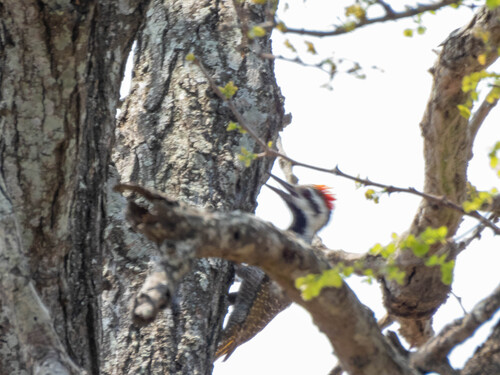 bearded woodpecker
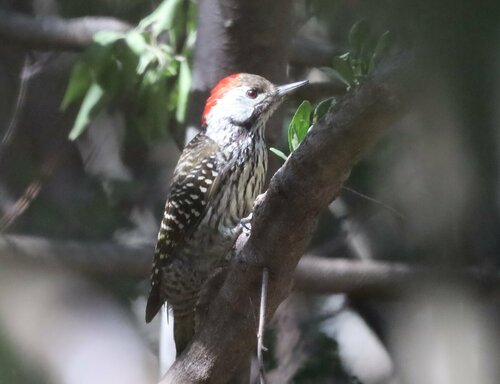 pica-pau-cardeal
Em resumo
A marca de campo mais confiável é o tamanho: o bearded woodpecker é quase duas vezes mais longo que o pica-pau-cardeal e parece muito mais robusto, com um bico maciço e plumagem pesada e riscada. O juvenil do bearded woodpecker pode apresentar uma tonalidade esverdeada e riscas difusas acima, enquanto o juvenil do pica-pau-cardeal é muito menor e não possui essa coloração. Em todas as idades, o bearded woodpecker tem uma cabeça preta e branca ousada com uma ampla faixa ocular preta e um bigode, enquanto o pica-pau-cardeal tem uma coroa oliva-marrom mais suave e um padrão facial menos dramático. Se você ver o pássaro empoleirado, concentre-se no padrão da cabeça e no tamanho geral; em voo, a construção maior do bearded woodpecker e seu voo mais lento e forçado também são pistas.
Dicas de identificação
- O tamanho é a pista mais imediata: o bearded woodpecker é quase duas vezes mais longo e muito mais robusto que o pica-pau. Se o pássaro parecer grande e robusto, especialmente em comparação com espécies familiares ou o tamanho do galho, incline-se para o bearded.
- Estrutura do bico: o bearded tem um bico grande, pesado e cinza-escuro; o bico do pica-pau é muito mais fino e proporcionalmente mais curto. Isso é especialmente visível quando o pássaro está de lado ou martelando.
- Padrão da cabeça (adultos): o bearded apresenta uma cabeça preta e branca impressionante com uma ampla faixa ocular preta, bigode preto e supercílios, face, queixo e garganta brancos. A cabeça do pica-pau é menos contrastante, com uma coroa oliva-marrom na frente, face e garganta brancas, e uma única faixa malar preta.
- Coroa/nuca vermelha (sexo/idade): o macho adulto do bearded tem uma coroa vermelha na parte de trás; a fêmea não possui vermelho. O juvenil do bearded (ambos os sexos) apresenta um pouco de vermelho na coroa e na nuca. O macho do pica-pau tem uma coroa e nuca vermelhas (juvenil macho: coroa vermelha na parte de trás, nuca preta); a fêmea tem uma coroa escura na parte de trás e nuca preta. Ambos podem mostrar vermelho, mas o contexto e o padrão da cabeça diferem.
- Partes superiores e riscas: as partes superiores do bearded são marrom-amareladas com riscas brancas estreitas; a cauda é marrom, riscada de branco, com eixos amarelados. As costas do pica-pau são oliva-escuro com pontos e faixas pálidas, a região do rabo é alaranjada, e a cauda é menos riscada.
- Partes inferiores: o bearded tem partes inferiores cinzas com riscas brancas estreitas; o pica-pau é branco por baixo, fortemente riscados de preto.
- Marcas juvenis: o juvenil do bearded tem uma tonalidade esverdeada e riscas difusas acima, com um pouco de vermelho na coroa/nuca. Os juvenis do pica-pau não têm a tonalidade esverdeada e são muito menores.
- Contraste facial: o padrão facial do bearded é ousado e nítido; o do pica-pau é mais suave, com uma única faixa malar preta e menos contraste.
- Comportamento de empoleiramento: o bearded é frequentemente visto em troncos grandes ou em galhos altos, às vezes em pares. O pica-pau é mais provável em níveis mais baixos das árvores, arbustos ou juncos, e pode se juntar a bandos mistos.
- Martelamento: o martelamento alto e forçado, terminando com quatro batidas, é típico do bearded; o martelamento suave e rápido é mais característico do pica-pau.
- Vocalização: os chamados agudos 'krrrek-krrrek-krrrek' são diagnósticos do pica-pau. O bearded é menos vocal, mas pode se comunicar com chamados enquanto forrageia em pares.
- Estilo de voo: o voo do bearded é provavelmente mais lento e pesado devido ao tamanho, enquanto o pica-pau é rápido e ágil.
- Contexto de habitat: em matas densas ou vegetação baixa, o pica-pau é mais provável; em florestas maduras ou em elevações mais altas, o bearded é favorecido.
- Cor dos olhos: o bearded tem olhos vermelhos, que podem ser visíveis a curta distância; a cor dos olhos do pica-pau não é especificada, mas não é uma marca-chave.
- Quando em dúvida: se você não consegue julgar o tamanho, concentre-se no padrão da cabeça e na estrutura do bico. Se você ouvir um chamado, use a vocalização como uma pista secundária.
Tamanho
O bearded woodpecker é um dos maiores pica-paus da África, atingindo cerca de 25 cm (10 pol.) de comprimento, com um bico grande e pesado e uma estrutura robusta. O pica-pau-cardeal é muito menor, com apenas 14–15 cm (5,5–5,9 pol.) de comprimento, com um bico proporcionalmente menor e mais fino e uma construção mais delicada. Mesmo à distância ou em pouca luz, a diferença de tamanho e volume geralmente é aparente se você tiver uma noção de escala (por exemplo, em comparação com a espessura do galho ou pássaros próximos).
Plumagem
- Juvenis: o juvenil do bearded woodpecker se assemelha ao adulto, mas tem uma tonalidade esverdeada nas partes superiores e riscas mais difusas; ambos os sexos mostram um pouco de vermelho na coroa e na nuca. O juvenil do pica-pau-cardeal é semelhante ao adulto, mas menor, com uma coroa vermelha na parte de trás e nuca preta nos machos, e não possui a tonalidade esverdeada ou riscas pesadas do bearded.
- Adultos (todas as estações): o bearded woodpecker tem uma cabeça preta e branca impressionante: bigode preto, ampla faixa ocular preta, coroa preta (coroa vermelha na parte de trás no macho) e supercílios, face, queixo e garganta brancos nítidos. As partes superiores são marrom-amareladas com riscas brancas estreitas, e as partes inferiores são cinzas com riscas brancas estreitas. O pica-pau-cardeal é muito mais apagado: coroa oliva-marrom na frente, face e garganta brancas separadas por uma faixa malar preta, costas oliva-escuro com pontos e faixas pálidas, partes inferiores brancas fortemente riscadas de preto e uma região do rabo alaranjada. O macho do pica-pau tem uma coroa e nuca vermelhas, mas o restante da cabeça é menos ousadamente padronizado do que o do bearded. Ambas as espécies têm algumas riscas acima e abaixo, mas as riscas do bearded são mais largas e extensas.
- Em voo: nenhum padrão distinto de asa superior é descrito para qualquer uma das espécies, mas o tamanho maior e as riscas mais pesadas do bearded podem ser aparentes, enquanto o pica-pau parece menor e mais levemente marcado.
Comportamento
O bearded woodpecker frequentemente forrageia em pares, passando longos períodos martelando, sondando e coletando em troncos ou galhos grandes, e frequentemente se move entre árvores amplamente espaçadas. Ele martela alto, terminando com quatro batidas. O pica-pau-cardeal é mais provável de ser visto em pequenos grupos familiares ou bandos mistos, forrageando em níveis mais baixos das árvores, arbustos ou até mesmo em talos de milho e juncos, e é mais ativo e ágil, frequentemente pendurado em pequenos galhos. Seu martelamento é mais suave e ele bica rapidamente, movendo-se rapidamente através da vegetação densa.
Habitat
Ambas as espécies têm amplas distribuições na África subsaariana e se sobrepõem amplamente, mas o bearded woodpecker prefere florestas com árvores grandes, florestas de Brachystegia, florestas de Acacia, bordas de florestas galeria e áreas de arbustos, frequentemente em elevações mais altas (até 3.000 m). O pica-pau-cardeal é mais um generalista de habitat, encontrado desde florestas densas até arbustos espinhosos, e é frequentemente mais comum em habitats perturbados ou abertos, incluindo níveis mais baixos de árvores e até juncos. Se você ver um pica-pau em um matagal denso ou baixo em um arbusto, é mais provável que seja um pica-pau-cardeal; se estiver em um tronco grande alto em uma floresta madura, considere o bearded.
Voz
O bearded woodpecker é conhecido por seu martelamento alto em galhos, terminando com quatro batidas, mas nenhum chamado específico é descrito. O pica-pau-cardeal é bastante vocal, com um chamado agudo 'krrrek-krrrek-krrrek' e martelamento suave. Se você ouvir um chamado agudo e repetido, provavelmente se refere ao pica-pau; o martelamento alto e forçado com um final distinto é mais típico do bearded.
bearded woodpecker · pica-pau-cardeal · Minhas aves difíceis