

Motmot

クロヒゲゲラ 対 アフリカコゲラ

Chloropicus namaquus 対 Dendropicos fuscescens

クロヒゲゲラとアフリカコゲラのクイズ
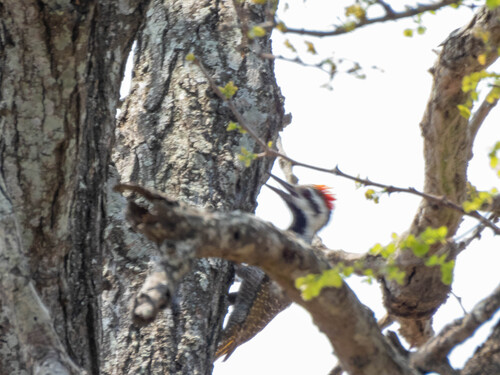
クロヒゲゲラ (Chloropicus namaquus) クロヒゲゲラ
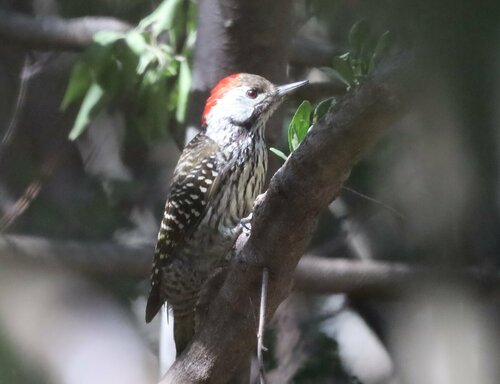
アフリカコゲラ (Dendropicos fuscescens) アフリカコゲラ

メディア

読み込み中…

要点

最も信頼できるフィールドマークはサイズです:クロヒゲゲラはアフリカコゲラのほぼ2倍の長さで、ずっしりとした体格に見え、大きなくちばしと重い縞模様の羽毛を持っています。幼鳥のクロヒゲゲラは緑がかった色合いと上部のぼんやりとした縞模様を示すことがありますが、幼鳥のアフリカコゲラはずっと小さく、この色合いはありません。すべての年齢において、クロヒゲゲラは広い黒いアイストライプと口ひげを持つ大胆な白黒の頭を持ち、アフリカコゲラはより控えめなオリーブブラウンの冠とあまり劇的でない顔の模様を持っています。鳥が止まっているのを見たら、頭の模様と全体のサイズに注目してください;飛んでいるときは、クロヒゲゲラの大きな体格と遅く、より力強い飛行も手がかりです。

識別のコツ

  1. サイズが最も即座の手がかりです: クロヒゲゲラはアフリカコゲラのほぼ2倍の長さで、ずっしりとした体格です。特に馴染みのある種や枝のサイズと比較して、鳥が大きくて頑丈に見える場合は、クロヒゲゲラの方に傾いてください。
  2. くちばしの構造: クロヒゲゲラは大きくて重い灰色がかった黒いくちばしを持っています;アフリカコゲラのくちばしはずっと細く、相対的に短いです。これは特に鳥が横から見たときや叩いているときに目立ちます。
  3. 頭の模様(成鳥): クロヒゲゲラは広い黒いアイストライプ、黒い口ひげ、白い眉、顔、あご、喉を持つ印象的な白黒の頭を示します。アフリカコゲラの頭は対照が少なく、オリーブブラウンの前冠、白い顔と喉、単一の黒い頬のストライプがあります。
  4. 赤い冠/後頭部(性別/年齢): 成熟したオスのクロヒゲゲラは赤い後冠を持っています;メスは赤がありません。幼鳥のクロヒゲゲラ(両性)は冠と後頭部にいくらかの赤を示します。アフリカコゲラのオスは赤い後冠と後頭部を持ち(幼鳥のオス:赤い後冠、黒い後頭部);メスは暗い後冠と黒い後頭部を持っています。両方とも赤を示すことがありますが、文脈と頭の模様は異なります。
  5. 上面と縞模様: クロヒゲゲラの上面は黄褐色で狭い白い縞模様があります;尾は茶色で、白い縞模様があり、黄褐色のシャフトがあります。アフリカコゲラの背中は鈍いオリーブ色で淡い点と帯があり、尾はあまり大胆に縞模様がありません。
  6. 下面: クロヒゲゲラは狭い白い縞模様のある灰色の下面を持っています;アフリカコゲラは白く、黒いストライプが強く入っています。
  7. 幼鳥のマーク: 幼鳥のクロヒゲゲラは上部に緑がかった色合いとぼんやりとした縞模様を持ち、冠/後頭部にいくらかの赤があります。アフリカコゲラの幼鳥は緑がかった色合いがなく、ずっと小さいです。
  8. 顔の対照: クロヒゲゲラの顔の模様は大胆で鮮明です;アフリカコゲラの顔は柔らかく、単一の黒い頬のストライプと対照が少ないです。
  9. 止まり方: クロヒゲゲラは大きな幹や高い枝にしばしば見られ、時にはペアでいます。アフリカコゲラは低い木のレベル、低木、または葦にいる可能性が高く、混合群れに加わることがあります。
  10. ドラム音: 大きく力強いドラム音が4回のタップで終わるのがクロヒゲゲラの典型です;柔らかく迅速なドラム音はアフリカコゲラの方が多いです。
  11. 鳴き声: 高音の「krrrek-krrrek-krrrek」という呼び声はアフリカコゲラの診断的な特徴です。クロヒゲゲラはあまり鳴かず、ペアで採餌しているときに呼び声でコミュニケーションを取ることがあります。
  12. 飛行スタイル: クロヒゲゲラの飛行はサイズのために遅くて重い可能性が高いですが、アフリカコゲラは迅速で敏捷です。
  13. 生息地の文脈: 厚い茂みや低い植生ではアフリカコゲラの方が可能性が高いですが、成熟した森林や高い標高ではクロヒゲゲラが好まれます。
  14. 目の色: クロヒゲゲラは赤い目を持ち、近距離で見ることができます;アフリカコゲラの目の色は指定されていませんが、重要なマークではありません。
  15. 迷ったときは: サイズを判断できない場合は、頭の模様とくちばしの構造に注目してください。呼び声が聞こえたら、鳴き声を二次的な手がかりとして使用してください。

大きさ

クロヒゲゲラはアフリカの最大のキツツキの一つで、約25 cm(10インチ)の長さに達し、大きくて重いくちばしと頑丈な体を持っています。アフリカコゲラはずっと小さく、長さはわずか14〜15 cm(5.5〜5.9インチ)で、相対的に小さく、細いくちばしとより繊細な体格を持っています。距離があったり、光が悪い場合でも、サイズと体格の違いは通常、スケール感(例えば、枝の太さや近くの鳥と比較して)を持っていれば明らかです。

羽色

行動

クロヒゲゲラはしばしばペアで採餌し、大きな幹や枝で叩いたり、探ったり、食べたりする長い時間を過ごし、広く離れた木の間を頻繁に移動します。大きな音でドラムを叩き、4回のタップで終わります。アフリカコゲラは小さな家族グループや混合群れで見られる可能性が高く、低い木のレベル、低木、またはトウモロコシの茎や葦の上で採餌し、より活発で敏捷で、小さな小枝からぶら下がることがよくあります。ドラム音は柔らかく、急速に叩き、密な植生の中を素早く移動します。

生息環境

両種はサハラ以南のアフリカで広い範囲を持ち、広く重なっていますが、クロヒゲゲラは大きな木のある森林、ブラキステギアの森林、アカシアの森林、ギャラリーフォレストの端、そして低木地を好み、しばしば高い標高(最大3,000 m)に生息します。アフリカコゲラは生息地の一般主義者で、密な森林からトゲのある低木まで見られ、しばしば乱れたまたは開けた生息地、低い木のレベルや葦の中でより一般的です。厚い茂みや低木の中でキツツキを見た場合、アフリカコゲラの方が可能性が高いです;成熟した森林の高い大きな幹にいる場合は、クロヒゲゲラを考慮してください。

声

クロヒゲゲラは枝の上で大きな音でドラムを叩くことで知られ、4回のタップで終わりますが、特定の呼び声は記載されていません。アフリカコゲラはかなり鳴き声があり、高音の「krrrek-krrrek-krrrek」という呼び声と柔らかいドラム音を持っています。高音で繰り返される呼び声が聞こえた場合、それはアフリカコゲラを指している可能性が高いです;大きく力強いドラム音で特有の終わりがあるのはクロヒゲゲラの方が典型的です。

より良い説明を送る

比較と同じ項目を使ってください。文章はすぐに公開されます。

The most reliable field mark is size: Bearded Woodpecker is nearly twice as long as Cardinal Woodpecker and appears much bulkier, with a massive bill and heavy, barred plumage. Juvenile Bearded Woodpecker can show a greenish tinge and diffuse barring above, while juvenile Cardinal Woodpecker is much smaller and lacks this coloration. In all ages, Bearded Woodpecker has a bold black-and-white head with a broad black eye-stripe and moustache, while Cardinal Woodpecker has a more muted olive-brown crown and less dramatic facial pattern. If you see the bird perched, focus on the head pattern and overall size; in flight, Bearded Woodpecker’s larger build and slower, more forceful flight are also clues.

  1. Size is the most immediate clue: Bearded Woodpecker is nearly twice as long and much bulkier than Cardinal. If the bird looks large and robust, especially compared to familiar species or branch size, lean toward Bearded.
  2. Bill structure: Bearded has a large, heavy, greyish-black bill; Cardinal’s bill is much finer and proportionally shorter. This is especially visible when the bird is side-on or hammering.
  3. Head pattern (adults): Bearded shows a striking black-and-white head with a broad black eye-stripe, black moustache, and white supercilium, face, chin, and throat. Cardinal’s head is less contrasting, with an olive-brown fore crown, white face and throat, and a single black malar stripe.
  4. Red crown/nape (sex/age): Adult male Bearded has a red hind crown; female lacks red. Juvenile Bearded (both sexes) show some red on crown and nape. Cardinal male has a red hind crown and nape (juvenile male: red hind crown, black nape); female has a dark hind crown and black nape. Both can show red, but the context and head pattern differ.
  5. Upperparts and barring: Bearded’s upperparts are yellowish-brown with narrow white barring; tail brown, barred white, with yellowish shafts. Cardinal’s back is dull olive with pale dots and bands, rump tawny, tail less boldly barred.
  6. Underparts: Bearded has grey underparts with narrow white barring; Cardinal is white below, heavily streaked with black.
  7. Juvenile marks: Juvenile Bearded has a greenish tinge and diffuse barring above, with some red on the crown/nape. Cardinal juveniles lack the greenish tinge and are much smaller.
  8. Facial contrast: Bearded’s facial pattern is bold and crisp; Cardinal’s is softer, with a single black malar stripe and less contrast.
  9. Perching behavior: Bearded is often seen on large trunks or high branches, sometimes in pairs. Cardinal is more likely in lower tree levels, shrubs, or reeds, and may join mixed flocks.
  10. Drumming: Loud, forceful drumming ending with four taps is typical of Bearded; soft, rapid drumming is more Cardinal.
  11. Vocalization: High-pitched 'krrrek-krrrek-krrrek' calls are diagnostic of Cardinal. Bearded is less vocal but may communicate with calls while foraging in pairs.
  12. Flight style: Bearded’s flight is likely slower and heavier due to size, while Cardinal is quick and agile.
  13. Habitat context: In thick bush or low vegetation, Cardinal is more likely; in mature woodland or at higher elevations, Bearded is favored.
  14. Eye color: Bearded has red eyes, which may be visible at close range; Cardinal’s eye color is not specified but is not a key mark.
  15. When in doubt: If you cannot judge size, focus on head pattern and bill structure. If you hear a call, use vocalization as a secondary clue.

Bearded Woodpecker is one of Africa’s largest woodpeckers, reaching about 25 cm (10 in) in length, with a large, heavy bill and robust frame. Cardinal Woodpecker is much smaller, only 14–15 cm (5.5–5.9 in) long, with a proportionally smaller, finer bill and a more delicate build. Even at a distance or in poor light, the difference in size and bulk is usually apparent if you have a sense of scale (e.g., compared to branch thickness or nearby birds).

  • Juveniles: Juvenile Bearded Woodpecker resembles the adult but has a greenish tinge to the upperparts and more diffuse barring; both sexes show some red on the crown and nape. Juvenile Cardinal Woodpecker is similar to the adult but smaller, with a red hind crown and black nape in males, and lacks the greenish tinge or heavy barring of Bearded.
  • Adults (all seasons): Bearded Woodpecker has a striking black-and-white head: black moustache, broad black eye-stripe, black crown (red hind crown in male), and crisp white supercilium, face, chin, and throat. The upperparts are yellowish-brown with narrow white barring, and the underparts are grey with narrow white barring. Cardinal Woodpecker is much duller: olive-brown fore crown, white face and throat separated by a black malar stripe, dull olive back with pale dots and bands, white underparts heavily streaked with black, and a tawny rump. The male Cardinal has a red hind crown and nape, but the rest of the head is less boldly patterned than Bearded. Both species have some barring above and below, but Bearded’s barring is broader and more extensive.
  • In flight: No distinctive upperwing pattern is described for either species, but Bearded’s larger size and heavier barring may be apparent, while Cardinal appears smaller and more lightly marked.

Bearded Woodpecker often forages in pairs, spending long periods hammering, probing, and gleaning on large trunks or branches, and frequently moves between widely spaced trees. It drums loudly, ending with four taps. Cardinal Woodpecker is more likely to be seen in small family groups or mixed flocks, foraging in lower tree levels, shrubs, or even on maize stalks and reeds, and is more active and agile, often hanging from small twigs. Its drumming is softer and it pecks rapidly, moving quickly through dense vegetation.

Both species have wide ranges in sub-Saharan Africa and overlap broadly, but Bearded Woodpecker prefers woodland with sizeable trees, Brachystegia woodland, Acacia woodland, gallery forest edges, and brushland, often at higher elevations (up to 3,000 m). Cardinal Woodpecker is more of a habitat generalist, found from dense forest to thorn bush, and is often more common in disturbed or open habitats, including lower tree levels and even reeds. If you see a woodpecker in thick bush or low in a shrub, Cardinal is more likely; if it’s on a large trunk high in a mature woodland, consider Bearded.

Bearded Woodpecker is known for loud drumming on branches, ending with four taps, but no specific call is described. Cardinal Woodpecker is fairly vocal, with a high-pitched 'krrrek-krrrek-krrrek' call and soft drumming. If you hear a high-pitched, repeated call, it likely points to Cardinal; loud, forceful drumming with a distinctive ending is more typical of Bearded.

変更を破棄しますか?

保存していない編集があります。今離れると失われます。

クロヒゲゲラ · アフリカコゲラ · 苦手な鳥