

fuselo vs maçarico-marmóreo
Limosa lapponica versus Limosa fedoa
Jogue um quiz com fuselo e maçarico-marmóreo
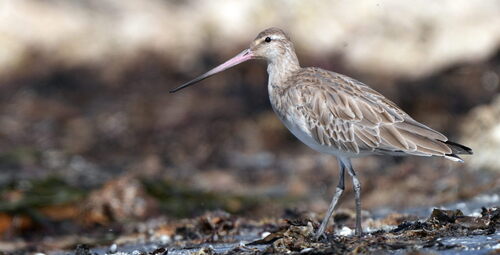 fuselo
 maçarico-marmóreo
Em resumo
A marca de campo mais confiável entre o fuselo e o maçarico-marmóreo é o padrão da asa inferior e da asa em voo: o maçarico-marmóreo apresenta coberturas de asa inferior em canela rica e uma asa superior uniforme, enquanto o fuselo não possui essa cor e, em vez disso, aparece mais simples ou mais riscado acima, especialmente em juvenis e aves não reprodutoras. O fuselo também tem um bico ligeiramente curvado, bicolor e pernas mais curtas, enquanto o maçarico-marmóreo é mais robusto, com um bico muito longo, ligeiramente curvado e com base rosa. Os fuselos em reprodução são vermelhos tijolo na parte inferior, mas aves não reprodutoras e juvenis podem ser confusamente semelhantes ao maçarico-marmóreo, então a estrutura e as vistas de voo são fundamentais. Ambos são grandes aves limícolas de pernas longas, mas o maçarico é o maior godwit e tende a parecer ter um pescoço mais longo e ser mais pesado no geral.
Dicas de identificação
- Verifique a asa inferior em voo: O maçarico-marmóreo apresenta coberturas de asa inferior em canela rica, visíveis em voo ou ao se esticar; o fuselo não possui essa cor e aparece mais claro ou simples por baixo. Esta é a marca mais confiável para todas as idades.
- Procure por vermelho tijolo na parte inferior (apenas reprodução): Os machos de fuselo em plumagem de reprodução são vermelhos tijolo no pescoço, peito e barriga; as fêmeas são mais opacas, mas ainda avermelhadas. O maçarico-marmóreo nunca apresenta esse vermelho, permanecendo marrom pálido com listras. Esta marca é útil apenas na primavera/verão em áreas de reprodução ou durante a migração.
- Estrutura e cor do bico: Ambos têm bicos longos e ligeiramente curvados, mas o do maçarico é mais longo e robusto, com uma base rosa e ponta escura. O bico do fuselo também é de base rosa, mas em média é mais curto e mais afilado. A cor do bico nem sempre é óbvia à distância, mas o comprimento e a robustez podem ser comparados em vistas diretas.
- Comprimento das pernas e postura: O maçarico-marmóreo tem pernas mais longas e se posiciona mais alto, com uma aparência mais pesada e robusta. O fuselo é relativamente de pernas curtas para um godwit e parece mais compacto.
- Padrão da asa superior (juvenis e não reprodutores): Os fuselos juvenis e não reprodutores são cinza-marrons simples acima, com listras sutis, enquanto os maçaricos-marmóreos são mais manchados e têm um tom de marrom mais quente. Em voo, nenhum deles apresenta uma faixa de asa ousada, mas a asa superior uniforme do maçarico e a asa inferior em canela se destacam.
- Listras e riscos na parte inferior: O maçarico-marmóreo apresenta listras escuras no peito e flancos, enquanto o fuselo (fora da reprodução) é mais claro na parte inferior, com riscos ou buff nos flancos e peito, especialmente em juvenis.
- Padrão da cauda: Não é diagnóstico entre esses dois; nenhum deles apresenta a cauda branca ousada do milherango.
- Comprimento do pescoço: O maçarico-marmóreo tem um pescoço mais longo, contribuindo para sua postura esguia e ereta. O fuselo parece ter um pescoço mais curto e mais compacto.
- Contexto de habitat: Na América do Norte, o maçarico-marmóreo é muito mais provável de ser encontrado em áreas interiores ou em wetlands de pradaria, enquanto o fuselo é um visitante raro, exceto na costa do Pacífico. Na Eurásia/Australásia, o fuselo é o godwit padrão em mudflats costeiros.
- Contexto sazonal: A plumagem de reprodução (vermelho na parte inferior) é vista apenas no fuselo e apenas na época certa. A maior confusão ocorre em plumagens não reprodutoras ou juvenis.
- Composição do grupo: Bandos de maçarico-marmóreo podem ser mais uniformes em tamanho e cor, enquanto bandos de fuselo podem mostrar mais variação devido ao dimorfismo sexual e idade.
- Comportamento alimentar: Ambos investigam o lodo, mas o maçarico pode também pegar insetos na grama; isso é sutil e não é uma marca de campo primária.
- Estilo de voo: Os voos cerimoniais do fuselo são mais ordenados e menos erráticos do que os do milherango, mas não são distintivos em comparação com o maçarico-marmóreo.
- Voz: Não é diagnóstico entre esses dois com base nas notas disponíveis.
- Armadilhas: Os fuselos não reprodutores e juvenis podem ser muito semelhantes ao maçarico-marmóreo, especialmente à distância. Sempre tente obter uma vista de voo para verificar a cor da asa inferior e use várias marcas juntas para melhor precisão.
Tamanho
O maçarico-marmóreo é, em média, o maior dos godwits, com um comprimento total de 40–50 cm e uma envergadura de 70–88 cm, em comparação com o comprimento de 37–41 cm e a envergadura de 70–80 cm do fuselo. A massa corporal média do fuselo é de cerca de 333,5 g ([wikidata]), enquanto os machos de maçarico-marmóreo têm uma média de 326 g e as fêmeas 391 g ([wikipedia]), então há sobreposição, mas o maçarico tende a ser mais pesado, especialmente entre as fêmeas. O maçarico-marmóreo também tem um bico notavelmente mais longo (até 13 cm) e parece mais robusto e de pernas longas em comparação direta.
Plumagem
- Juvenis e aves não reprodutoras: Os juvenis e adultos não reprodutores de fuselo são cinza-marrons simples acima, com centros de penas mais escuros, dando uma aparência sutilmente listrada, e são esbranquiçados abaixo com algumas manchas e riscos nos flancos e peito. O maçarico-marmóreo, em contraste, é marrom pálido abaixo com listras escuras no peito e flancos, e tem um dorso manchado escuro. Em voo, o maçarico-marmóreo apresenta coberturas de asa inferior em canela rica, uma diferença chave em relação ao fuselo, que não possui essa cor e aparece mais simples por baixo.
- Plumagem de reprodução: O fuselo em plumagem de reprodução é vermelho tijolo no pescoço, peito e barriga (machos), com fêmeas mais opacas e mais canela. O maçarico-marmóreo não apresenta esse vermelho; em vez disso, permanece marrom pálido com listras escuras.
- Padrão da asa em voo: O maçarico-marmóreo apresenta asas inferiores em canela rica e asas superiores uniformes, enquanto o fuselo não possui isso e pode mostrar mais riscos ou uma aparência mais simples, especialmente em imaturos. Nenhuma das espécies apresenta a faixa de asa branca ousada do milherango, mas a cor da asa inferior é um separador forte.
- Cor do bico: Ambos têm bicos longos e ligeiramente curvados, mas o do fuselo é rosa na base e preto na ponta, enquanto o do maçarico é mais longo, de base rosa e ligeiramente curvado com uma ponta escura.
Comportamento
Ambas as espécies forrageiam investigando mudflats e pântanos com seus longos bicos, mas o maçarico-marmóreo pode também pegar insetos à vista na grama baixa. O fuselo é famoso por voos migratórios extremamente longos e ininterruptos, às vezes mais de 10.000 km, e é menos territorial, com voos cerimoniais que são mais ordenados e menos erráticos do que os do milherango. O maçarico-marmóreo não é notado por tal migração extrema nessas notas, mas ambas as espécies são altamente migratórias e frequentemente encontradas em bandos. O comportamento de descanso é semelhante, com as aves frequentemente em pé em uma perna e enfiando o bico no corpo.
Habitat
O fuselo se reproduz nas costas e tundras árticas da Escandinávia ao Alasca, hibernando nas costas temperadas e tropicais da Austrália e Nova Zelândia. O maçarico-marmóreo se reproduz no centro e oeste da América do Norte (incluindo Alasca e Canadá central) e hiberna no sul dos EUA até o noroeste da América do Sul. Ambos são encontrados em mudflats costeiros, estuários e praias durante a migração e inverno, mas o fuselo é mais estritamente costeiro fora da temporada de reprodução, enquanto o maçarico pode ser encontrado em wetlands costeiras e interiores.