

babbling starling vs burchell's starling
Neocichla gutturalis versus Lamprotornis australis
Jogue um quiz com babbling starling e burchell's starling
 babbling starling
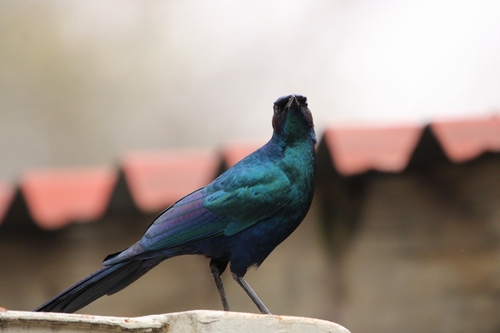 burchell's starling
Em resumo
A marca de campo mais confiável para separar o babbling starling do burchell's starling é o distinto peito amarelo do babbling com uma cunha preta no peito, combinado com sua cabeça off-white e uma clara faixa branca na asa visível na asa dobrada. O burchell's starling não possui essas características e, em vez disso, apresenta uma plumagem uniforme e brilhante. Ambas as espécies são semelhantes em estrutura geral, mas o babbling starling é ligeiramente menor e mais pálido, com uma cabeça e partes inferiores mais contrastantes. Se você ver um estorninho com uma cabeça pálida e uma forte faixa branca na asa, é o babbling; se for todo escuro e brilhante, é o burchell's.
Dicas de identificação
- Peito amarelo com cunha preta (apenas babbling): Procure um peito amarelo brilhante com uma marca em forma de cunha preta no centro. O burchell's nunca mostra isso. Funciona para todas as idades e sexos.
- Cabeça off-white (apenas babbling): O babbling starling tem uma cabeça off-white notavelmente pálida que contrasta com o resto do corpo. O burchell's é uniformemente escuro e brilhante.
- Faixa branca na asa (apenas babbling): Em aves empoleiradas ou com as asas dobradas, o babbling mostra uma faixa branca na asa. Isso está ausente no burchell's, que tem asas sem marcas.
- Olho amarelo brilhante (babbling): O babbling starling tem uma íris amarela marcante, enquanto a cor do olho do burchell's não é especificada, mas não é notada como diagnóstica.
- Plumagem brilhante e uniforme (apenas burchell's): Se a ave for de um azul-esverdeado ou roxo brilhante, sem forte contraste de cor entre a cabeça, peito e asas, é o burchell's.
- Sem cabeça pálida ou peito amarelo (burchell's): A ausência de tons pálidos ou amarelos na cabeça ou peito aponta para o burchell's.
- Tamanho e estrutura: O babbling é menor e mais leve (17 cm, 64–72 g) que o burchell's (80 g), mas isso é sutil e melhor usado como evidência de apoio.
- Cor da cauda: O babbling tem uma cauda marrom escura; a cauda do burchell's não é descrita como contrastante, então procure uma cauda uniforme e brilhante no burchell's.
- Voz: Se você ouvir um chamado arrastado, estridente ou áspero, suspeite do babbling starling. A falta de descrição vocal para o burchell's significa que o silêncio não é diagnóstico.
- Distribuição: Se você estiver nas florestas secas do sul da África, é mais provável que seja o burchell's; em Angola, Malawi, Tanzânia ou Zâmbia, verifique o babbling.
- Habitat: Ambas ocorrem em florestas abertas e savanas, então o habitat sozinho não é confiável onde as distribuições se sobrepõem.
- Sexos semelhantes: Ambas as espécies mostram pouco ou nenhum dimorfismo sexual, então não confie nas diferenças de sexo.
- Sem marcas de voo específicas de idade conhecidas: Nenhuma das espécies é relatada como mostrando padrões distintivos de asas superiores juvenis ou imaturas, então concentre-se no padrão do corpo e da cabeça.
- Sem mudança sazonal: Ambas as espécies mantêm suas principais marcas de campo durante todo o ano, então essas dicas se aplicam em todas as estações.
- Armadilha: Em luz fraca, a cabeça pálida e o peito amarelo do babbling podem parecer desbotados; sempre verifique a faixa branca na asa e a cunha preta no peito para confirmar.
Tamanho
O babbling starling é um pouco menor e mais leve (17 cm, 64–72 g [wikipedia]) que o burchell's starling (80 g [wikidata]). Essa diferença pode ser sutil no campo, mas o babbling starling pode parecer mais delicado e menos volumoso, especialmente quando empoleirado. Ambos são estorninhos de tamanho médio, mas o burchell's é o mais pesado e robusto dos dois.
Plumagem
O babbling starling de todas as idades mostra uma combinação distinta de um peito amarelo com uma cunha preta no centro, uma cabeça off-white e uma coroa marrom clara que desbota em asas marrom cinza-escuras. A asa dobrada tem uma clara faixa branca, e a cauda é marrom escura. O olho é amarelo brilhante. Os sexos são semelhantes. Em contraste, o burchell's starling é uniforme e brilhante, sem cabeça pálida, peito amarelo ou faixa branca na asa. Sua plumagem é um azul-esverdeado ou roxo iridescente uniforme, sem forte contraste de cor entre a cabeça, peito e asas. Nenhuma diferença de plumagem específica de idade ou sazonal é notada para nenhuma das espécies nas fontes, então essas marcas se aplicam durante todo o ano.
Comportamento
Nenhuma diferença comportamental diagnóstica é notada nas fontes. Ambas as espécies são estorninhos típicos em postura e movimento.
Habitat
O babbling starling é encontrado em Angola, Malawi, Tanzânia e Zâmbia [wikipedia], enquanto o burchell's starling é nativo das florestas secas e mesófilas e savanas do sul da África [wikipedia]. Se você estiver fora da faixa de sobreposição, isso pode ajudar, mas ambos podem ocorrer em habitats semelhantes de florestas abertas e savanas onde suas distribuições se encontram.
Voz
O babbling starling é descrito como emitindo chamados arrastados, estridentes ou ásperos [wikipedia]. Nenhuma descrição vocal é fornecida para o burchell's starling nas fontes, então a voz só é útil se você ouvir os distintos chamados ásperos do babbling.
babbling starling · burchell's starling · Minhas aves difíceis