

Witvleugelspreeuw vs Grote glansspreeuw
Neocichla gutturalis versus Lamprotornis australis
Speel een quiz met Witvleugelspreeuw en Grote glansspreeuw
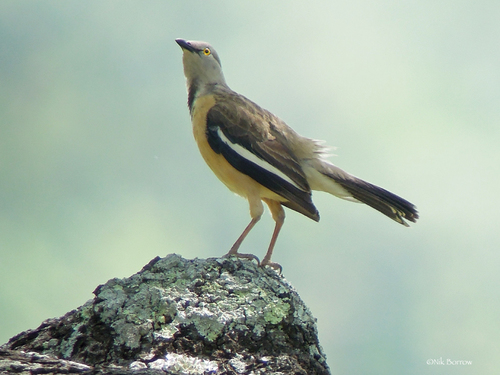 Witvleugelspreeuw
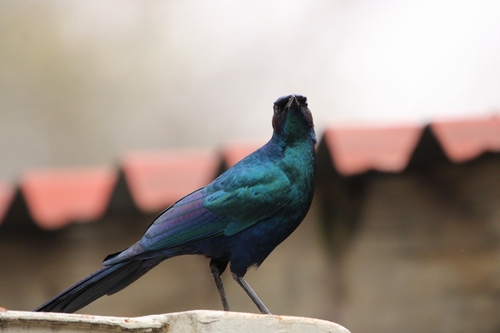 Grote glansspreeuw
Kort gezegd
Het meest betrouwbare veldkenmerk om de Witvleugelspreeuw van de Grote glansspreeuw te scheiden, is de kenmerkende gele borst van de Witvleugelspreeuw met een zwarte wig op de borst, gecombineerd met zijn off-white hoofd en een duidelijke witte vleugelband die zichtbaar is op de gevouwen vleugel. De Grote glansspreeuw mist deze kenmerken en vertoont in plaats daarvan een uniforme glanzende verenkleed. Beide soorten zijn vergelijkbaar in algehele structuur, maar de Witvleugelspreeuw is iets kleiner en lichter, met een meer contrasterend hoofd en onderlichaam. Als je een spreeuw ziet met een licht hoofd en een sterke witte vleugelband, is het de Witvleugelspreeuw; als het helemaal donker en glanzend is, is het de Grote glansspreeuw.
Herkenningstips
- Gele borst met zwarte wig (alleen Witvleugelspreeuw): Zoek naar een heldergele borst met een zwarte wigvormige markering in het midden. De Grote glansspreeuw toont dit nooit. Geldt voor alle leeftijden en geslachten.
- Off-white hoofd (alleen Witvleugelspreeuw): De Witvleugelspreeuw heeft een merkbaar bleek, off-white hoofd dat contrasteert met de rest van het lichaam. De Grote glansspreeuw is uniform donker en glanzend.
- Witte vleugelband (alleen Witvleugelspreeuw): Bij gezeten of gevouwen-vleugel vogels toont de Witvleugelspreeuw een witte band over de vleugel. Dit ontbreekt bij de Grote glansspreeuw, die ongemarkeerde vleugels heeft.
- Heldere gele iris (Witvleugelspreeuw): De Witvleugelspreeuw heeft een opvallende gele iris, terwijl de oogkleur van de Grote glansspreeuw niet gespecificeerd is maar niet als diagnostisch wordt genoteerd.
- Glanzend, uniform verenkleed (alleen Grote glansspreeuw): Als de vogel overal glanzend blauw-groen of paars is zonder sterke kleurcontrasten tussen hoofd, borst en vleugels, is het de Grote glansspreeuw.
- Geen licht hoofd of gele borst (Grote glansspreeuw): Afwezigheid van lichte of gele tinten op het hoofd of de borst wijst op de Grote glansspreeuw.
- Grootte en bouw: De Witvleugelspreeuw is kleiner en lichter (17 cm, 64–72 g) dan de Grote glansspreeuw (80 g), maar dit is subtiel en het beste als ondersteunend bewijs te gebruiken.
- Staartkleur: De Witvleugelspreeuw heeft een donkerbruine staart; de staart van de Grote glansspreeuw wordt niet als contrasterend beschreven, dus zoek naar een uniforme glanzende staart bij de Grote glansspreeuw.
- Stem: Als je een slappe, piepende of schorre berispende roep hoort, vermoed dan de Witvleugelspreeuw. Het ontbreken van een vocale beschrijving voor de Grote glansspreeuw betekent dat stilte niet diagnostisch is.
- Verspreiding: Als je in de droge bossen van Zuid-Afrika bent, is de Grote glansspreeuw waarschijnlijker; in Angola, Malawi, Tanzania of Zambia, kijk dan naar de Witvleugelspreeuw.
- Habitat: Beide komen voor in open bossen en savannes, dus alleen het habitat is niet betrouwbaar waar de verspreidingsgebieden overlappen.
- Geslachten gelijk: Beide soorten vertonen weinig of geen seksuele dimorfie, dus vertrouw niet op geslachtsverschillen.
- Geen bekende leeftijdspecifieke vluchtkenmerken: Geen van beide soorten vertoont rapporten van onderscheidende juvenile of onvolwassen bovenvleugelpatronen, dus focus op het lichaam en het hoofdpatroon.
- Geen seizoensverandering: Beide soorten behouden hun belangrijkste veldkenmerken het hele jaar door, dus deze tips zijn in alle seizoenen van toepassing.
- Valstrik: In slecht licht kan het lichte hoofd en de gele borst van de Witvleugelspreeuw er vervaagd uitzien; controleer altijd de witte vleugelband en de zwarte borstwig om te bevestigen.
Grootte
De Witvleugelspreeuw is iets kleiner en lichter (17 cm, 64–72 g [wikipedia]) dan de Grote glansspreeuw (80 g [wikidata]). Dit verschil kan subtiel zijn in het veld, maar de Witvleugelspreeuw kan er delicater en minder massief uitzien, vooral wanneer hij zit. Beide zijn middelgrote spreeuwen, maar de Grote glansspreeuw is de zwaardere en robuustere van de twee.
Verenkleed
De Witvleugelspreeuw van alle leeftijden toont een kenmerkende combinatie van een gele borst met een zwarte wig in het midden, een off-white hoofd en een lichtbruine kroon die vervaagt in donker grijsbruin vleugels. De gevouwen vleugel heeft een duidelijke witte band, en de staart is donkerbruin. Het oog is helder geel. Geslachten zijn gelijk. In tegenstelling tot de Witvleugelspreeuw is de Grote glansspreeuw uniform en glanzend, zonder een licht hoofd, gele borst of witte vleugelband. Zijn verenkleed is een gelijkmatige iriserende blauw-groen of paars, zonder sterke kleurcontrasten tussen hoofd, borst en vleugels. Er zijn geen leeftijdspecifieke of seizoensgebonden verenkleedverschillen genoteerd voor beide soorten in de bronnen, dus deze kenmerken zijn het hele jaar van toepassing.
Gedrag
Er zijn geen diagnostische gedragsverschillen genoteerd in de bronnen. Beide soorten zijn typische spreeuwen in houding en beweging.
Habitat
De Witvleugelspreeuw komt voor in Angola, Malawi, Tanzania en Zambia [wikipedia], terwijl de Grote glansspreeuw inheems is in droge en mesische bossen en savannes van Zuid-Afrika [wikipedia]. Als je buiten het overlappende gebied bent, kan dit helpen, maar beide kunnen voorkomen in vergelijkbare open bossen en savannehabitats waar hun verspreidingsgebieden elkaar ontmoeten.
Geluid
De Witvleugelspreeuw wordt beschreven als het geven van slappe, piepende of schorre berispende roepen [wikipedia]. Er is geen vocale beschrijving gegeven voor de Grote glansspreeuw in de bronnen, dus de stem is alleen nuttig als je de kenmerkende harde roepen van de Witvleugelspreeuw hoort.
Witvleugelspreeuw · Grote glansspreeuw · Mijn lastige vogels