

ayres's hawk-eagle vs águia-preta
Hieraaetus ayresii versus Aquila verreauxii
Jogue um quiz com ayres's hawk-eagle e águia-preta
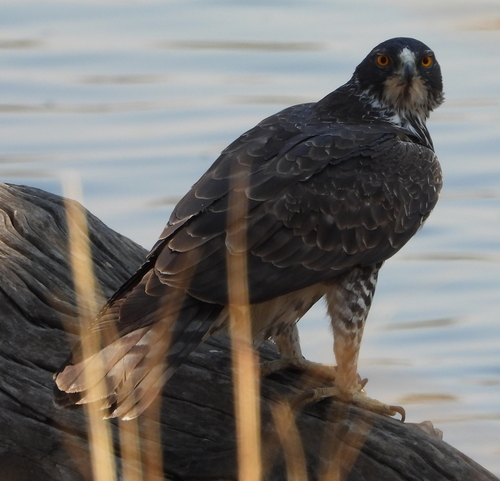 ayres's hawk-eagle
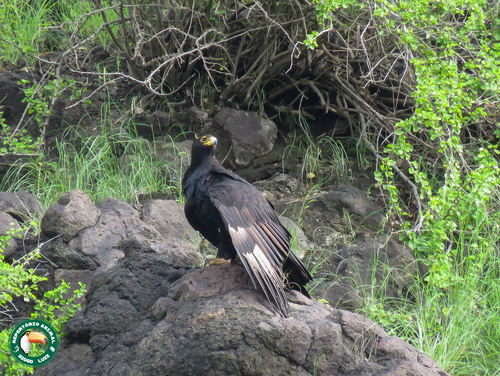 águia-preta
Em resumo
A marca de campo mais confiável entre ayres's hawk-eagle e águia-preta é o tamanho e a estrutura geral: a águia-preta é uma águia maciça e de corpo pesado, enquanto a ayres's é muito menor e mais leve. Em voo, as águias-preta juvenis mostram extensas manchas brancas na asa inferior e uma nuca dourada contrastante, enquanto os juvenis da ayres's não possuem essas características e são mais uniformemente escuros acima, com marcas mais esparsas abaixo. As águias-preta adultas são quase inteiramente pretas com branco ousado na região do rabo e nas costas, enquanto os adultos da ayres's são escuros acima, mas fortemente manchados e listrados abaixo, com um supercílios e testa brancos. Mesmo à distância, a massa e as asas em forma de pá da águia-preta se destacam em relação à ayres's hawk-eagle, que é mais compacta e semelhante a um gavião.
Dicas de identificação
- O tamanho é a primeira verificação: Se a ave é realmente maciça, com envergadura e massa comparáveis às maiores águias, é a águia-preta. A ayres's é muito menor, do tamanho de um gavião. Use aves próximas ou características da paisagem para escala.
- Forma de voo: A águia-preta planam com asas em um dihedral forte (forma de V), asas largas e em forma de pá, e primárias levantadas. A ayres's tem um perfil de asa mais plano, semelhante ao de um gavião, e parece mais leve e ágil.
- Padrão da asa inferior juvenil: As águias-preta juvenis mostram extensas manchas brancas na asa inferior e uma nuca dourada—única na região. Os juvenis da ayres's têm asas inferiores escuras e fortemente listradas, sem grandes manchas brancas, e não possuem a nuca dourada.
- Plumagem adulta: A águia-preta é quase inteiramente preta com um V branco ousado nas costas e na região do rabo, e branco na base das primárias. A adulta da ayres's é escura acima, mas com manchas brancas, um supercílios branco e partes inferiores brancas fortemente manchadas.
- Padrão da cabeça: A ayres's hawk-eagle tem uma testa e supercílios brancos, frequentemente visíveis mesmo à distância. A águia-preta não possui isso, sendo uniformemente escura na cabeça como adulta.
- Cresta: A ayres's às vezes mostra uma pequena cresta pontuda quando empoleirada ou alerta; a águia-preta não.
- Penas nas pernas: Ambas as espécies têm pernas plumosas, mas a ayres's tem pernas totalmente brancas e bem plumosas, frequentemente visíveis em boas vistas. As pernas da águia-preta são cremosas a amareladas em imaturos, menos contrastantes em adultos.
- Padrão da cauda: A ayres's tem uma cauda cinza-acinzentada com uma ponta preta larga e listras escuras estreitas; a cauda da águia-preta é mais escura e menos distintamente listrada, frequentemente parecendo escura em adultos.
- Jizz empoleirado: A águia-preta empoleirada parece enorme, com peito profundo e asas longas, frequentemente ofuscando outras aves de rapina. A ayres's é mais esbelta e ereta, com uma cauda e asas proporcionalmente mais curtas.
- Contexto do habitat: Se vista sobre colinas rochosas ou penhascos, especialmente perto de colônias de hienas, é provável que seja a águia-preta. Sobre florestas ou bordas de florestas, a ayres's é mais provável.
- Dimorfismo sexual: Apenas a ayres's mostra diferenças marcadas de tamanho e manchas entre os sexos; os sexos da águia-preta são semelhantes em plumagem.
- Ayres's melanística: A rara morfologia escura da ayres's pode parecer muito escura, mas ainda carece do tamanho maciço e da região branca do rabo da águia-preta.
- Confusão de imaturos: Os imaturos da águia-preta podem ser marrons, mas ainda mostram nuca dourada e extensa brancura na asa inferior; os imaturos da ayres's são mais marrons com menos contraste e carecem dessas características.
- Coberturas das asas em voo: A águia-preta tem branco na base das primárias e nas costas; a ayres's não possui isso, com asas superiores mais uniformemente escuras.
- Bico e pés: A águia-preta tem um bico e pés maciços apropriados para presas grandes; o bico e os pés da ayres's são muito menores e mais delicados.
Tamanho
A águia-preta é dramaticamente maior, com uma média de mais de 4 kg de massa corporal, em comparação com a ayres's hawk-eagle, que pesa menos de 1 kg [wikidata]. A águia-preta é uma das maiores aves de rapina da África, com uma envergadura e comprimento comparáveis à águia-real, e parece enorme e poderosa tanto empoleirada quanto em voo. A ayres's hawk-eagle é apenas do tamanho de um grande gavião ou pequena águia, com uma estrutura muito mais leve e asas e cauda mais curtas. Essa diferença de tamanho é óbvia em qualquer comparação direta ou quando vista perto de outras grandes aves de rapina.
Plumagem
-
Juvenil/imaturo: As águias-preta juvenis são marrons escuros com uma coroa dourada e nuca ruiva, além de extensas manchas brancas na asa inferior em voo—uma marca de campo chave. Suas partes inferiores são marrons com manchas ruivas a cremosas, e as coberturas da asa superior mostram listras brancas. Os juvenis da ayres's hawk-eagle são marrons escuros acima, com um pescoço mais claro, e em grande parte brancos abaixo com marcas escuras esparsas. Eles carecem da nuca dourada e da extensa brancura na asa inferior da águia-preta, e suas asas inferiores são mais uniformemente listradas e escuras, sem um painel ou janela clara.
-
Adulto: As águias-preta adultas são strikingly pretas com um V branco ousado nas costas e na região do rabo, e manchas brancas na base das primárias visíveis em voo. Os adultos da ayres's são escuros acima com manchas brancas, uma testa e supercílios brancos, e partes inferiores brancas fortemente manchadas. A asa inferior da ayres's é escura e fortemente listrada, carecendo das manchas brancas da águia-preta. A ayres's também tem uma pequena cresta, às vezes visível quando empoleirada.
-
Ambas as espécies mostram dimorfismo sexual, mas apenas a ayres's hawk-eagle tem uma diferença notável em tamanho e manchas entre machos e fêmeas.
Comportamento
A águia-preta planam com asas em um dihedral pronunciado (forma de V), frequentemente alto sobre terrenos montanhosos, e tem um voo lento e poderoso com asas largas e em forma de pá. É frequentemente vista caçando ou patrulhando penhascos e encostas rochosas. A ayres's hawk-eagle é mais ágil e flutuante em voo, com um jizz mais próximo de um gavião ou pequena águia, e é tipicamente vista sobre florestas ou bordas de florestas, frequentemente voando mais baixo e com batidas de asas mais rápidas e flexíveis. Quando empoleirada, a águia-preta parece maciça e imponente, enquanto a ayres's é mais compacta e ereta.
Habitat
A águia-preta está fortemente associada a colinas rochosas, penhascos e regiões montanhosas, raramente se aventurando longe desses habitats. É uma predadora especialista de hienas rochosas e raramente é encontrada em florestas densas ou florestas de baixa altitude. A ayres's hawk-eagle, em contraste, é uma ave de florestas e bordas de florestas africanas, evitando áreas rochosas abertas. Assim, o contexto e o habitat podem ser uma pista forte: uma grande águia preta sobre penhascos é quase certamente a águia-preta, enquanto uma águia de tamanho médio sobre florestas é mais provável que seja a ayres's.