
ayres's hawk-eagle vs águia-fulva
Hieraaetus ayresii versus Aquila rapax
Jogue um quiz com ayres's hawk-eagle e águia-fulva
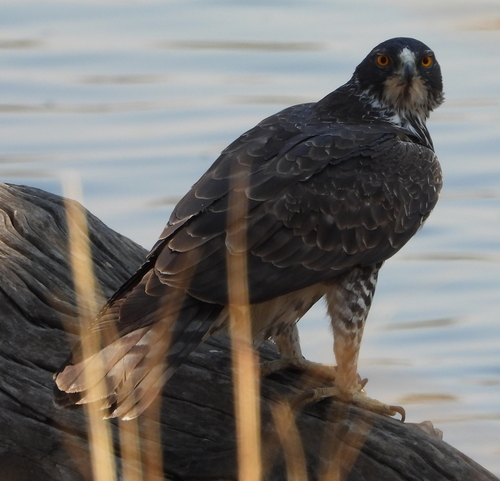 ayres's hawk-eagle
 águia-fulva
Em resumo
A marca de campo mais confiável entre ayres's hawk-eagle e águia-fulva é o tamanho: águia-fulva é muito maior e mais robusta, com uma construção mais pesada e asas mais longas e largas, enquanto ayres's hawk-eagle é notavelmente mais leve e compacto. Em voo, ayres's hawk-eagle mostra um contorno mais ágil, semelhante a um accipiter, e asas inferiores fortemente barradas sem painéis claros, enquanto águia-fulva aparece com asas mais largas e frequentemente mostra uma asa inferior mais uniforme ou sutilmente listrada. O juvenil de ayres's hawk-eagle é escuro por cima e principalmente branco por baixo com marcas esparsas, enquanto os juvenis de águia-fulva são overall acastanhados e carecem de forte contraste. Empoleirado, ayres's hawk-eagle é menor, frequentemente com crista, e mais padronizado, enquanto águia-fulva é maior, com um pescoço mais longo, pernas emplumadas largas e uma aparência geralmente simples ou uniformemente colorida. Essas diferenças são mais óbvias quando ambas as espécies são vistas em ambientes semelhantes, como em florestas abertas ou empoleiradas em galhos expostos.
Dicas de identificação
- O tamanho é a pista mais imediata: águia-fulva é muito maior e mais robusta do que ayres's hawk-eagle; se o pássaro parecer pequeno para uma águia, suspeite de ayres's.
- Silhueta em voo: ayres's hawk-eagle tem uma forma compacta, ágil, semelhante a um accipiter, com asas relativamente curtas e arredondadas e uma cauda proporcionalmente mais longa; águia-fulva tem asas largas e longas com 'dedos' pronunciados e uma cauda mais curta e quadrada.
- Crista: ayres's hawk-eagle frequentemente mostra uma pequena, mas perceptível crista, especialmente quando empoleirada; águia-fulva nunca mostra crista.
- Padrão da asa inferior (todas as idades): ayres's hawk-eagle tem asas inferiores escuras e fortemente barradas sem painéis claros; a asa inferior da águia-fulva é mais uniforme ou sutilmente listrada, e morfos claros podem mostrar contraste entre as coberturas claras e as penas de voo escuras.
- Plumagem juvenil: o juvenil de ayres's hawk-eagle é escuro por cima, branco por baixo com marcas marrons esparsas; o juvenil de águia-fulva é marrom por cima e por baixo, carecendo de forte contraste.
- Partes inferiores adultas: o adulto de ayres's hawk-eagle é branco por baixo com manchas escuras pesadas; os adultos de águia-fulva são simples ou listrados de marrom a ruivo por baixo, nunca fortemente manchados.
- Padrão da cauda: ayres's hawk-eagle tem uma cauda cinza-acinzentada com uma ponta preta larga e 3–4 listras estreitas; a cauda da águia-fulva é simples ou sutilmente listrada (cerca de 7 listras indistintas), frequentemente parecendo uniforme à distância.
- Penas das pernas: Ambas têm pernas emplumadas, mas as da águia-fulva são especialmente largas e óbvias, contribuindo para sua aparência de pernas pesadas.
- Bico e cabeça: águia-fulva tem um bico mais longo e profundo e um pescoço mais longo, dando um perfil semelhante ao de um urubu; ayres's hawk-eagle tem um bico menor e uma cabeça mais compacta.
- Postura empoleirada: ayres's hawk-eagle empoleira-se de forma mais ereta e compacta, frequentemente com a crista levantada; águia-fulva senta-se ereta, mas parece maior, com um pescoço mais longo e frequentemente uma aparência desgrenhada e pesada.
- Morfos de cor: Ambas as espécies podem mostrar morfos escuros, mas a fase melanística de ayres's hawk-eagle retém algumas marcas brancas e é menor; o morfo escuro da águia-fulva é todo marrom escuro e muito maior.
- Supercílios e testa: os adultos de ayres's hawk-eagle frequentemente mostram uma testa e supercílios brancos; a águia-fulva carece dessa característica.
- Contexto de habitat: em florestas densas, ayres's hawk-eagle é mais provável; em campo aberto ou empoleirada em postes expostos, águia-fulva é mais provável.
- Comportamento: ayres's hawk-eagle é mais provável de ser vista caçando ativamente em florestas ou fazendo voos ágeis; águia-fulva é frequentemente vista planando ou sentada por longos períodos em áreas abertas.
- Dimorfismo sexual: a fêmea de ayres's hawk-eagle é maior e menos densamente manchada do que o macho, mas ambos os sexos permanecem muito menores do que qualquer águia-fulva.
Tamanho
A águia-fulva é mais de duas vezes mais pesada que ayres's hawk-eagle (massa média do adulto: 1996 g vs 839,5 g) e parece muito maior e mais robusta em todos os aspectos. Ayres's hawk-eagle é um rapinante de tamanho médio, aproximadamente o peso de um falcão-peregrino, enquanto a águia-fulva é uma grande águia com um corpo mais robusto, asas mais longas e uma cabeça e bico proporcionalmente maiores. No campo, essa diferença de tamanho é geralmente óbvia, especialmente se ambas as espécies forem vistas na mesma área ou perto de rapinantes familiares para escala.
Plumagem
- Juvenil/imaturo ayres's hawk-eagle: Marrom escuro por cima, branco por baixo com marcas marrons esparsas; coberturas da asa superior escuras, asa inferior fortemente barrada e escura, sem painéis claros. À medida que amadurecem, as partes inferiores tornam-se mais escuras com um tom ruivo antes de adquirirem as partes inferiores brancas fortemente manchadas do adulto.
- Juvenil/imaturo águia-fulva: Uniformemente marrom a fulvo por cima e por baixo, carecendo de forte contraste; asa inferior geralmente simples ou sutilmente listrada, não fortemente barrada, e sem painéis claros nítidos.
- Adulto ayres's hawk-eagle: Partes superiores negras com manchas brancas, testa e supercílios brancos, cauda cinza-acinzentada com ponta preta larga e listras estreitas, partes inferiores brancas com manchas escuras pesadas, coberturas da asa inferior marrons e penas de voo escuras e fortemente barradas. Crista pequena, mas às vezes pronunciada.
- Adulto águia-fulva: Altamente variável, mas geralmente simples de marrom cinza a ruivo-fulvo no geral, com penas de voo e cauda mais escuras; a cabeça geralmente combina com o corpo, às vezes com sobrancelhas ou queixo mais escuros; a cauda é simples ou sutilmente listrada. Morfos claros têm um contraste entre coberturas do corpo/asa claras e penas de voo/cauda escuras. Sem crista.
- Melanístico ayres's hawk-eagle: Principalmente preto com marcas brancas, mas ainda menor e mais padronizado do que o morfo uniformemente escuro da águia-fulva.
Comportamento
Ayres's hawk-eagle é ágil e frequentemente semelhante a um accipiter em voo, com batidas rápidas de asas e movimentos rápidos e manobráveis, especialmente ao caçar em florestas. Empoleira-se de forma mais ereta e pode mostrar uma pequena crista. A águia-fulva é mais provável de ser vista planando com asas largas, frequentemente mantendo uma postura mais horizontal ao andar no chão, e empoleira-se ereta por longos períodos em postes expostos ou copas de árvores. Seu voo é mais estável e menos ágil, condizente com seu tamanho maior.
Habitat
Ambas as espécies podem ocorrer em florestas africanas, mas ayres's hawk-eagle está mais estritamente associada a habitats florestais, enquanto águia-fulva é mais adaptável e frequentemente encontrada em campo aberto, savana e áreas semiáridas, além de florestas. A águia-fulva é mais provável de ser vista em habitats abertos ou de borda, às vezes se alimentando ou andando no chão, enquanto ayres's hawk-eagle é mais tipicamente um caçador de florestas.