
Ayres's Hawk-Eagle vs Aquila rapace
Hieraaetus ayresii contro Aquila rapax
Fai un quiz con Ayres's Hawk-Eagle e Aquila rapace
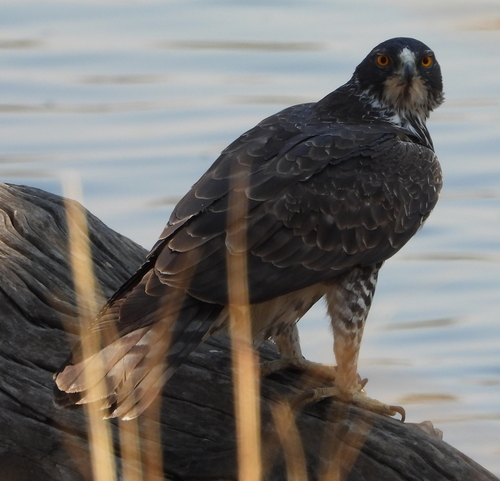 Ayres's Hawk-Eagle
 Aquila rapace
In breve
Il segno distintivo più affidabile tra Ayres's Hawk-Eagle e Aquila rapace è la dimensione: Aquila rapace è molto più grande e massiccia, con una struttura più pesante e ali più lunghe e larghe, mentre Ayres's Hawk-Eagle è notevolmente più leggera e compatta. In volo, Ayres's Hawk-Eagle mostra una silhouette più agile, simile a un accipiter, e ali inferiori pesantemente barrate senza pannelli chiari, mentre Aquila rapace appare con ali più larghe e spesso mostra un'ala inferiore più uniforme o leggermente striata. Il giovane Ayres's Hawk-Eagle è scuro sopra e per lo più bianco sotto con marcature sparse, mentre i giovani Aquila rapace sono complessivamente brunastri e mancano di forte contrasto. In posa, Ayres's Hawk-Eagle è più piccolo, spesso con cresta, e più patternato, mentre Aquila rapace è più grande, con un collo più lungo, gambe piumate e una generale apparenza semplice o uniformemente colorata. Queste differenze sono più evidenti quando entrambe le specie sono viste in ambienti simili, come boschi aperti o posate su rami esposti.
Consigli di identificazione
- La dimensione è l'indizio più immediato: Aquila rapace è molto più grande e massiccia di Ayres's Hawk-Eagle; se l'uccello sembra piccolo per un'aquila, sospetta Ayres's.
- Silhouette in volo: Ayres's Hawk-Eagle ha una forma compatta, agile, simile a un accipiter, con ali relativamente corte e arrotondate e una coda proporzionalmente più lunga; Aquila rapace ha ali larghe e lunghe con 'dita' pronunciate e una coda più corta e squadrata.
- Cresta: Ayres's Hawk-Eagle mostra spesso una piccola ma evidente cresta, specialmente quando è posato; Aquila rapace non mostra mai una cresta.
- Pattern delle ali inferiori (tutte le età): Ayres's Hawk-Eagle ha ali inferiori scure, pesantemente barrate senza pannelli chiari; l'ala inferiore di Aquila rapace è più uniforme o leggermente striata, e le forme chiare possono mostrare contrasto tra copritrici chiare e piume di volo scure.
- Piumaggio giovanile: Il giovane Ayres's Hawk-Eagle è scuro sopra, bianco sotto con marcature brune sparse; il giovane Aquila rapace è bruno sopra e sotto, mancando di forte contrasto.
- Parte inferiore degli adulti: L'adulto Ayres's Hawk-Eagle è bianco sotto con pesanti macchie scure; gli adulti Aquila rapace sono semplici o striati di marrone a rufous sotto, mai pesantemente macchiati.
- Pattern della coda: Ayres's Hawk-Eagle ha una coda grigia cenere con una larga punta nera e 3–4 barre strette; la coda di Aquila rapace è semplice o leggermente striata (circa 7 bande indistinte), spesso apparendo uniforme da lontano.
- Piumaggio delle gambe: Entrambi hanno gambe piumate, ma quelle di Aquila rapace sono particolarmente larghe e evidenti, contribuendo al suo aspetto pesante.
- Becco e testa: Aquila rapace ha un becco più lungo e profondo e un collo più lungo, dando un profilo simile a un avvoltoio; Ayres's Hawk-Eagle ha un becco più piccolo e una testa più compatta.
- Postura in posa: Ayres's Hawk-Eagle si posiziona più eretto e compatto, spesso con la cresta sollevata; Aquila rapace si siede eretto ma appare più grande, con un collo più lungo e spesso un aspetto trasandato e pesante.
- Forme di colore: Entrambe le specie possono mostrare forme scure, ma la fase melanistica di Ayres's Hawk-Eagle mantiene alcune marcature bianche ed è più piccola; la forma scura di Aquila rapace è tutta marrone scuro e molto più grande.
- Supercilio e fronte: Gli adulti di Ayres's Hawk-Eagle mostrano spesso una fronte e un supercilio bianchi; Aquila rapace manca di questa caratteristica.
- Contesto dell'habitat: In boschi densi, Ayres's Hawk-Eagle è più probabile; in campagna aperta o posato su pali esposti, Aquila rapace è più probabile.
- Comportamento: Ayres's Hawk-Eagle è più probabile che venga visto cacciare attivamente nel bosco o fare voli agili; Aquila rapace è spesso visto planare o seduto per lunghi periodi in aree aperte.
- Dimorfismo sessuale: La femmina di Ayres's Hawk-Eagle è più grande e meno densamente macchiata del maschio, ma entrambi i sessi rimangono molto più piccoli di qualsiasi Aquila rapace.
Taglia
Aquila rapace è più di due volte più pesante di Ayres's Hawk-Eagle (massa media degli adulti: 1996 g vs 839.5 g) e appare molto più grande e robusta in tutti i sensi. Ayres's Hawk-Eagle è un rapace di dimensioni medie, circa del peso di un falco pellegrino, mentre Aquila rapace è un'aquila grande con un corpo più massiccio, ali più lunghe e una testa e un becco proporzionalmente più grandi. Sul campo, questa differenza di dimensioni è solitamente evidente, specialmente se entrambe le specie sono viste nella stessa area o vicino a rapaci familiari per scala.
Piumaggio
- Giovane/immaturo Ayres's Hawk-Eagle: Marrone scuro sopra, bianco sotto con marcature brune sparse; copritrici superiori scure, ali inferiori pesantemente barrate e scure, mancando di pannelli chiari. Man mano che maturano, le parti inferiori diventano più scure con una tonalità rufous prima di acquisire le parti inferiori bianche pesantemente macchiate dell'adulto.
- Giovane/immaturo Aquila rapace: Uniformemente marrone a rufous sopra e sotto, mancando di forte contrasto; ali inferiori generalmente semplici o leggermente striate, non pesantemente barrate, e senza pannelli chiari netti.
- Adulto Ayres's Hawk-Eagle: Parti superiori nerastre con maculature bianche, fronte e supercilio bianchi, coda grigia cenere con larga punta nera e barre strette, parti inferiori bianche con pesanti macchie scure, copritrici delle ali inferiori brune e piume di volo scure e pesantemente barrate. Piccola ma talvolta pronunciata cresta.
- Adulto Aquila rapace: Altamente variabile ma generalmente semplice grigio-marrone a rufous nel complesso, con piume di volo e coda più scure; la testa spesso corrisponde al corpo, talvolta con sopracciglia o mento più scuri; la coda è semplice o leggermente striata. Le forme chiare hanno un contrasto tra copritrici chiare del corpo/ali e piume di volo/coda più scure. Nessuna cresta.
- Melanistico Ayres's Hawk-Eagle: Per lo più nero con marcature bianche, ma ancora più piccolo e più patternato della forma uniformemente scura di Aquila rapace.
Comportamento
Ayres's Hawk-Eagle è agile e spesso simile a un accipiter in volo, con battiti d'ali rapidi e movimenti rapidi e manovrabili, specialmente quando caccia nel bosco. Si posiziona più eretto e può mostrare una piccola cresta. Aquila rapace è più probabile che venga visto planare su ali larghe, spesso mantenendo una postura più orizzontale quando cammina a terra, e si posiziona eretto per lunghi periodi su pali esposti o cime degli alberi. Il suo volo è più stabile e meno agile, adatto alla sua dimensione maggiore.
Habitat
Entrambe le specie possono verificarsi nei boschi africani, ma Ayres's Hawk-Eagle è più strettamente associato a habitat boschivi, mentre Aquila rapace è più adattabile e spesso si trova in campagna aperta, savana e aree semi-aride oltre che nei boschi. Aquila rapace è più probabile che venga visto in habitat aperti o di margine, talvolta scavando o camminando a terra, mentre Ayres's Hawk-Eagle è più tipicamente un cacciatore di bosco.
Ayres's Hawk-Eagle · Aquila rapace · I miei uccelli difficili