

asian koel vs asian emerald cuckoo
Eudynamys scolopaceus versus Chrysococcyx maculatus
Jogue um quiz com asian koel e asian emerald cuckoo
 asian koel
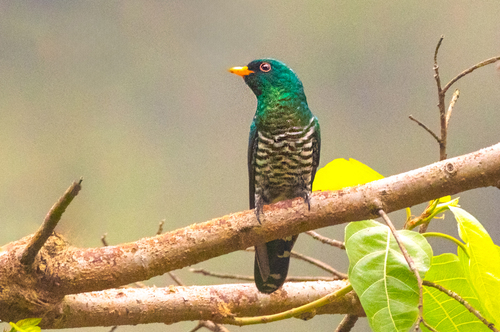 asian emerald cuckoo
Em resumo
A maneira mais confiável de separar o asian koel do asian emerald cuckoo é pelo tamanho e estrutura: o koel é muito maior e tem cauda mais longa, enquanto o emerald cuckoo é compacto e tem cauda curta. Em voo, os adultos e juvenis do asian emerald cuckoo mostram uma faixa branca ousada na parte inferior da asa, que o asian koel nunca mostra em nenhuma idade. Os machos de ambas as espécies são escuros, mas o koel é de um azul-negro brilhante e muito mais robusto, enquanto o macho do emerald cuckoo é de um verde iridescente brilhante com um peito inferior branco. Fêmeas e imaturos de ambas podem ser listrados ou manchados, mas o koel é sempre muito maior e com cauda mais longa, com um bico mais pesado. A sobreposição de habitat é possível, mas o emerald cuckoo prefere florestas, enquanto o koel é frequentemente encontrado em áreas abertas ou perto de habitação humana.
Dicas de identificação
- Tamanho e forma: O asian koel é mais de duas vezes o comprimento do asian emerald cuckoo e muito mais pesado; sempre verifique o volume geral e especialmente o comprimento da cauda.
- Cauda: O koel tem uma cauda longa e graduada, frequentemente mantida reta ou aberta; a cauda do emerald cuckoo é curta e quadrada, nunca tão proeminente.
- Bico: O bico do koel é grosso e de um cinza-esverdeado pálido (adultos), enquanto o bico do emerald cuckoo é esbelto, laranja/amarelo com uma ponta preta.
- Plumagem do macho adulto: Os machos do koel são de um azul-negro brilhante com olhos carmesins; os machos do emerald cuckoo são de um verde escuro iridescente com um peito inferior branco e barriga com listras verdes.
- Plumagem da fêmea adulta: As fêmeas do koel são marrons com listras ruivas na cabeça, partes superiores marrons escuras com manchas brancas/bege, e partes inferiores brancas fortemente listradas. As fêmeas do emerald cuckoo são de um verde-cobre por cima, marrom enferrujado na coroa/nuca, e partes inferiores com listras verdes.
- Padrão de voo de juvenis/imaturos: O emerald cuckoo (todas as idades) mostra uma faixa branca ousada na parte inferior da asa em voo; o koel nunca mostra essa marca.
- Plumagem juvenil: Os jovens koels se assemelham aos machos adultos, mas com um bico preto; os jovens emerald cuckoos são mais listrados por baixo e não têm o peito inferior branco.
- Padrão das partes inferiores: As fêmeas/imaturos do koel são fortemente listrados por baixo; as fêmeas/imaturos do emerald cuckoo são listrados, não listrados, e têm uma aparência mais compacta.
- Cor dos olhos: Os machos do koel têm olhos carmesins marcantes; o emerald cuckoo tem pele nua laranja ao redor do olho.
- Habitat: O koel é comum em áreas abertas, jardins e perto de pessoas; o emerald cuckoo é um especialista em florestas.
- Comportamento: O koel é frequentemente conspícuo, empoleirando-se em locais abertos e chamando; o emerald cuckoo é mais secreto, permanecendo na copa densa.
- Voz: O 'koo-Ooo' alto e repetitivo do koel e o 'kik-kik-kik' são diagnósticos; o emerald cuckoo emite um 'chweek' agudo e twitters mais suaves.
- Contexto: Se visto em uma cidade, plantação ou perto de casas, o koel é provável; em floresta densa, especialmente longe de pessoas, o emerald cuckoo é mais provável.
- Cor do bico em juvenis: Os jovens koels têm um bico preto, ao contrário dos adultos; o bico dos juvenis do emerald cuckoo é semelhante ao dos adultos (laranja/amarelo com ponta preta).
- Quando em dúvida: Use tamanho, comprimento da cauda e padrão da parte inferior da asa em voo como suas primeiras verificações—esses são os mais confiáveis e menos afetados pela idade ou sexo.
Tamanho
O asian koel é dramaticamente maior, medindo 39–46 cm de comprimento e pesando 190–327 g. Em contraste, o asian emerald cuckoo tem apenas cerca de 18 cm de comprimento (menos da metade do comprimento) e é muito mais leve. Essa diferença é óbvia mesmo à distância: o koel parece do tamanho de um corvo com uma cauda longa e graduada, enquanto o emerald cuckoo é mais do tamanho de um tordo e compacto. O tamanho do bico também difere: o koel tem um bico grosso e de um cinza-esverdeado pálido, enquanto o bico do emerald cuckoo é esbelto e laranja/amarelo com uma ponta preta. O tamanho por si só pode eliminar confusões na maioria das situações de campo.
Plumagem
- Visões de voo juvenil/imaturo: O asian emerald cuckoo (todas as idades/sexos) mostra uma faixa branca distinta na parte inferior da asa em voo, uma marca chave que não está presente no asian koel em nenhuma idade. Os juvenis do emerald cuckoo têm partes inferiores mais fortemente listradas e não têm o peito inferior branco do adulto.
- Machos adultos: Os machos do asian koel são de um azul-negro brilhante por toda parte com um bico cinza-esverdeado pálido e olhos carmesins. Os machos do asian emerald cuckoo são de um verde escuro iridescente por cima e no peito superior, com um peito inferior branco em forte contraste e barriga com listras verdes, além de pele nua laranja ao redor do olho e um bico bicolor.
- Fêmeas adultas: As fêmeas do koel são marrons na coroa com listras ruivas, partes superiores marrons escuras com manchas brancas/bege, e partes inferiores brancas fortemente listradas. As fêmeas do emerald cuckoo têm partes superiores verde-cobre, coroa/nuca marrom enferrujada, e partes inferiores com listras verdes. Ambas podem parecer listradas ou manchadas por baixo, mas o koel é muito maior e com cauda mais longa.
- Juvenis: Os jovens koels se assemelham aos machos adultos (escuros por cima), mas com um bico preto. Os jovens emerald cuckoos são mais listrados por baixo e não têm o peito inferior branco. A faixa branca na parte inferior da asa em voo permanece uma marca chave para o emerald cuckoo em todas as idades.
Comportamento
O asian koel é frequentemente visto se movendo lentamente pela copa aberta, árvores frutíferas, ou mesmo em jardins e áreas urbanas, às vezes bastante conspícuo e vocal. Ele tem um voo pesado, lento e direto, frequentemente com uma cauda longa arrastando. O asian emerald cuckoo é mais arbóreo e secreto, geralmente permanecendo na copa média a superior de florestas densas, movendo-se rapidamente e frequentemente empoleirando-se em silêncio. Seu voo é mais rápido e direto, com uma cauda mais curta e menos volume. O koel é muito mais provável de ser visto em habitats abertos ou modificados pelo homem, enquanto o emerald cuckoo é um especialista em florestas.
Habitat
Ambas as espécies podem ocorrer em regiões sobrepostas (Sul e Sudeste da Ásia), mas seus habitats preferidos diferem. O asian koel é comum em florestas abertas, jardins, plantações e até mesmo áreas urbanas, frequentemente perto de árvores frutíferas e ninhos hospedeiros. O asian emerald cuckoo é um pássaro de florestas tropicais ou subtropicais úmidas de baixada e montanha, raramente aventurando-se em áreas abertas. Se visto em floresta densa, especialmente longe de habitação humana, o emerald cuckoo é mais provável; se em um parque da cidade, plantação ou vila, o koel é muito mais provável.
Voz
O asian koel é altamente vocal, especialmente na temporada de reprodução (março-agosto), com o macho emitindo um 'koo-Ooo' alto e repetido e a fêmea um 'kik-kik-kik...' agudo. Esses chamados são distintos e frequentemente ouvidos antes que o pássaro seja visto. O asian emerald cuckoo é menos vocal, com um chamado agudo 'chweek' emitido em voo e vários twitters assobiados, mas é geralmente muito mais silencioso e menos conspícuo do que o koel. Se você ouvir a canção clássica do koel, a identificação é certa.