

Asian Koel vs Asian Emerald Cuckoo
Eudynamys scolopaceus contro Chrysococcyx maculatus
Fai un quiz con Asian Koel e Asian Emerald Cuckoo
 Asian Koel
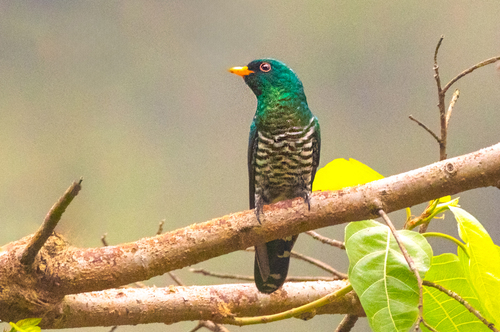 Asian Emerald Cuckoo
In breve
Il modo più affidabile per separare l'Asian Koel dall'Asian Emerald Cuckoo è la dimensione e la struttura: il koel è molto più grande e ha una coda più lunga, mentre l'emeraldo cuculo è compatto e ha una coda corta. In volo, gli adulti e i giovani Asian Emerald Cuckoo mostrano una netta banda bianca sulla parte inferiore dell'ala, che l'Asian Koel non mostra mai a nessuna età. I maschi di entrambe le specie sono scuri, ma il koel è di un blu nerastro lucido e molto più robusto, mentre il maschio dell'emeraldo cuculo è di un verde iridescente brillante con un petto inferiore bianco. Le femmine e gli immaturi di entrambe le specie possono essere striati o macchiati, ma il koel è sempre molto più grande e ha una coda più lunga, con un becco più pesante. È possibile una sovrapposizione degli habitat, ma l'emeraldo cuculo preferisce la foresta, mentre il koel si trova spesso in campagna aperta o vicino all'abitazione umana.
Consigli di identificazione
- Size and shape: L'Asian Koel è più lungo di oltre il doppio rispetto all'Asian Emerald Cuckoo e molto più pesante; controlla sempre la massa complessiva e in particolare la lunghezza della coda.
- Tail: Il koel ha una lunga coda graduata, spesso tenuta dritta o a ventaglio; la coda dell'emeraldo cuculo è corta e quadrata, mai così prominente.
- Bill: Il becco del koel è spesso e di un grigio-verde pallido (adulti), mentre il becco dell'emeraldo cuculo è snello, arancione/giallo con una punta nera.
- Adult male plumage: I maschi del koel sono di un blu nerastro lucido con occhi cremisi; i maschi dell'emeraldo cuculo sono di un verde scuro iridescente con un petto inferiore bianco e un ventre barrato di verde.
- Adult female plumage: Le femmine del koel sono marroni con striature rugginose sulla testa, parti superiori di un marrone scuro con macchie bianche/crema e parti inferiori bianche fortemente striate. Le femmine dell'emeraldo cuculo sono di un verde rame sopra, marrone rugginoso sulla corona/nuca e barrate di verde sotto.
- Juvenile/immature flight pattern: L'emeraldo cuculo (tutte le età) mostra una netta banda bianca sulla parte inferiore dell'ala in volo; il koel non mostra mai questo segno.
- Juvenile plumage: I giovani koel assomigliano ai maschi adulti ma con un becco nero; i giovani emeraldo cuculo sono più barrati sotto e mancano del petto inferiore bianco.
- Underparts pattern: Le femmine/immaturi del koel sono fortemente striati sotto; le femmine/immaturi dell'emeraldo cuculo sono barrati, non striati, e hanno un aspetto più compatto.
- Eye color: I maschi del koel hanno occhi cremisi sorprendenti; l'emeraldo cuculo ha una pelle nuda arancione attorno all'occhio.
- Habitat: Il koel è comune in aree aperte, giardini e vicino alle persone; l'emeraldo cuculo è uno specialista della foresta.
- Behavior: Il koel è spesso evidente, posandosi in luoghi aperti e chiamando; l'emeraldo cuculo è più segreto, rimanendo nella densa chioma.
- Voice: Il forte e ripetitivo 'koo-Ooo' e 'kik-kik-kik' del koel sono diagnostici; l'emeraldo cuculo emette un 'chweek' acuto e cinguettii più morbidi.
- Context: Se visto in una città, piantagione o vicino a case, è probabile che sia un koel; in una foresta densa, specialmente lontano dalle persone, è più probabile che sia un emeraldo cuculo.
- Bill color in juveniles: I giovani koel hanno un becco nero, a differenza degli adulti; il becco dei giovani emeraldo cuculo è simile a quello degli adulti (arancione/giallo con punta nera).
- When in doubt: Usa la dimensione, la lunghezza della coda e il modello della parte inferiore dell'ala in volo come tuoi primi controlli—questi sono i più affidabili e meno influenzati dall'età o dal sesso.
Taglia
L'Asian Koel è drammaticamente più grande, misurando 39–46 cm di lunghezza e pesando 190–327 g. Al contrario, l'Asian Emerald Cuckoo è lungo solo circa 18 cm (meno della metà della lunghezza) e molto più leggero. Questa differenza è ovvia anche a distanza: il koel appare delle dimensioni di un corvo con una lunga coda graduata, mentre l'emeraldo cuculo è più delle dimensioni di un tordo e compatto. Anche la dimensione del becco differisce: il koel ha un becco spesso, di un grigio-verde pallido, mentre il becco dell'emeraldo cuculo è snello e arancione/giallo con una punta nera. La dimensione da sola può eliminare la confusione nella maggior parte delle situazioni sul campo.
Piumaggio
- Juvenile/Immature flight views: L'Asian Emerald Cuckoo (tutte le età/sessi) mostra una netta banda bianca sulla parte inferiore dell'ala in volo, un segno chiave non presente nell'Asian Koel a nessuna età. I giovani emeraldo cuculo hanno parti inferiori più fortemente barrate e mancano del petto inferiore bianco degli adulti.
- Adult males: I maschi dell'Asian Koel sono di un blu nerastro lucido ovunque con un becco grigio-verde pallido e occhi cremisi. I maschi dell'Asian Emerald Cuckoo sono di un verde scuro iridescente sopra e sul petto superiore, con un petto inferiore bianco a forte contrasto e un ventre barrato di verde, oltre a pelle nuda arancione attorno all'occhio e un becco bicolore.
- Adult females: Le femmine del koel sono marroni sulla corona con striature rugginose, parti superiori di un marrone scuro con macchie bianche/crema e parti inferiori bianche fortemente striate. Le femmine dell'emeraldo cuculo hanno parti superiori di un verde rame, corona/nuca marrone rugginoso e parti inferiori barrate di verde. Entrambe possono apparire striate o macchiate sotto, ma il koel è molto più grande e ha una coda più lunga.
- Juveniles: I giovani koel assomigliano ai maschi adulti (scuri sopra), ma con un becco nero. I giovani emeraldo cuculo sono più barrati sotto e mancano del petto inferiore bianco. La banda bianca sulla parte inferiore dell'ala in volo rimane un segno chiave per l'emeraldo cuculo a tutte le età.
Comportamento
L'Asian Koel è spesso visto muoversi lentamente attraverso la chioma aperta, alberi da frutto, o anche in giardini e aree urbane, a volte piuttosto evidente e vocale. Ha un volo pesante, lento e diretto, spesso con una lunga coda che si trascina. L'Asian Emerald Cuckoo è più arboreo e segreto, di solito rimane nella chioma densa delle foreste, muovendosi rapidamente e spesso posandosi in silenzio. Il suo volo è più rapido e diretto, con una coda più corta e meno massa. Il koel è molto più probabile da vedere in habitat aperti o modificati dall'uomo, mentre l'emeraldo cuculo è uno specialista della foresta.
Habitat
Entrambe le specie possono verificarsi in regioni sovrapposte (Asia meridionale e sud-est asiatico), ma i loro habitat preferiti differiscono. L'Asian Koel è comune in boschi aperti, giardini, piantagioni e persino aree urbane, spesso vicino ad alberi da frutto e nidi ospiti. L'Asian Emerald Cuckoo è un uccello delle foreste umide subtropicali o tropicali di pianura e montane, raramente avventurandosi in campagna aperta. Se visto in una foresta densa, specialmente lontano dall'abitazione umana, è più probabile che sia un emeraldo cuculo; se in un parco cittadino, piantagione o villaggio, è molto più probabile che sia un koel.
Voce
L'Asian Koel è molto vocale, specialmente nella stagione degli amori (marzo-agosto), con il maschio che emette un forte 'koo-Ooo' ripetuto e la femmina un acuto 'kik-kik-kik...'. Questi richiami sono distintivi e spesso uditi prima che l'uccello venga visto. L'Asian Emerald Cuckoo è meno vocale, con un richiamo acuto 'chweek' emesso in volo e vari cinguettii fischiati, ma è generalmente molto più silenzioso e meno evidente del koel. Se senti il canto classico del koel, l'identificazione è certa.
Asian Koel · Asian Emerald Cuckoo · I miei uccelli difficili