

asian emerald cuckoo vs banded bay cuckoo
Chrysococcyx maculatus versus Cacomantis sonneratii
Jogue um quiz com asian emerald cuckoo e banded bay cuckoo
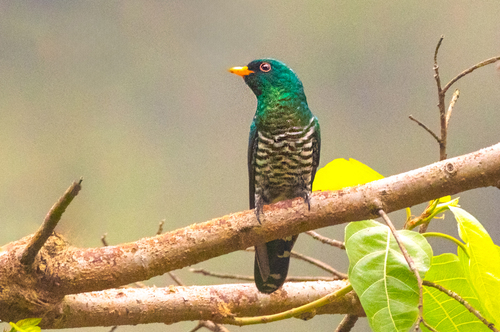 asian emerald cuckoo
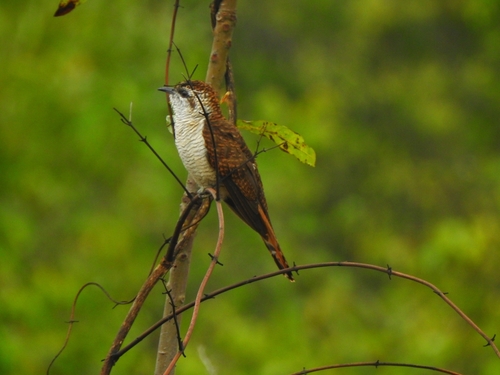 banded bay cuckoo
Em resumo
A separação de campo mais confiável é a plumagem: os machos adultos de asian emerald cuckoo são strikingly iridescent green acima com um peito inferior branco e uma barriga com barras verdes, enquanto o banded bay cuckoo é ruivo acima com barras escuras ousadas e um supercílios esbranquiçado. Em voo, ambos os sexos e idades de asian emerald cuckoo mostram uma faixa branca diagnóstica na parte inferior da asa, ausente em banded bay cuckoo. Os juvenis diferem: os jovens asian emerald cuckoo não têm o peito inferior branco e são mais fortemente barrados abaixo, mas ainda têm tons verdes e a faixa branca na parte inferior da asa, enquanto o juvenil banded bay cuckoo se assemelha aos adultos, mas com um maxilar inferior mais claro e franjas brancas nas penas superiores. Estruturalmente, banded bay cuckoo tem um bico mais longo e uma cauda mais graduada e com padrões ousados. Ambas as espécies se sobrepõem em alcance e habitat, mas banded bay cuckoo é mais frequentemente visto em florestas de colinas mais baixas e é altamente vocal durante a temporada de reprodução.
Dicas de identificação
- Faixa branca na parte inferior da asa (todas as idades, apenas asian emerald cuckoo): Em voo, procure uma barra branca clara na parte inferior da asa—presente em ambos os sexos e todas as idades de asian emerald cuckoo, ausente em banded bay cuckoo.
- Plumagem do macho adulto: Os machos de asian emerald cuckoo são iridescentes de verde escuro acima, com um peito inferior branco e barriga com barras verdes. Banded bay cuckoo nunca é verde; é ruivo acima com barras escuras ousadas.
- Plumagem da fêmea adulta/imatura: A fêmea de asian emerald cuckoo é verde-cobre acima com uma coroa enferrujada e partes inferiores com barras verdes. Os juvenis são mais fortemente barrados abaixo, mas mantêm tons verdes e a faixa branca na parte inferior da asa. Banded bay cuckoo de todas as idades é ruivo/bay acima com barras escuras ousadas e um supercílios esbranquiçado.
- Supercílios: Banded bay cuckoo mostra uma sobrancelha esbranquiçada forte acima de uma linha escura ao redor dos olhos, ausente em asian emerald cuckoo.
- Padrão da cauda: Banded bay cuckoo tem uma cauda longa e graduada com um centro marrom escuro, uma faixa negra subterminal e pontas brancas—frequentemente óbvias quando a cauda está aberta. A cauda de asian emerald cuckoo é mais curta e menos marcada.
- Forma e cor do bico: Banded bay cuckoo tem um bico longo e ligeiramente curvado, preto, com uma base cinza-esverdeada no maxilar inferior. O bico de asian emerald cuckoo é mais curto, laranja/amarelo com uma ponta preta, e cercado por pele nua laranja ao redor do olho.
- Cor dos olhos: Banded bay cuckoo tem uma íris amarela; a cor da íris de asian emerald cuckoo não é especificada, mas a pele nua laranja ao redor do olho é distintiva.
- Marcas juvenis: O juvenil banded bay cuckoo tem um maxilar inferior pálido e franjas brancas nas penas do corpo superior, mas de outra forma se assemelha aos adultos. O juvenil asian emerald cuckoo é mais fortemente barrado abaixo, não tem o peito inferior branco, mas ainda mostra partes superiores verdes e a faixa branca na parte inferior da asa.
- Tamanho e estrutura: Banded bay cuckoo tem cerca de 22 cm, mais longo e lankier com um bico e cauda mais longos. Asian emerald cuckoo é mais compacto com 18 cm, com um bico e cauda mais curtos.
- Vocalizações: Assobios persistentes e agudos de quatro notas indicam banded bay cuckoo. Asian emerald cuckoo emite um "chweek" menos distintivo e twitters assobiados.
- Contexto de habitat: Banded bay cuckoo é mais comum em florestas de colinas mais baixas e é frequentemente detectado pela voz durante a temporada de monções/reprodução. Asian emerald cuckoo prefere florestas mais densas e úmidas e é mais silencioso.
- Comportamento: Banded bay cuckoo frequentemente pousa de forma conspícua e canta; asian emerald cuckoo é mais secreto e forrageia silenciosamente.
- Dimorfismo sexual: Apenas asian emerald cuckoo mostra diferenças sexuais fortes; os sexos de banded bay cuckoo são semelhantes.
- Contexto sazonal: Banded bay cuckoo é frequentemente migratório e mais vocal durante a temporada de reprodução/monções; a presença de asian emerald cuckoo é menos ligada à sazonalidade em campo.
- Erros comuns: Formas hepáticas (ruivas) de outros cucos Cacomantis podem se assemelhar a banded bay cuckoo, mas a combinação de supercílios, bico longo e cauda com barras ousadas é distintiva. A faixa branca na parte inferior da asa de asian emerald cuckoo é única entre essas opções.
Tamanho
Asian emerald cuckoo é menor, atingindo cerca de 18 cm de comprimento, enquanto banded bay cuckoo é maior, com cerca de 22 cm. Essa diferença é sutil em campo, mas pode ser aparente se ambos forem vistos juntos. Banded bay cuckoo também tem um bico notavelmente mais longo e ligeiramente curvado, e uma cauda mais graduada, contribuindo para uma aparência mais esguia em comparação com o compacto e de bico curto asian emerald cuckoo.
Plumagem
- Pássaros juvenis/imaturos em voo: Asian emerald cuckoo (todas as idades e sexos) mostra uma clara faixa branca na parte inferior da asa, uma marca chave visível em voo e frequentemente quando empoleirado com as asas abertas. O juvenil asian emerald cuckoo não tem o peito inferior branco do macho adulto e é mais fortemente barrado abaixo, mas ainda mostra partes superiores verdes e a faixa branca na parte inferior da asa. O juvenil banded bay cuckoo é semelhante aos adultos, mas tem um maxilar inferior pálido e franjas brancas nas penas do corpo superior; nunca mostra uma faixa branca na parte inferior da asa.
- Machos adultos: Asian emerald cuckoo é iridescente de verde escuro acima e no peito superior, com um peito inferior branco e barriga com barras verdes. Banded bay cuckoo é ruivo brilhante (bay) acima, com barras escuras largas, um supercílios esbranquiçado e um lado inferior esbranquiçado com finas estriações.
- Fêmeas adultas: A fêmea de asian emerald cuckoo é verde-cobre acima com uma coroa/nuca marrom enferrujada e partes inferiores com barras verdes; ainda mostra a faixa branca na parte inferior da asa. As fêmeas de banded bay cuckoo são como os machos, sem dimorfismo sexual.
- Cauda: Banded bay cuckoo tem uma cauda graduada com um centro marrom escuro, uma faixa negra subterminal e pontas brancas; a cauda de asian emerald cuckoo é menos marcada.
- Bico e partes nuas: Asian emerald cuckoo tem pele nua laranja ao redor do olho e um bico laranja/amarelo com ponta preta; banded bay cuckoo tem um bico preto com base cinza-esverdeada no maxilar inferior, íris amarela e sem anel ocular laranja.
Comportamento
Banded bay cuckoo frequentemente canta de ramos expostos, especialmente durante a temporada de reprodução, e pode ser visto atacando insetos ou forrageando no dossel. Asian emerald cuckoo é menos conspícuo, tipicamente forrageando silenciosamente no dossel médio a superior. Ambos são parasitas de ninho, mas isso não é uma marca de campo. O comportamento mais vocal e ativo de banded bay cuckoo pode ajudar a distingui-lo, especialmente ao chamar.
Habitat
Ambas as espécies ocorrem em áreas sobrepostas na Ásia do Sul e Sudeste. Asian emerald cuckoo prefere florestas tropicais ou subtropicais úmidas de planície e montanha, enquanto banded bay cuckoo é mais frequentemente encontrado em áreas bem arborizadas, principalmente em colinas mais baixas. Banded bay cuckoo pode ser mais provável em habitats florestais mais secos ou mais abertos e é frequentemente detectado pela voz nas temporadas de monções e reprodução.
Voz
Banded bay cuckoo tem um assobio distinto e agudo de quatro notas, frequentemente transcrito como "wee-ti wee-tee" ou "smoke-yer-pepper," com cada nota caindo em tom. Este chamado é alto, de longa distância e repetido persistentemente, especialmente na temporada de reprodução. A voz de asian emerald cuckoo é menos distintiva: um "chweek" dado em voo e vários twitters assobiados, mas não uma frase alta e repetida. Se você ouvir o clássico assobio de quatro notas, é banded bay cuckoo.
asian emerald cuckoo · banded bay cuckoo · Minhas aves difíceis