

Asian Emerald Cuckoo vs Banded Bay Cuckoo
Chrysococcyx maculatus contro Cacomantis sonneratii
Fai un quiz con Asian Emerald Cuckoo e Banded Bay Cuckoo
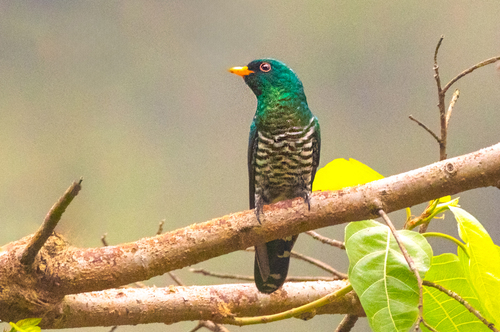 Asian Emerald Cuckoo
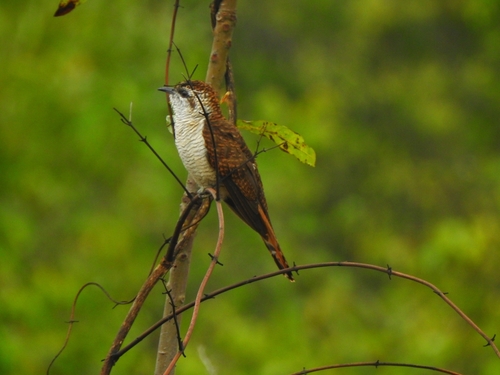 Banded Bay Cuckoo
In breve
La separazione sul campo più affidabile è il piumaggio: i maschi adulti di Asian Emerald Cuckoo sono di un verde iridescente sopra con un petto inferiore bianco e un ventre barrato di verde, mentre il Banded Bay Cuckoo è ruggine sopra con barre scure audaci e un sopracciglio biancastro. In volo, entrambi i sessi e le età di Asian Emerald Cuckoo mostrano una banda bianca diagnostica sotto le ali, assente nel Banded Bay Cuckoo. I giovani differiscono: i giovani Asian Emerald Cuckoo mancano del petto inferiore bianco e sono più pesantemente barrati sotto, ma hanno ancora toni verdi e la banda bianca sotto le ali, mentre il giovane Banded Bay Cuckoo assomiglia agli adulti ma con una mandibola inferiore più chiara e frange di piume bianche sopra. Strutturalmente, il Banded Bay Cuckoo ha un becco più lungo e una coda più graduata e audacemente patternata. Entrambe le specie si sovrappongono in distribuzione e habitat, ma il Banded Bay Cuckoo è più spesso visto nelle foreste collinari più basse ed è molto vocale durante la stagione di riproduzione.
Consigli di identificazione
- Banda bianca sotto le ali (tutte le età, solo Asian Emerald Cuckoo): In volo, cerca una chiara banda bianca sotto le ali—presente in entrambi i sessi e tutte le età di Asian Emerald Cuckoo, assente nel Banded Bay Cuckoo.
- Piumaggio del maschio adulto: I maschi di Asian Emerald Cuckoo sono di un verde scuro iridescente sopra, con un petto inferiore bianco e un ventre barrato di verde. Il Banded Bay Cuckoo non è mai verde; è ruggine sopra con barre scure audaci.
- Piumaggio della femmina adulta/immatura: La femmina di Asian Emerald Cuckoo è di un verde rameo sopra con una corona rugginosa e parti inferiori barrate di verde. I giovani sono più pesantemente barrati sotto ma mantengono toni verdi e la banda bianca sotto le ali. Il Banded Bay Cuckoo di tutte le età è ruggine/bay sopra con barre scure audaci e un sopracciglio biancastro.
- Sopracciglio: Il Banded Bay Cuckoo mostra un forte sopracciglio biancastro sopra una linea oculare scura, mancante nell'Asian Emerald Cuckoo.
- Pattern della coda: Il Banded Bay Cuckoo ha una coda lunga e graduata con un centro marrone scuro, una banda nera subterminale e punte bianche—spesso ovvie quando la coda è aperta. La coda dell'Asian Emerald Cuckoo è più corta e meno audacemente patternata.
- Forma e colore del becco: Il Banded Bay Cuckoo ha un becco lungo, leggermente curvato e nero con una base grigio-verde sulla mandibola inferiore. Il becco dell'Asian Emerald Cuckoo è più corto, arancione/giallo con una punta nera, e circondato da pelle nuda arancione attorno all'occhio.
- Colore dell'occhio: Il Banded Bay Cuckoo ha un'iride gialla; il colore dell'iride dell'Asian Emerald Cuckoo non è specificato, ma la pelle nuda arancione attorno all'occhio è distintiva.
- Segni giovanili: Il giovane Banded Bay Cuckoo ha una mandibola inferiore chiara e frange bianche sulle piume del corpo superiore, ma altrimenti assomiglia agli adulti. Il giovane Asian Emerald Cuckoo è più pesantemente barrato sotto, manca del petto inferiore bianco, ma mostra ancora parti superiori verdi e la banda bianca sotto le ali.
- Dimensioni e struttura: Il Banded Bay Cuckoo è di circa 22 cm, più lungo e snello con un becco e una coda più lunghi. L'Asian Emerald Cuckoo è più compatto a 18 cm, con un becco e una coda più corti.
- Vocalizzazioni: Fischi persistenti e acuti a quattro note indicano il Banded Bay Cuckoo. L'Asian Emerald Cuckoo emette un "chweek" meno distintivo e twitteri fischiati.
- Contesto dell'habitat: Il Banded Bay Cuckoo è più comune nelle foreste collinari più basse ed è spesso rilevato dalla voce durante la stagione dei monsoni/riproduzione. L'Asian Emerald Cuckoo preferisce foreste più dense e umide ed è più silenzioso.
- Comportamento: Il Banded Bay Cuckoo spesso si posa in modo evidente e canta; l'Asian Emerald Cuckoo è più segreto e cerca cibo in silenzio.
- Dimorfismo sessuale: Solo l'Asian Emerald Cuckoo mostra forti differenze sessuali; i sessi del Banded Bay Cuckoo sono simili.
- Contesto stagionale: Il Banded Bay Cuckoo è spesso migratorio e più vocale durante la stagione di riproduzione/monsoni; la presenza dell'Asian Emerald Cuckoo è meno legata alla stagionalità sul campo.
- Trappole comuni: Le forme epatiche (ruggine) di altri cuculi Cacomantis possono assomigliare al Banded Bay Cuckoo, ma la combinazione di sopracciglio, becco lungo e coda audacemente barrata è distintiva. La banda bianca sotto le ali dell'Asian Emerald Cuckoo è unica tra queste opzioni.
Taglia
L'Asian Emerald Cuckoo è più piccolo, raggiungendo circa 18 cm di lunghezza, mentre il Banded Bay Cuckoo è più grande a circa 22 cm. Questa differenza è sottile sul campo ma può essere evidente se entrambi sono visti insieme. Il Banded Bay Cuckoo ha anche un becco visibilmente più lungo e leggermente ricurvo, e una coda più graduata, contribuendo a un aspetto più snello rispetto all'Asian Emerald Cuckoo compatto e dal becco corto.
Piumaggio
- Uccelli giovani/immaturi in volo: L'Asian Emerald Cuckoo (tutte le età e sessi) mostra una chiara banda bianca sotto le ali, un segno chiave visibile in volo e spesso quando è posato con le ali aperte. Il giovane Asian Emerald Cuckoo manca del petto inferiore bianco del maschio adulto ed è più pesantemente barrato sotto, ma mostra ancora parti superiori verdi e la banda bianca sotto le ali. Il giovane Banded Bay Cuckoo è simile agli adulti ma ha una mandibola inferiore chiara e frange bianche sulle piume del corpo superiore; non mostra mai una banda bianca sotto le ali.
- Maschi adulti: L'Asian Emerald Cuckoo è di un verde scuro iridescente sopra e sul petto superiore, con un petto inferiore bianco e un ventre barrato di verde. Il Banded Bay Cuckoo è di un ruggine brillante (bay) sopra, con barre scure ampie, un sopracciglio biancastro e un lato inferiore biancastro con fini striature.
- Femmine adulte: La femmina di Asian Emerald Cuckoo è di un verde rameo sopra con una corona/nuca marrone ruggine e parti inferiori barrate di verde; mostra ancora la banda bianca sotto le ali. Le femmine di Banded Bay Cuckoo sono simili ai maschi, senza dimorfismo sessuale.
- Coda: Il Banded Bay Cuckoo ha una coda graduata con un centro marrone scuro, una banda nera subterminale e punte bianche; la coda dell'Asian Emerald Cuckoo è meno audacemente marcata.
- Becco e parti nude: L'Asian Emerald Cuckoo ha pelle nuda arancione attorno all'occhio e un becco arancione/giallo con punta nera; il Banded Bay Cuckoo ha un becco nero con base grigio-verde sulla mandibola inferiore, iride gialla e senza anello oculare arancione.
Comportamento
Il Banded Bay Cuckoo spesso canta da rami esposti, specialmente durante la stagione di riproduzione, e può essere visto mentre si lancia per insetti o cerca cibo nella chioma. L'Asian Emerald Cuckoo è meno evidente, tipicamente cerca cibo in silenzio nella chioma media e superiore. Entrambi sono parassiti della covata, ma questo non è un segno sul campo. Il comportamento più vocale e attivo del Banded Bay Cuckoo può aiutare a distinguerlo, specialmente quando chiama.
Habitat
Entrambe le specie si trovano in aree sovrapposte in tutto il Sud e il Sud-est asiatico. L'Asian Emerald Cuckoo preferisce foreste umide subtropicali o tropicali di pianura e montane, mentre il Banded Bay Cuckoo è più spesso trovato in aree ben boschive, principalmente nelle colline più basse. Il Banded Bay Cuckoo potrebbe essere più probabile in habitat boschivi più asciutti o più aperti ed è spesso rilevato dalla voce durante i monsoni e le stagioni di riproduzione.
Voce
Il Banded Bay Cuckoo ha un fischio distintivo, acuto e a quattro note, spesso trascritto come "wee-ti wee-tee" o "smoke-yer-pepper," con ogni nota che scende di tono. Questo richiamo è forte, si diffonde lontano e viene ripetuto persistentemente, specialmente durante la stagione di riproduzione. La voce dell'Asian Emerald Cuckoo è meno distintiva: un "chweek" emesso in volo e vari twitteri fischiati, ma non una frase forte e ripetuta. Se senti il classico fischio a quattro note, è il Banded Bay Cuckoo.
Asian Emerald Cuckoo · Banded Bay Cuckoo · I miei uccelli difficili