

faigão-rola vs fluttering shearwater
Pachyptila desolata versus Puffinus gavia
Jogue um quiz com faigão-rola e fluttering shearwater
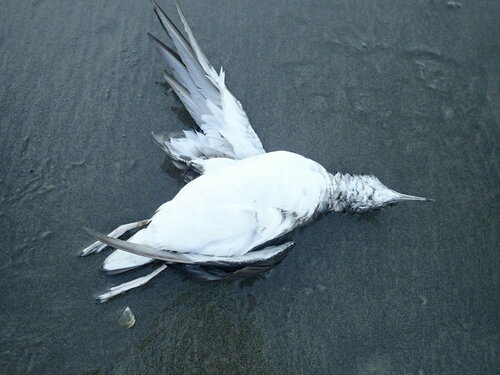
 faigão-rola
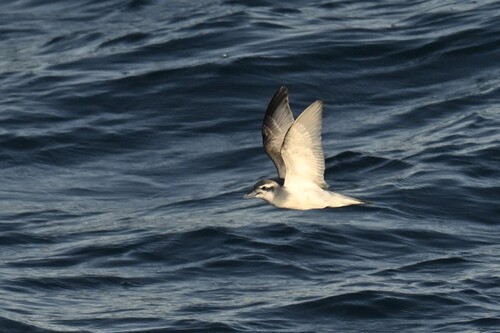
 fluttering shearwater
Em resumo
A marca de campo mais confiável para separar o faigão-rola do fluttering shearwater é o padrão da asa superior: o faigão-rola (todas as idades) apresenta uma asa superior azul-acinzentada com um forte 'M' escuro se estendendo das costas até as pontas das asas, enquanto o fluttering shearwater tem partes superiores uniformemente marrons escuras, sem nenhum 'M' ou painel contrastante. Em voo, os tons azul-acinzentados mais claros do faigão-rola e a cauda em forma de cunha com ponta preta contrastam com as partes superiores mais uniformemente escuras e marrons do shearwater e a cauda curta em forma de leque. O fluttering shearwater também é notavelmente maior e mais pesado, com um bico mais longo e fino e pernas rosa-claras que frequentemente se projetam além da cauda em voo. Ambas as espécies podem parecer superficialmente semelhantes à distância, mas uma atenção cuidadosa ao padrão das asas, estrutura e cor das pernas as separará.
Dicas de identificação
- Padrão da asa superior (todas as idades): O faigão-rola apresenta uma asa superior azul-acinzentada com um forte 'M' escuro das costas até as pontas das asas; o fluttering shearwater é uniformemente marron escuro acima, sem nenhum 'M' ou painel. Esta é a melhor marca em voo.
- Forma e cor da cauda: O faigão-rola tem uma cauda cinza em forma de cunha com ponta preta; a cauda do fluttering shearwater é curta, em forma de leque, e misturada entre marrom e branco.
- Estrutura do bico: O bico do faigão-rola é curto, grosso e azul-acinzentado; o bico do fluttering shearwater é mais longo, mais fino e escuro. A cor e a forma do bico são melhor vistas de perto ou em boa luz.
- Cor e projeção das pernas: O fluttering shearwater tem pernas e pés rosa-claros com membranas escuras, e os pés frequentemente se estendem além da cauda em voo. O faigão-rola tem pés azuis, mas estes raramente são visíveis em voo.
- Padrão facial: O faigão-rola tem uma sobrancelha branca e um rosto azul-acinzentado mais contrastante; o rosto do fluttering shearwater é marrom-acinzentado, desvanecendo para branco abaixo do olho, sem uma sobrancelha forte.
- Parte inferior da asa: O fluttering shearwater tem a parte inferior da asa predominantemente branca com uma área axilar marrom-acinzada; a parte inferior da asa do faigão-rola não é descrita em detalhes, mas as partes inferiores são brancas.
- Tamanho do corpo e jizz: O fluttering shearwater é mais robusto, com asas mais longas e corpo mais pesado; o faigão-rola é menor e mais delicado. Em bandos mistos, a diferença de tamanho pode ser aparente.
- Estilo de voo: O faigão-rola tem um voo mais flutuante e deslizante; o shearwater voa baixo e rápido com batidas de asa rápidas e deslizes.
- Efeitos da muda: O fluttering shearwater no final do verão-outono pode parecer mais pálido e desgastado acima, mas ainda assim não possui o padrão 'M' do faigão-rola.
- Confusão juvenil: Os juvenis de fluttering shearwater são semelhantes aos adultos, mas com margens de cobertura de asa mais pálidas; nenhuma marca juvenil distintiva para o faigão-rola foi notada.
- Contexto de habitat: O fluttering shearwater é provavelmente encontrado perto das costas da Nova Zelândia; o faigão-rola é mais pelágico e menos provável de ser encontrado perto da costa.
- Vocalização: Se ouvido, o chamado do fluttering shearwater 'ka-hek-ka-hek' é distintivo; o chamado do faigão-rola não é uma marca de campo.
- Comportamento alimentar: O faigão-rola frequentemente filtra zooplâncton na superfície; o shearwater pode ser visto mergulhando ou perseguindo peixes.
- Contexto sazonal: O fluttering shearwater está presente nas águas da Nova Zelândia principalmente de setembro a fevereiro; a presença do faigão-rola está menos ligada às temporadas de reprodução locais.
- Quando as marcas falham: A grandes distâncias ou em luz fraca, ambos podem parecer pequenos pássaros marinhos de barriga pálida; concentre-se no padrão das asas e no estilo de voo para a melhor separação.
Tamanho
O faigão-rola é significativamente menor e mais leve que o fluttering shearwater. O faigão-rola pesa em média cerca de 156 g [wikidata], enquanto as fêmeas do fluttering shearwater pesam em média 302 g e os machos 243 g [wikipedia]. No campo, o fluttering shearwater parece mais robusto, com um corpo mais longo e asas visivelmente mais longas. O faigão-rola é mais delicado e compacto, com um bico mais curto e grosso e uma impressão geral menor.
Plumagem
- Juvenil/imaturo e adulto faigão-rola: Partes superiores azul-acinzentadas com um forte 'M' escuro das costas atravessando as asas até as pontas; partes inferiores brancas; sobrancelha branca; bico azul-acinzentado; pés azuis; cauda cinza em forma de cunha com ponta preta; coberturas maiores quase pretas, criando um contraste na asa. Este padrão é consistente em todas as idades, sem menção de marcas específicas de asa superior para juvenis [wikipedia].
- Fluttering Shearwater (todas as idades): As partes superiores, incluindo pescoço, asas e cauda, são uniformemente marrons escuras, sem nenhum 'M' ou painel contrastante. O rosto e o pescoço são marrom-acinzentados, desvanecendo para branco abaixo do olho. As partes inferiores são brancas com uma mancha escura na coxa visível em voo. A parte inferior da asa é predominantemente branca com uma área axilar marrom-acinzada. A cauda é curta, em forma de leque, e misturada entre marrom escuro e branco. As aves em muda (final do verão-outono) parecem mais pálidas e desgastadas, com partes superiores desvanecendo para marrom enferrujado [wikipedia]. Os juvenis têm coloração semelhante aos adultos, mas com margens de cobertura de asa mais pálidas.
Comportamento
O faigão-rola é um filtrador, frequentemente visto raspando a superfície em busca de zooplâncton. Seu voo é tipicamente flutuante e deslizante, com batidas de asa menos rápidas do que as dos shearwaters. O fluttering shearwater tem um voo baixo, rápido e intencional, com batidas de asa rápidas intercaladas com deslizes. Ele frequentemente persegue presas debaixo d'água usando suas asas, e suas pernas e pés podem ser conspicuamente visíveis se arrastando atrás da cauda. O faigão-rola é mais provável de ser visto em alto-mar, enquanto o fluttering shearwater pode ser visto mais perto da costa, especialmente perto da Nova Zelândia.
Habitat
O faigão-rola é uma espécie do Oceano Antártico, tipicamente vista longe da terra, exceto durante a reprodução, e não é endêmica da Nova Zelândia. O fluttering shearwater é endêmico da Nova Zelândia, reproduzindo-se lá e migrando para a Austrália e as Ilhas Salomão. É mais provável que seja visto perto de costas rochosas e águas costeiras, enquanto o faigão-rola é quase exclusivamente pelágico.
Voz
O fluttering shearwater tem um chamado distintivo e desconexo descrito como 'ka-hek-ka-hek-ka-hek', geralmente emitido em voo. A voz do faigão-rola não é descrita nas notas fornecidas e não é uma marca de campo confiável para separação.