

amur paradise-flycatcher vs blyth's paradise-flycatcher
Terpsiphone incei versus Terpsiphone affinis
Jogue um quiz com amur paradise-flycatcher e blyth's paradise-flycatcher
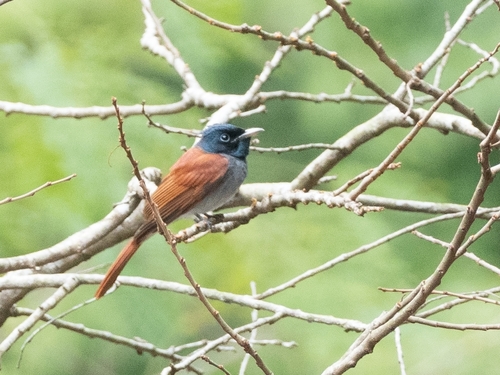 amur paradise-flycatcher
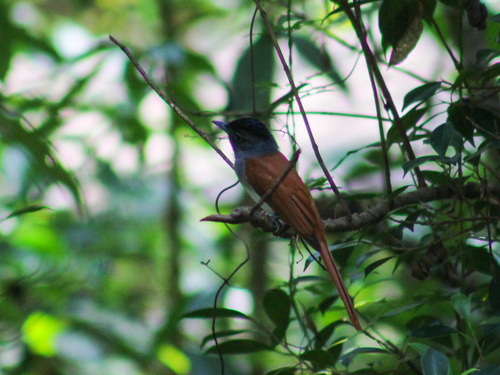 blyth's paradise-flycatcher
Em resumo
A marca de campo mais confiável para separar amur paradise-flycatcher de blyth's paradise-flycatcher é a cor do subcauda e a nitidez do contraste nas partes inferiores em morfos ruivos: Amur apresenta um subcauda branco e um contraste nítido em preto e branco, enquanto Blyth's tem um subcauda ruivo pálido e uma transição mais gradual para cinza abaixo. Ambas as espécies têm machos dimórficos (morfos ruivos e brancos), capuzes pretos, anéis oculares azuis e longas fitas de cauda em machos em reprodução, tornando-os muito semelhantes à primeira vista. A forma da crista e a intensidade do anel ocular podem ajudar, mas são sutis. Fêmeas e aves não reprodutoras são especialmente complicadas, então concentre-se na cor do subcauda e no contraste das partes inferiores sempre que possível.
Dicas de identificação
- A cor do subcauda é fundamental: Amur apresenta um subcauda branco (todas as idades e sexos), enquanto Blyth's tem um subcauda ruivo pálido em morfos ruivos e fêmeas. Esta é a marca de campo mais confiável.
- Contraste das partes inferiores: Amur tem um contraste nítido entre o capuz preto e as partes inferiores brancas; os morfos ruivos de Blyth's têm uma transição mais gradual para partes inferiores acinzentadas, sem uma divisão nítida.
- Marcas do morfo branco: Machos do morfo branco de Blyth's apresentam listras escuras nas asas e nos eixos das penas centrais da cauda, que não são notadas para Amur. Verifique essas marcas sutis em boa luz.
- Forma da crista: Blyth's tem uma crista curta e arredondada; a de Amur é pequena, mas não especificamente arredondada. Isso é sutil e melhor utilizado em comparação direta.
- Cor do anel ocular: Ambos têm anéis oculares azuis, mas as fêmeas de Blyth's e as aves não reprodutoras têm um azul menos vibrante do que Amur. Este é um ponto menor e pode ser difícil de julgar em campo.
- Comprimento das fitas de cauda: Ambos os machos em plumagem reprodutiva têm fitas de cauda quase duas vezes o comprimento do corpo, então isso não é um separador.
- Confusão das fêmeas: As fêmeas de ambas as espécies são muito semelhantes; confie na cor do subcauda e no contraste das partes inferiores, já que outras características se sobrepõem.
- Contexto do habitat: Se vistas em floresta madura na China ou no Extremo Oriente Russo, Amur é mais provável; em jardins, plantações ou habitats de borda do Sudeste Asiático, Blyth's é favorecido, mas a sobreposição de áreas de distribuição e migração pode causar confusão.
- Voz: Apenas Blyth's tem uma canção/chamada descrita nessas notas. Se você ouvir um "wiwiwiwiwiwiwi" ou um nasal "ji-jeh", isso apoia Blyth's, mas a ausência de canção não é diagnóstica.
- Armadilhas do morfo ruivo: Ambas as espécies têm morfos ruivos, então não use apenas a coloração ruiva geral. Concentre-se no subcauda e no contraste das partes inferiores.
- Armadilhas do morfo branco: Ambas podem apresentar morfos brancos; procure as listras escuras nos eixos de Blyth's, que não são descritas para Amur.
- Crista e jizz: A forma da crista é sutil e nem sempre visível; não confie apenas nisso.
- Confusão de imaturos/juvenis: Nenhuma marca distintiva de asa ou padrão de voo imaturo é descrita, então concentre-se no subcauda e no contraste das partes inferiores, mesmo em aves jovens.
- Contexto sazonal: Amur é um migrante no Sudeste Asiático, então o tempo pode ajudar, mas a sobreposição com Blyth's é possível no inverno.
- Quando em dúvida: Se a cor do subcauda e o contraste das partes inferiores não forem visíveis, e o habitat ou a voz não ajudarem, pode não ser possível separar essas espécies com confiança em campo.
Tamanho
Nenhuma diferença de tamanho direta é notada entre amur paradise-flycatcher e blyth's paradise-flycatcher nas fontes disponíveis. Ambos são típicos paradise-flycatchers, com machos apresentando caudas extremamente longas em plumagem reprodutiva. A estrutura (bico, asa, corpo) não é destacada como um separador nessas espécies.
Plumagem
-
Plumagem juvenil/imatura: Nenhuma diferença específica de plumagem ou padrão de voo juvenil ou imaturo é descrita nas notas disponíveis para qualquer uma das espécies. Se você encontrar uma ave em voo, concentre-se na cor do subcauda e no contraste das partes inferiores, se visíveis.
-
Machos adultos (reprodução): Ambas as espécies têm dois morfos masculinos (ruivo e branco), com longas fitas de cauda, capuzes pretos, anéis oculares azuis e pequenas cristas. Machos de Amur têm partes inferiores brancas e um subcauda branco, com um contraste nítido entre o capuz preto e a barriga branca. Machos do morfo ruivo de Blyth's têm um subcauda ruivo pálido e uma transição gradual de partes superiores mais escuras para partes inferiores acinzentadas, sem o contraste nítido de Amur. Machos do morfo branco de Blyth's apresentam listras escuras na asa e no eixo central da cauda, que não são mencionadas para Amur.
-
Fêmeas e aves não reprodutoras: As fêmeas de ambas as espécies se assemelham a machos ruivos, mas as fêmeas de Blyth's têm uma cabeça mais pálida e um anel ocular azul menos vibrante. O subcauda continua sendo um separador chave: branco em Amur, ruivo pálido em Blyth's. O contraste das partes inferiores também é menos nítido em Blyth's.
-
Crista: Blyth's tem uma crista curta e arredondada; a de Amur é descrita como pequena, mas não especificamente moldada.
Comportamento
Nenhuma diferença comportamental distintiva é descrita entre essas duas espécies nas notas disponíveis. Ambas são típicos flycatchers, provavelmente vistas capturando insetos e empoleirando-se no meio da vegetação ou na copa.
Habitat
Amur Paradise-Flycatcher é nativo da China e do Extremo Oriente Russo, invernando no Sudeste Asiático. Blyth's Paradise-Flycatcher é mais associado a florestas de folhas largas perenes, bordas de florestas, crescimento secundário, jardins e plantações em regiões de planície e encosta. Embora ambas possam ocorrer em áreas de invernada sobrepostas no Sudeste Asiático, Blyth's é mais provável em habitats perturbados ou de borda, enquanto Amur pode preferir florestas mais maduras (embora isso não seja definitivo).
Voz
Apenas Blyth's Paradise-Flycatcher tem vocalizações descritas nas notas: uma série de notas "wiwiwiwiwiwiwi" e uma chamada nasal "ji-jeh" ou "ji-jeh-jeh". Nenhuma descrição vocal é fornecida para Amur nessas notas, então a voz não é um separador confiável, a menos que você esteja familiarizado com as chamadas de Blyth's.
amur paradise-flycatcher · blyth's paradise-flycatcher · Minhas aves difíceis