

Amur Paradise-Flycatcher vs Blyth's Paradise-Flycatcher
Terpsiphone incei contro Terpsiphone affinis
Fai un quiz con Amur Paradise-Flycatcher e Blyth's Paradise-Flycatcher
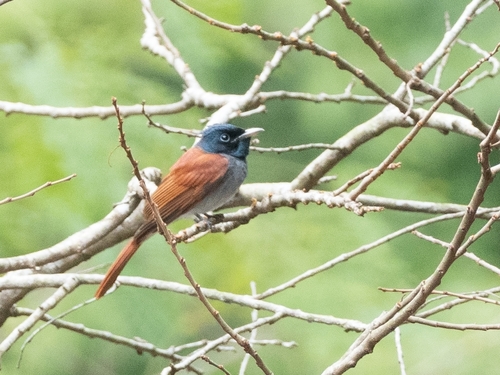 Amur Paradise-Flycatcher
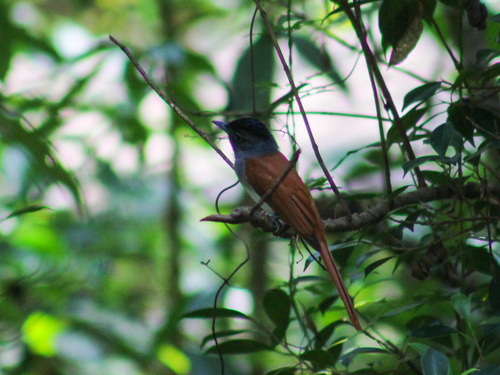 Blyth's Paradise-Flycatcher
In breve
Il segno di campo più affidabile per separare l'Amur Paradise-Flycatcher dal Blyth's Paradise-Flycatcher è il colore dell'undertail e la nitidezza del contrasto sulle parti inferiori nei morph rufous: l'Amur mostra un undertail bianco e un contrasto netto in bianco e nero, mentre il Blyth's ha un undertail rufous pallido e una transizione più graduale al grigio sotto. Entrambe le specie hanno maschi dimorfici (morph rufous e bianchi), cappucci neri, anelli oculari blu e lunghe streamers nella coda nei maschi in riproduzione, rendendoli molto simili a colpo d'occhio. La forma della cresta e l'intensità dell'anello oculare possono aiutare, ma sono sottili. Le femmine e gli uccelli non in riproduzione sono particolarmente difficili, quindi concentrati sul colore dell'undertail e sul contrasto delle parti inferiori ogni volta che è possibile.
Consigli di identificazione
- Il colore dell'undertail è fondamentale: L'Amur mostra un undertail bianco (tutte le età e sessi), mentre il Blyth's ha un undertail rufous pallido nei morph rufous e nelle femmine. Questo è il segno di campo più affidabile.
- Contrasto delle parti inferiori: L'Amur ha un contrasto netto tra il cappuccio nero e le parti inferiori bianche; i morph rufous del Blyth's hanno una transizione più graduale verso le parti inferiori grigioastre, senza una netta divisione.
- Segni del morph bianco: I maschi del morph bianco del Blyth's mostrano strisce scure sulle ali e sugli steli delle piume centrali della coda, che non sono notate per l'Amur. Controlla questi segni sottili in buona luce.
- Forma della cresta: Il Blyth's ha una cresta corta e arrotondata; l'Amur è piccolo ma non specificamente arrotondato. Questo è sottile e meglio utilizzato in confronto diretto.
- Colore dell'anello oculare: Entrambi hanno anelli oculari blu, ma le femmine e gli uccelli non in riproduzione del Blyth's hanno un blu meno vivace rispetto all'Amur. Questo è un punto minore e potrebbe essere difficile da giudicare sul campo.
- Lunghezza delle streamers della coda: Entrambi i maschi in abito nuziale hanno streamers della coda quasi due volte la lunghezza del corpo, quindi questo non è un separatore.
- Confusione femminile: Le femmine di entrambe le specie sono molto simili; fai affidamento sul colore dell'undertail e sul contrasto delle parti inferiori, poiché altre caratteristiche si sovrappongono.
- Contesto dell'habitat: Se viste in foreste mature in Cina o nel Far East Russo, l'Amur è più probabile; nei giardini, piantagioni o habitat di margine del Sud-est asiatico, il Blyth's è favorito, ma la sovrapposizione dell'areale e la migrazione possono causare confusione.
- Voce: Solo il Blyth's ha una canzone/chiamata descritta in queste note. Se senti un "wiwiwiwiwiwiwi" squillante o un "ji-jeh" nasale, supporta il Blyth's, ma l'assenza di canzone non è diagnostica.
- Insidie dei morph rufous: Entrambe le specie hanno morph rufous, quindi non usare solo la colorazione rufous complessiva. Concentrati sul contrasto dell'undertail e delle parti inferiori.
- Insidie dei morph bianchi: Entrambi possono mostrare morph bianchi; cerca le strisce scure sugli steli del Blyth's, che non sono descritte per l'Amur.
- Cresta e jizz: La forma della cresta è sottile e non sempre visibile; non fare affidamento su questo da solo.
- Confusione immatura/giovanile: Non sono descritti segni distintivi di ali immature o schemi di volo, quindi concentrati sul contrasto dell'undertail e delle parti inferiori anche negli uccelli giovani.
- Contesto stagionale: L'Amur è un migratore nel Sud-est asiatico, quindi il tempismo può aiutare, ma la sovrapposizione con il Blyth's è possibile in inverno.
- Quando in dubbio: Se il colore dell'undertail e il contrasto delle parti inferiori non sono visibili, e l'habitat o la voce non aiutano, potrebbe non essere possibile separare queste specie con fiducia sul campo.
Taglia
Non sono notate differenze di dimensioni dirette tra l'Amur e il Blyth's Paradise-Flycatchers nelle fonti disponibili. Entrambi sono tipici paradise-flycatchers, con maschi che mostrano code estremamente lunghe in abito nuziale. La struttura (becco, ala, corpo) non è evidenziata come separatore in queste specie.
Piumaggio
-
Piumaggio giovanile/immaturo: Non sono descritte differenze specifiche di piumaggio o schemi di volo per uccelli giovanili o immaturi nelle note disponibili per entrambe le specie. Se incontri un uccello in volo, concentrati sul colore dell'undertail e sul contrasto delle parti inferiori se visibili.
-
Maschi adulti (riproduzione): Entrambe le specie hanno due morph maschili (rufous e bianco), con lunghe streamers della coda, cappucci neri, anelli oculari blu e piccole creste. I maschi dell'Amur hanno parti inferiori bianche e un undertail bianco, con un contrasto netto tra il cappuccio nero e il ventre bianco. I maschi del morph rufous del Blyth's hanno un undertail rufous pallido e una transizione graduale da parti superiori più scure a parti inferiori grigioastre, senza il contrasto netto dell'Amur. I maschi del morph bianco del Blyth's mostrano strisce scure sull'ala e sullo stelo centrale della coda, che non sono menzionate per l'Amur.
-
Femmine e uccelli non in riproduzione: Le femmine di entrambe le specie assomigliano ai maschi rufous, ma le femmine del Blyth's hanno una testa più chiara e un anello oculare blu meno vivace. L'undertail rimane un separatore chiave: bianco nell'Amur, rufous pallido nel Blyth's. Il contrasto delle parti inferiori è anche meno netto nel Blyth's.
-
Cresta: Il Blyth's ha una cresta corta e arrotondata; l'Amur è descritto come piccolo ma non specificamente sagomato.
Comportamento
Non sono descritte differenze comportamentali distintive tra queste due specie nelle note disponibili. Entrambi sono tipici flycatchers, probabilmente visti mentre catturano insetti e posano nel sottobosco o nella chioma degli alberi.
Habitat
L'Amur Paradise-Flycatcher è nativo della Cina e del Far East Russo, svernando nel Sud-est asiatico. Il Blyth's Paradise-Flycatcher è più associato a foreste sempreverdi a foglia larga, margini forestali, crescita secondaria, giardini e piantagioni nelle regioni di pianura e di piede. Anche se entrambe possono verificarsi in aree di svernamento sovrapposte nel Sud-est asiatico, il Blyth's è più probabile in habitat disturbati o di margine, mentre l'Amur potrebbe preferire foreste più mature (anche se questo non è definitivo).
Voce
Solo il Blyth's Paradise-Flycatcher ha vocalizzazioni descritte nelle note: una serie squillante di note "wiwiwiwiwiwiwi" e una chiamata nasale "ji-jeh" o "ji-jeh-jeh". Nessuna descrizione vocale è fornita per l'Amur in queste note, quindi la voce non è un separatore affidabile a meno che tu non sia familiare con le chiamate del Blyth's.
Amur Paradise-Flycatcher · Blyth's Paradise-Flycatcher · I miei uccelli difficili