

galinha-d'água vs townsend's solitaire
Gallinula galeata versus Myadestes townsendi
Jogue um quiz com galinha-d'água e townsend's solitaire
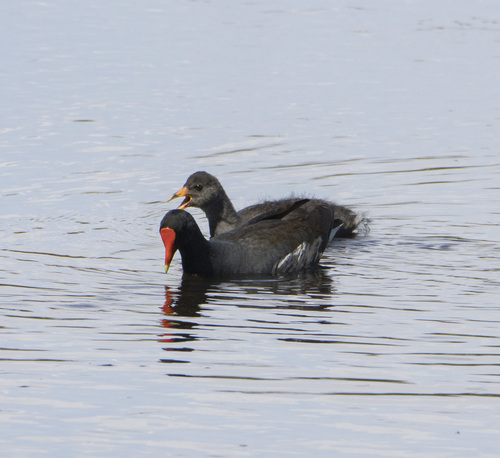 galinha-d'água
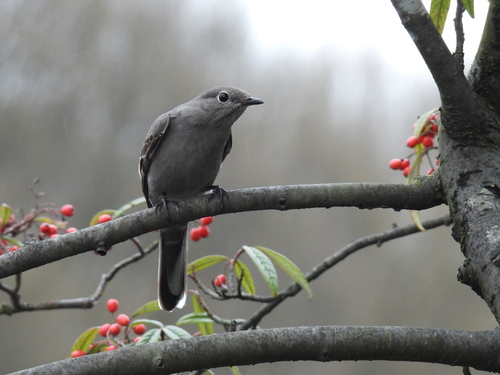 townsend's solitaire
Em resumo
A marca de campo mais confiável entre a galinha-d'água e o townsend's solitaire é a estrutura e a cor geral: a galinha-d'água é uma ave de pântano escura, semelhante a uma galinha, com um escudo vermelho no rosto e pernas amarelas, enquanto o solitaire é um tordo cinza esbelto e ereto, com um anel ocular branco e uma faixa alaranjada nas asas. As galinhas-d'água juvenis são mais marrons e não têm o escudo vermelho, mas ainda mostram uma parte inferior branca e pernas amareladas, ao contrário da cauda cinza e com bordas brancas do solitaire e sua postura ereta. As galinhas-d'água são sempre encontradas em ou perto da água, frequentemente caminhando sobre vegetação flutuante, enquanto os solitaires empoleiram-se altos e eretos, geralmente em habitats mais secos, arborizados ou arbustivos. A diferença de tamanho é extrema: a galinha-d'água é quase dez vezes mais pesada que o solitaire.
Dicas de identificação
- Habitat: A galinha-d'água nunca está longe da água; o solitaire quase nunca está em pântanos ou em água aberta. Use o habitat como seu primeiro filtro.
- Tamanho: A galinha-d'água é quase dez vezes mais pesada e muito mais robusta que o solitaire. Se a ave parece do tamanho de uma galinha, não é um solitaire.
- Estrutura: A galinha-d'água tem um corpo semelhante a uma galinha, cauda curta e dedos longos e largos para caminhar sobre vegetação. O solitaire é esbelto, com uma cauda longa e afilada e postura ereta, semelhante a um tordo.
- Bico: A galinha-d'água tem um bico curto, grosso e vermelho com um escudo frontal vermelho; o solitaire tem um bico curto, grosso e escuro sem escudo.
- Pernas e Pés: A galinha-d'água tem pernas amarelas brilhantes e pés muito grandes; o solitaire tem pernas e pés normais, pouco visíveis.
- Marcas Faciais: A galinha-d'água (adulto) mostra um escudo vermelho ousado acima do bico; o solitaire tem um anel ocular branco e nenhum escudo.
- Cor da Plumagem: A galinha-d'água é escura no geral com uma parte inferior branca; o solitaire é cinza liso com uma faixa alaranjada nas asas e cauda com bordas brancas.
- Padrão das Asas: O solitaire mostra uma faixa alaranjada nas asas e bordas brancas na cauda em todas as idades; a galinha-d'água nunca mostra uma faixa nas asas ou branco nas asas.
- Plumagem Juvenil: A galinha-d'água juvenil é mais marrom, não tem o escudo vermelho, mas ainda possui uma parte inferior branca e pernas amareladas. O solitaire juvenil é cinza e branco manchado, com um anel ocular pálido e faixa alaranjada nas asas.
- Cauda: A galinha-d'água tem uma cauda curta e quadrada com uma parte inferior branca; o solitaire tem uma cauda longa e afilada com bordas brancas.
- Postura: A galinha-d'água é horizontal, frequentemente se esgueirando ou nadando; o solitaire é ereto, empoleirando-se alto e imóvel.
- Comportamento: A galinha-d'água caminha sobre plantas flutuantes ou nada; o solitaire empoleira-se, lança-se para pegar insetos e defende áreas de frutas.
- Vocalizações: A galinha-d'água emite gorgolejos ásperos e sibilos; o solitaire canta frases melodiosas, semelhantes a flautas, e emite um chamado estridente.
- Contexto: Se a ave está em um pântano ou na água, pense em galinha-d'água; se está em florestas secas ou em um poleiro alto, pense em solitaire.
- Armadilhas: As galinhas-d'água imaturas podem não ter o escudo vermelho e parecer mais marrons, mas nunca mostrarão uma faixa nas asas ou anel ocular. Os solitaires, mesmo como juvenis, sempre mostram alguma mancha pálida e um anel ocular branco.
Tamanho
A galinha-d'água é muito maior e mais pesada (310–456 g, 32–35 cm de comprimento, 54–62 cm de envergadura) do que o townsend's solitaire (32 g, 20–24 cm de comprimento, 37 cm de envergadura). A galinha-d'água é uma ave robusta, do tamanho de uma galinha, enquanto o solitaire é um tordo pequeno e esbelto. Mesmo à distância, o volume e os dedos longos da galinha-d'água são óbvios em comparação com a silhueta pequena e ereta do solitaire.
Plumagem
- Aves Juvenis/imaturas: As galinhas-d'água juvenis são mais marrons no geral, não têm o escudo facial vermelho do adulto, mas ainda mostram uma parte inferior branca e pernas amareladas. Os solitaires juvenis são cinza e branco manchados, com um anel ocular pálido e uma faixa alaranjada nas asas já presente. A cauda do solitaire é sempre com bordas brancas, mesmo em aves jovens, e é longa e afilada.
- Adultos: As galinhas-d'água adultas são escuras (quase negras) com um escudo vermelho ousado acima do bico, pernas amarelas e uma parte inferior branca. Os solitaires adultos são cinza liso com um anel ocular branco, faixa alaranjada nas asas e cauda com bordas brancas. A galinha-d'água nunca mostra uma faixa nas asas ou anel ocular; o solitaire nunca mostra um escudo vermelho ou pernas amarelas. Em voo, as bordas brancas da cauda e a faixa nas asas do solitaire são visíveis; a galinha-d'água mostra um flash de branco sob a cauda, mas de outra forma permanece escura.
Comportamento
As galinhas-d'água são frequentemente secretivas, esgueirando-se através da densa vegetação de pântano ou caminhando sobre plantas flutuantes, mas podem se tornar mansas e visíveis em algumas áreas. Elas nadam, caminham e às vezes se viram como patos. Os solitaires empoleiram-se eretos, frequentemente altos e expostos, e podem ficar imóveis por longos períodos. Eles se alimentam de frutas e insetos, frequentemente lançando-se de poleiros, e defendem territórios de inverno ao redor de arbustos de zimbro. As galinhas-d'água raramente se empoleiram altas ou permanecem paradas em aberto por muito tempo.
Habitat
A galinha-d'água está sempre associada à água—pântanos, lagoas, canais ou lagos com vegetação densa. Se você vê a ave longe da água, quase certamente não é uma galinha-d'água. O townsend's solitaire prefere habitats secos, arborizados ou arbustivos, especialmente áreas com zimbro no inverno. Ele faz ninho no chão em áreas florestais ou arbustivas, nunca em pântanos ou água aberta. O habitat por si só é frequentemente suficiente para separar essas duas espécies.
Voz
A galinha-d'água emite uma variedade de chamados gorgolejantes e sibilos altos, especialmente quando alarmada. Seus chamados não são musicais. O townsend's solitaire canta uma canção alta, melodiosa e semelhante a uma flauta, com frases ascendentes e descendentes, às vezes com uma qualidade mecânica, e emite um chamado estridente 'eeek' ou um assobio suave. Se você ouvir uma canção musical, é um solitaire; se ouvir gorgolejos ásperos ou sibilos, é uma galinha-d'água.
galinha-d'água · townsend's solitaire · Minhas aves difíceis