

african openbill vs abdim's stork
Anastomus lamelligerus versus Ciconia abdimii
Jogue um quiz com african openbill e abdim's stork
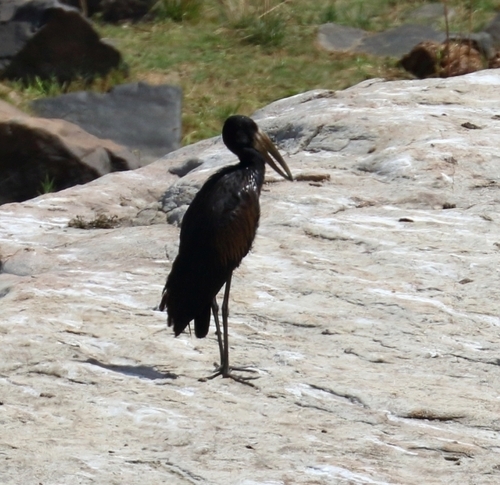 african openbill
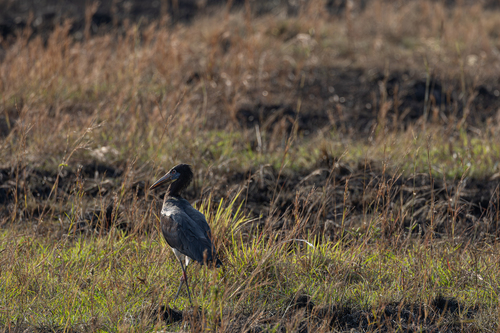 abdim's stork
Em resumo
A marca de campo mais confiável para separar o african openbill do abdim's stork é o bico: o african openbill tem um bico único, fortemente espaçado, com uma abertura visível entre as mandíbulas, enquanto o abdim's stork apresenta um bico reto e normal de cegonha. Em voo ou em repouso, o abdim's stork é facilmente identificado por sua impressionante barriga branca e coberturas de asa contrastando com a plumagem escura, enquanto o african openbill é uniformemente escuro e iridescente, sem branco nas partes inferiores. Ambas as espécies ocorrem amplamente na África Subsaariana, mas sua estrutura, comportamento alimentar e detalhes da plumagem são bastante diferentes. As plumagens juvenis e imaturas não são descritas em detalhes para nenhuma das espécies, então concentre-se nas marcas de campo de adultos e gerais.
Dicas de identificação
- A forma do bico é diagnóstica: o african openbill tem um bico distinto, espaçado, com um espaço visível entre as mandíbulas (melhor visto de lado, especialmente quando o bico está fechado). O abdim's stork tem um bico reto e normal de cegonha, sem espaço. Esta é a marca de campo mais confiável a qualquer distância onde o bico é visível.
- Cor das partes inferiores: o abdim's stork tem partes inferiores e coberturas de asa brancas e ousadas, criando um forte contraste com as partes superiores escuras e penas de voo. O african openbill é totalmente escuro, sem branco na barriga ou nas asas. Isso é óbvio em voo e quando empoleirado.
- Cor das pernas e pés: o abdim's stork apresenta pernas cinzas com joelhos e pés vermelhos, especialmente óbvios em adultos em reprodução. O african openbill tem pernas escuras, sem destaques vermelhos. Isso é melhor visto de perto ou em boa luz.
- Pele facial: na época de reprodução, o abdim's stork apresenta pele vermelha na frente do olho e pele azul perto do bico. O african openbill não tem pele facial colorida, permanecendo uniformemente escuro.
- Iridescência: o african openbill tem um brilho iridescente verde na plumagem das asas e do peito, especialmente em boa luz, devido à sua estrutura única de penas. O abdim's stork é menos brilhante e não possui essa iridescência esverdeada.
- Impressão geral de cor: o african openbill parece uniformemente escuro e brilhante em todas as idades. O abdim's stork sempre apresenta uma barriga e uma asa brancas, dando uma aparência bicolor em preto e branco.
- Perfil de voo: ambas as espécies planam com o pescoço e a cabeça estendidos, mas o african openbill é conhecido por sua agilidade e descidas acrobáticas. O abdim's stork é mais provável de ser visto planando de forma constante sobre o campo aberto.
- Comportamento alimentar: o african openbill é frequentemente visto perto da água, sondando em busca de caracóis e moluscos. O abdim's stork é mais provável de forragear por insetos em campos abertos ou pastagens.
- Contexto do habitat: se visto em um pântano ou ao longo da água, especialmente com caracóis presentes, suspeite do african openbill. Em campo aberto seco ou em campos agrícolas, o abdim's stork é mais provável.
- Confusão juvenil/imatura: não há informações detalhadas disponíveis para plumagens imaturas, mas a presença ou ausência de branco na barriga e na asa deve permanecer confiável em todas as idades.
- Impressão de tamanho: o abdim's stork é a menor cegonha e pode parecer mais compacta e leve que o african openbill, mas o tamanho sozinho não é um separador seguro, a menos que vistos lado a lado.
- Cor das pernas em voo: os joelhos e pés vermelhos do abdim's stork podem ser visíveis quando as pernas estão estendidas em voo; as pernas do african openbill permanecem escuras.
- Sem branco no openbill: se você ver qualquer branco na barriga ou na asa, exclua o african openbill.
- Sem espaço no bico do abdim's: se o bico parecer reto e fechado, sem espaço, exclua o african openbill.
- Dicas contextuais: ambas as espécies podem ocorrer juntas, mas use uma combinação de forma do bico, cor das partes inferiores e cor das pernas/pele facial para uma identificação confiante.
Tamanho
O abdim's stork é a menor espécie de cegonha, medindo cerca de 73 cm (29 pol) e pesando pouco mais de 1 kg (2,2 lb) [wikipedia]. O african openbill é descrito como menor que a maioria das cegonhas, mas nenhuma medida precisa é fornecida; ambas são de tamanho médio para cegonhas, mas o abdim's é notavelmente mais compacto e leve. No campo, ambas podem parecer semelhantes em tamanho, mas o abdim's é distintamente mais esguio e menos volumoso que a maioria das outras cegonhas.
Plumagem
O african openbill adulto é totalmente escuro, com um brilho iridescente verde nas asas e no peito, criado por penas únicas em forma de fita. Não há branco nas partes inferiores ou nas asas. O abdim's stork, em contraste, é preto por cima, mas tem partes inferiores e coberturas de asa brancas proeminentes, criando um forte contraste em voo e quando empoleirado. O abdim's também apresenta joelhos e pés vermelhos e, na época de reprodução, pele facial vermelha na frente do olho e pele azul perto do bico. Plumagens juvenis e imaturas não são descritas para nenhuma das espécies, então esses contrastes se aplicam a adultos e provavelmente a imaturos mais velhos também. Em todas as idades, a presença ou ausência de branco na barriga e na asa é um separador chave.
Comportamento
O african openbill é adaptado para se alimentar de moluscos, especialmente caracóis, usando seu bico especializado e espaçado. É ágil em voo, capaz de mergulhos acentuados e acrobacias, e frequentemente planam em térmicas. O abdim's stork se alimenta principalmente de insetos e é mais provável de ser visto forrageando em habitats abertos. Ambas as espécies planam, mas o african openbill é conhecido por sua agilidade e descidas acrobáticas. O comportamento dos filhotes é descrito para o african openbill: os jovens cobrem sua comida com as asas e têm mandíbulas flexíveis para engolir presas grandes, mas esses comportamentos não são marcas de campo para aves mais velhas.
Habitat
Ambas as espécies são amplamente distribuídas na África Subsaariana. O african openbill é distribuído de forma irregular, mas pode ser localmente abundante, especialmente perto de pântanos e corpos d'água onde moluscos estão disponíveis. O abdim's stork é encontrado em habitats abertos, incluindo pastagens e áreas agrícolas, e também é amplamente distribuído, mas pode ser mais provável de ser encontrado longe da água em comparação com o african openbill. Ambas podem ocorrer juntas, mas o contexto pode ajudar: o openbill está mais ligado às bordas de pântanos, o abdim's ao campo aberto.