

African Openbill vs Abdim's Stork
Anastomus lamelligerus contro Ciconia abdimii
Fai un quiz con African Openbill e Abdim's Stork
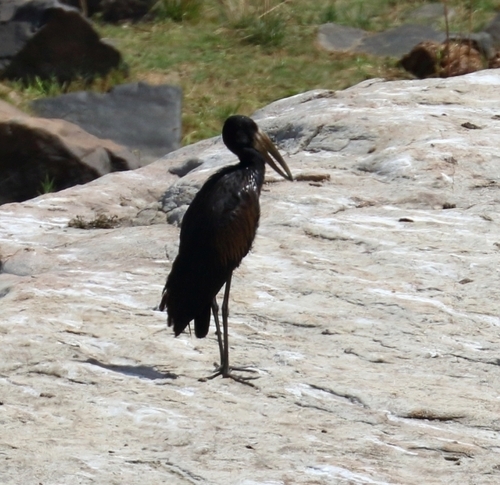 African Openbill
 Abdim's Stork
In breve
Il segno di campo più affidabile per separare l'African Openbill dall'Abdim's Stork è il becco: l'African Openbill ha un becco unico, fortemente gapato, con un'apertura visibile tra le mandibole, mentre l'Abdim's Stork mostra un becco d'airone dritto e normale. In volo o a riposo, l'Abdim's Stork è facilmente riconoscibile per il suo ventre bianco e le copritrici delle ali inferiori che contrastano con il piumaggio altrimenti scuro, mentre l'African Openbill è uniformemente scuro e iridescente senza bianco nelle parti inferiori. Entrambe le specie si trovano ampiamente nell'Africa subsahariana, ma la loro struttura, comportamento alimentare e dettagli del piumaggio sono piuttosto diversi. I piumaggi giovanili e immaturi non sono descritti in dettaglio per nessuna delle due specie, quindi concentrati sui segni di campo adulti e generali.
Consigli di identificazione
- La forma del becco è diagnostica: L'African Openbill ha un becco distintivo, gapato, con uno spazio visibile tra le mandibole (meglio visibile di lato, specialmente quando il becco è chiuso). L'Abdim's Stork ha un becco d'airone dritto e normale senza gap. Questo è il segno di campo più affidabile a qualsiasi distanza in cui il becco è visibile.
- Colore delle parti inferiori: L'Abdim's Stork ha parti inferiori e copritrici delle ali inferiori bianche e audaci, creando un forte contrasto con le parti superiori scure e le penne da volo. L'African Openbill è completamente scuro, senza bianco sul ventre o sulle ali inferiori. Questo è ovvio in volo e quando è posato.
- Colore delle gambe e dei piedi: L'Abdim's Stork mostra gambe grigie con ginocchia e piedi rossi, particolarmente evidenti negli adulti in riproduzione. L'African Openbill ha gambe scure senza evidenti riflessi rossi. Questo è meglio visibile a distanza ravvicinata o in buona luce.
- Pelle facciale: Durante la stagione di riproduzione, l'Abdim's Stork mostra pelle rossa davanti all'occhio e pelle blu vicino al becco. L'African Openbill non ha pelle facciale colorata, rimanendo uniformemente scuro.
- Iridescenza: L'African Openbill ha una lucentezza iridescente verdastra sulle ali e sul petto, specialmente in buona luce, a causa della sua unica struttura delle piume. L'Abdim's Stork è meno lucido e manca di questa iridescenza verdastra.
- Impressione di colore generale: L'African Openbill appare uniformemente scuro e lucido a tutte le età. L'Abdim's Stork mostra sempre un ventre e un'ala inferiore bianchi, dando un aspetto bicolore in bianco e nero.
- Profilo di volo: Entrambe le specie volano con il collo e la testa estesi, ma l'African Openbill è noto per la sua agilità e discese acrobatiche. L'Abdim's Stork è più probabile che venga visto planare stabilmente su terreni aperti.
- Comportamento alimentare: L'African Openbill è spesso visto vicino all'acqua, mentre cerca lumache e molluschi. L'Abdim's Stork è più probabile che stia cercando insetti in campi aperti o praterie.
- Contesto dell'habitat: Se visto in una zona umida o lungo l'acqua, specialmente con lumache presenti, sospetta l'African Openbill. In terreni aperti e asciutti o campi agricoli, è più probabile che si tratti dell'Abdim's Stork.
- Confusione giovanile/immatura: Non sono disponibili informazioni dettagliate sui piumaggi immaturi, ma la presenza o l'assenza di bianco sul ventre e sull'ala inferiore dovrebbe rimanere affidabile a tutte le età.
- Impressione di dimensione: L'Abdim's Stork è il più piccolo airone e può apparire più compatto e leggero rispetto all'African Openbill, ma la dimensione da sola non è un separatore sicuro a meno che non siano visti fianco a fianco.
- Colore delle gambe in volo: Le ginocchia e i piedi rossi dell'Abdim's Stork possono essere visibili quando le gambe sono estese in volo; le gambe dell'African Openbill rimangono scure.
- Nessun bianco nell'openbill: Se vedi del bianco sul ventre o sull'ala inferiore, escludi l'African Openbill.
- Nessun gap nel becco dell'Abdim's: Se il becco appare dritto e chiuso senza gap, escludi l'African Openbill.
- Indizi contestuali: Entrambe le specie possono verificarsi insieme, ma utilizza una combinazione di forma del becco, colore delle parti inferiori e colore delle gambe/pelle facciale per un'identificazione sicura.
Taglia
L'Abdim's Stork è la specie di airone più piccola, misurando circa 73 cm (29 in) e pesando poco più di 1 kg (2.2 lb) [wikipedia]. L'African Openbill è descritto come più piccolo della maggior parte degli aironi, ma non sono fornite misurazioni precise; entrambi sono di dimensioni medie per gli aironi, ma l'Abdim's è notevolmente più compatto e leggero. Sul campo, entrambi possono apparire simili in dimensioni, ma l'Abdim's è distintamente più snello e meno ingombrante rispetto alla maggior parte degli altri aironi.
Piumaggio
L'African Openbill adulto è completamente scuro con una lucentezza iridescente verdastra sulle ali e sul petto, creata da piume uniche a forma di nastro. Non c'è bianco nelle parti inferiori o nelle ali inferiori. L'Abdim's Stork, al contrario, è nero sopra ma ha parti inferiori e copritrici delle ali inferiori bianche prominenti, creando un forte contrasto in volo e quando è posato. L'Abdim's mostra anche ginocchia e piedi rossi e, durante la stagione di riproduzione, pelle facciale rossa davanti all'occhio e pelle blu vicino al becco. I piumaggi giovanili e immaturi non sono descritti per nessuna delle due specie, quindi questi contrasti si applicano agli adulti e probabilmente anche ai giovani più grandi. A tutte le età, la presenza o l'assenza di bianco sul ventre e sull'ala inferiore è un separatore chiave.
Comportamento
L'African Openbill è adattato per nutrirsi di molluschi, specialmente lumache, utilizzando il suo becco gapato specializzato. È agile in volo, capace di tuffi ripidi e acrobazie, e spesso vola su termiche. L'Abdim's Stork si nutre principalmente di insetti ed è più probabile che venga visto cercare cibo in habitat aperti. Entrambe le specie volano, ma l'African Openbill è noto per la sua agilità e discese acrobatiche. Il comportamento dei nidiacei è descritto per l'African Openbill: i giovani coprono il loro cibo con le ali e hanno mandibole flessibili per ingoiare prede grandi, ma questi comportamenti non sono segni di campo per gli uccelli più grandi.
Habitat
Entrambe le specie sono diffuse nell'Africa subsahariana. L'African Openbill è distribuito in modo irregolare ma può essere localmente abbondante, specialmente vicino a zone umide e corpi d'acqua dove sono disponibili molluschi. L'Abdim's Stork si trova in habitat aperti, comprese praterie e aree agricole, ed è anche diffuso ma potrebbe essere più probabile lontano dall'acqua rispetto all'African Openbill. Entrambi possono verificarsi insieme, ma il contesto può aiutare: l'Openbill è più legato ai margini delle zone umide, l'Abdim's all'aperto.