

Witmaskeribis vs Roodmaskeribis
Plegadis chihi versus Phimosus infuscatus
Speel een quiz met Witmaskeribis en Roodmaskeribis
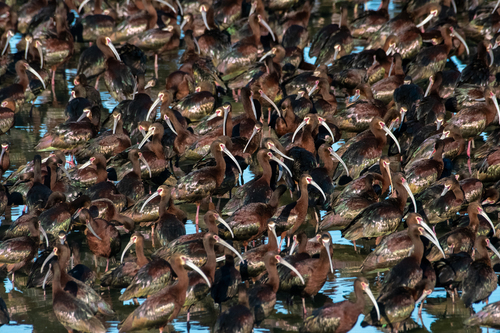 Witmaskeribis
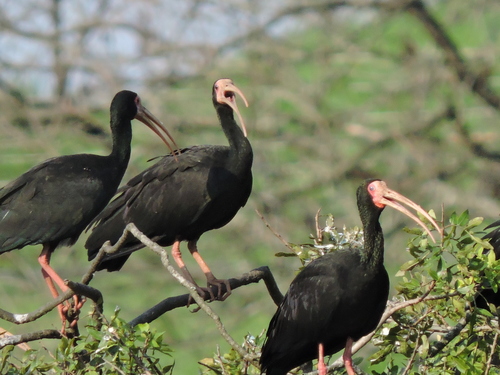 Roodmaskeribis
Kort gezegd
Het meest betrouwbare veldkenmerk tussen Witmaskeribis en Roodmaskeribis is het gezichts patroon bij volwassen vogels: Witmaskeribis in broedkleed toont een roze kale gezicht omringd door witte veren en rode ogen, terwijl Roodmaskeribis een kale roodachtige gezicht heeft zonder witte rand en donkere ogen. Juveniele Witmaskeribissen zijn bijna identiek aan Zwarte ibissen en missen de witte gezichtsrand, waardoor ze op die leeftijd erg op Roodmaskeribis lijken. De kleur van de snavel en de kleur van de poten kunnen ook helpen: Witmaskeribis heeft een grijze snavel en roder poten in broedkleed, terwijl Roodmaskeribis een roze tot roodachtig-bruin of oranje snavel en roze poten heeft. Beide soorten zijn donkere, langbenige watervogels, maar Witmaskeribis is iets zwaarder en heeft een warmere kleurtoon in het verenkleed. Scheiding is het meest uitdagend bij niet-broedende en onvolwassen vogels, waar structuur en subtiele kleurverschillen belangrijk worden.
Herkenningstips
- Gezichts patroon bij volwassenen (broed): Let op de witte verenrand rond het roze kale gezicht bij Witmaskeribis (alleen broedvolwassen). Roodmaskeribis toont nooit een witte rand; zijn kale gezicht is uniform roodachtig.
- Oogkleur: Volwassen Witmaskeribis heeft het hele jaar door rode ogen, terwijl Roodmaskeribis donkere ogen heeft. Dit is het beste te zien van dichtbij of in goed licht.
- Snavelkleur: Witmaskeribis heeft een grijze snavel, vooral in broedkleed. Roodmaskeribis heeft een roze tot roodachtig-bruin of oranje snavel, vaak helderder dan Witmaskeribis.
- Poten kleur: Broedende Witmaskeribis heeft helderdere, roder poten. Roodmaskeribis heeft roze poten, die minder intens gekleurd kunnen lijken.
- Verenkleuren: Witmaskeribis heeft de neiging een warmere, meer kastanjebruine of roodachtige glans op zijn donkere verenkleed te hebben, vooral in broedconditie. Roodmaskeribis is meer uniform donkerbruin tot zwartachtig.
- Juveniele verwarring: Juveniele en niet-broedende Witmaskeribis missen de witte gezichtsrand en hebben donkere ogen, waardoor ze extreem op Roodmaskeribis lijken. In deze leeftijden is scheiding onbetrouwbaar zonder nauwkeurige studie of context van het bereik.
- Snavelvorm en grootte: Beide soorten hebben lange, gebogen snavels, maar Roodmaskeribis-mannetjes hebben relatief grotere snavels voor hun lichaamsgrootte. Dit is subtiel en meestal niet diagnostisch in het veld.
- Vluchtgedrag: Roodmaskeribis is vaak in grote, gemengde soorten groepen en kan in de buurt van huisdieren worden gezien. Witmaskeribis is koloniaal maar wordt niet beschreven als associërend met vee.
- Habitatcontext: Als gezien in Noord-Amerika, vooral het westen van de VS of Canada, is het bijna zeker Witmaskeribis. In Zuid-Amerika kunnen beide soorten overlappen, zodat gezichts- en snavelkenmerken cruciaal worden.
- Nestplaatsen: Witmaskeribis nestelt in dichte moerasvegetatie, vaak in struiken of lage bomen. Roodmaskeribis kan nestelen in meer open wetlands en deelt soms nesten met andere soorten.
- Vluchtzicht: Geen onderscheidende bovenvleugel of vluchtmerken scheiden deze soorten; focus op gezichts patroon en snavelkleur als zichtbaar.
- Aggressie en socialiteit: Roodmaskeribis is minder territoriaal en meer tolerant tegenover nabije buren, soms delen ze nesten. Witmaskeribis is koloniaal maar niet bekend om dit gedrag.
- Seizoensgebonden veranderingen: Alleen Witmaskeribis toont een dramatische verandering naar een witomrand gezicht en roder poten in het broedseizoen; Roodmaskeribis verandert niet seizoensgebonden.
- Geografisch bereik: Gebruik locatie als een sterke aanwijzing—Witmaskeribis is de enige die in Noord-Amerika wordt verwacht, terwijl beide in delen van Zuid-Amerika kunnen voorkomen.
- Bij twijfel: Als de vogel geen witte gezichtsrand heeft en een roodachtig kale gezicht met een roze of oranje snavel heeft, vooral in Zuid-Amerika, is Roodmaskeribis waarschijnlijk. Als de vogel een witomrand roze gezicht en rode ogen toont, is het een broedvolwassen Witmaskeribis.
Grootte
Witmaskeribis is iets groter en zwaarder, met een gemiddelde lichaamsmassa van 612,5 g [wikidata] en een lengte van 46–56 cm [wikipedia]. Roodmaskeribis is iets kleiner, met een lengte van 45–50 cm [wikipedia], maar er zijn geen massa-gegevens beschikbaar. In het veld is dit grootteverschil subtiel en meestal niet diagnostisch, tenzij beide soorten naast elkaar worden gezien. Beide hebben vergelijkbare vleugelspanwijdtes en algehele verhoudingen die typisch zijn voor ibissen.
Verenkleed
- Juveniele/onvolwassen vogels: Juveniele Witmaskeribis mist de witte gezichtsrand en heeft donkere ogen, waardoor het op deze leeftijd erg lijkt op Roodmaskeribis. Beide zijn over het algemeen donker, zonder sterk gezichts patroon, dus leeftijdspecifieke scheiding is extreem moeilijk en mogelijk niet betrouwbaar in het veld.
- Volwassen niet-broed: Witmaskeribis in niet-broedkleed is zeer vergelijkbaar met Zwarte ibis en dus met Roodmaskeribis, maar heeft de neiging een iets warmere algehele kleur te hebben. Roodmaskeribis blijft donkerbruin tot zwartachtig met een kale roodachtige gezicht en roze poten.
- Volwassen broed: Witmaskeribis ontwikkelt een roze kale gezicht met een duidelijke witte verenrand, rode ogen, een grijze snavel en helderdere, roder poten. Roodmaskeribis toont nooit een witte gezichtsrand; zijn gezicht is kaal en roodachtig, met een roze tot oranje snavel en roze poten. De oogkleur blijft donker bij Roodmaskeribis.
- Bovenvleugel patroon: Geen onderscheidende leeftijdspecifieke bovenvleugelmerken zijn beschreven voor beide soorten, dus vlucht scheiding is afhankelijk van lichaam en gezichts kenmerken.
Gedrag
Roodmaskeribis wordt typisch gezien in grote groepen, vaak met andere ibis soorten of zelfs huisdieren, en is niet erg territoriaal. Het wordt zelden alleen gevonden en is minder agressief dan andere ibissen, soms delen ze nesten met andere soorten. Witmaskeribis broedt ook koloniaal in moerassen maar wordt niet beschreven als associërend met huisdieren of als bijzonder niet-territoriaal. Beide soorten voeden zich door te zoeken naar ongewervelden en kleine gewervelden in natte habitats, en hun foerageergedrag is vergelijkbaar.
Habitat
Witmaskeribis broedt in moerassen met dichte vegetatie, nestelend in struiken of lage bomen, en wordt gevonden in de Amerika's van het zuidwesten van Canada en het westen van de VS naar het zuiden door Mexico, evenals in delen van Zuid-Amerika. Roodmaskeribis wordt gevonden in Zuid-Amerika, vaak in open natte habitats, en staat bekend om het leven in de nabijheid van andere ibis groepen, soms zo dichtbij als 100 meter. Beide soorten zijn sterk geassocieerd met wetlands, maar Witmaskeribis kan de voorkeur geven aan dichtere, meer begroeide moerassen voor het nestelen.