

White-faced Ibis vs Bare-faced Ibis
Plegadis chihi contro Phimosus infuscatus
Fai un quiz con White-faced Ibis e Bare-faced Ibis
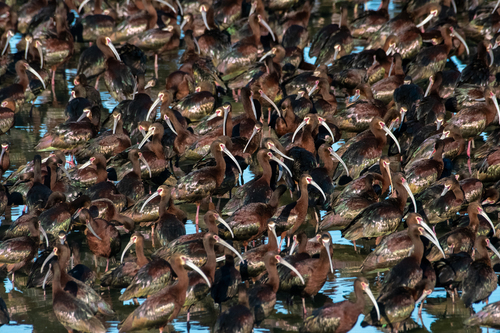 White-faced Ibis
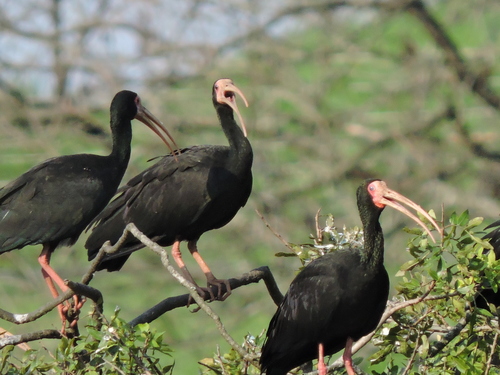 Bare-faced Ibis
In breve
Il segno di campo più affidabile tra White-faced Ibis e Bare-faced Ibis è il motivo facciale negli adulti: White-faced Ibis in abito nuziale mostra un viso nudo rosa bordato di piume bianche e occhi rossi, mentre Bare-faced Ibis ha un viso rossastro senza piume e senza bordo bianco e occhi scuri. I giovani di White-faced Ibis sono quasi identici a Mignattaio e mancano del bordo facciale bianco, rendendoli molto simili a Bare-faced Ibis a quell'età. Anche il colore del becco e delle gambe possono aiutare: White-faced Ibis ha un becco grigio e gambe più rosse in abito nuziale, mentre Bare-faced Ibis ha un becco rosa-rossastro o arancione e gambe rosa. Entrambe le specie sono waders scuri e long-legged, ma White-faced Ibis è leggermente più pesante e ha un tono di piumaggio più caldo. La separazione è più difficile negli uccelli non in riproduzione e immaturi, dove la struttura e le sottili differenze di colore diventano importanti.
Consigli di identificazione
- Motivo facciale negli adulti (riproduzione): Cerca il bordo di piume bianche attorno al viso nudo rosa in White-faced Ibis (solo adulto in riproduzione). Bare-faced Ibis non mostra mai un bordo bianco; il suo viso nudo è uniformemente rossastro.
- Colore degli occhi: Gli adulti di White-faced Ibis hanno occhi rossi tutto l'anno, mentre Bare-faced Ibis ha occhi scuri. Questo è meglio visibile da vicino o in buona luce.
- Colore del becco: White-faced Ibis ha un becco grigio, specialmente in abito nuziale. Bare-faced Ibis ha un becco rosa-rossastro o arancione, spesso più luminoso di White-faced Ibis.
- Colore delle gambe: White-faced Ibis in riproduzione ha gambe più luminose e rosse. Bare-faced Ibis ha gambe rosa, che possono apparire meno intensamente colorate.
- Calore del piumaggio: White-faced Ibis tende ad avere un gloss più caldo, più castano o rossastro nel suo piumaggio scuro, specialmente in condizioni di riproduzione. Bare-faced Ibis è più uniformemente marrone scuro o nerastro.
- Confusione giovanile: I giovani e i non in riproduzione di White-faced Ibis mancano del bordo facciale bianco e hanno occhi scuri, rendendoli estremamente simili a Bare-faced Ibis. In queste età, la separazione è inaffidabile senza uno studio ravvicinato o un contesto di gamma.
- Forma e dimensione del becco: Entrambe le specie hanno becchi lunghi e curvi, ma i maschi di Bare-faced Ibis hanno becchi relativamente più grandi per la loro dimensione corporea. Questo è sottile e di solito non è diagnostico sul campo.
- Comportamento di gruppo: Bare-faced Ibis è spesso in grandi stormi misti e può essere visto vicino ad animali domestici. White-faced Ibis è coloniale ma non è descritto come associato al bestiame.
- Contesto dell'habitat: Se visto in Nord America, specialmente negli Stati Uniti occidentali o in Canada, è quasi certamente White-faced Ibis. In Sud America, entrambe le specie possono sovrapporsi, quindi le caratteristiche facciali e del becco diventano critiche.
- Siti di nidificazione: White-faced Ibis nidifica in vegetazione palustre densa, spesso in cespugli o alberi bassi. Bare-faced Ibis può nidificare in aree umide più aperte e a volte condivide i nidi con altre specie.
- Viste in volo: Non ci sono segni distintivi sulle ali superiori o segni di volo che separano queste specie; concentrati sul motivo facciale e sul colore del becco se visibile.
- Aggressione e socialità: Bare-faced Ibis è meno territoriale e più tollerante nei confronti dei vicini, a volte condividendo i nidi. White-faced Ibis è coloniale ma non è noto per questo comportamento.
- Cambiamenti stagionali: Solo White-faced Ibis mostra un cambiamento drammatico a un viso bordato di bianco e gambe più rosse nella stagione di riproduzione; Bare-faced Ibis non cambia stagionalmente.
- Gamma geografica: Usa la posizione come un forte indizio—White-faced Ibis è l'unico previsto in Nord America, mentre entrambi possono verificarsi in parti del Sud America.
- Quando hai dubbi: Se l'uccello manca di un bordo facciale bianco e ha un viso nudo rossastro con un becco rosa o arancione, specialmente in Sud America, è probabile che sia Bare-faced Ibis. Se l'uccello mostra un viso rosa bordato di bianco e occhi rossi, è un adulto in riproduzione di White-faced Ibis.
Taglia
White-faced Ibis è leggermente più grande e pesante, con una massa corporea media di 612,5 g [wikidata] e una lunghezza di 46–56 cm [wikipedia]. Bare-faced Ibis è un po' più piccolo, con una lunghezza di 45–50 cm [wikipedia], ma non sono disponibili dati sulla massa. Sul campo, questa differenza di dimensione è sottile e di solito non è diagnostica a meno che entrambe le specie non siano viste fianco a fianco. Entrambe hanno aperture alari simili e proporzioni complessive tipiche degli ibises.
Piumaggio
- Giovani/uccelli immaturi: Il giovane White-faced Ibis manca del bordo facciale bianco e ha occhi scuri, rendendolo molto simile a Bare-faced Ibis a questa età. Entrambi sono complessivamente scuri, senza un forte motivo facciale, quindi la separazione specifica per età è estremamente difficile e potrebbe non essere affidabile sul campo.
- Adulto non in riproduzione: White-faced Ibis in piumaggio non riproduttivo è molto simile a Mignattaio e quindi a Bare-faced Ibis, ma tende ad avere un colore complessivo leggermente più caldo. Bare-faced Ibis rimane marrone scuro o nerastro con un viso nudo rossastro e gambe rosa.
- Adulto in riproduzione: White-faced Ibis sviluppa un viso nudo rosa con un distintivo bordo di piume bianche, occhi rossi, un becco grigio e gambe più luminose e rosse. Bare-faced Ibis non mostra mai un bordo facciale bianco; il suo viso è senza piume e rossastro, con un becco rosa-rossastro o arancione e gambe rosa. Il colore degli occhi rimane scuro in Bare-faced Ibis.
- Motivo dell'ala superiore: Non ci sono segni distintivi specifici per età descritti per nessuna delle due specie, quindi la separazione in volo si basa su caratteristiche corporee e facciali.
Comportamento
Bare-faced Ibis è tipicamente visto in grandi stormi, spesso con altre specie di ibis o anche animali domestici, e non è molto territoriale. È raramente trovato da solo ed è meno aggressivo rispetto ad altri ibises, a volte condividendo i nidi con altre specie. White-faced Ibis nidifica anche in colonie nelle paludi ma non è descritto come associato ad animali domestici o come particolarmente non territoriale. Entrambe le specie si nutrono cercando invertebrati e piccoli vertebrati in habitat umidi, e il loro comportamento di foraggiamento è simile.
Habitat
White-faced Ibis nidifica in paludi con vegetazione densa, nidificando in cespugli o alberi bassi, ed è trovato nelle Americhe dal Canada sud-occidentale e negli Stati Uniti occidentali a sud attraverso il Messico, così come in parti del Sud America. Bare-faced Ibis si trova in Sud America, spesso in habitat umidi aperti, ed è noto per vivere in stretta prossimità ad altri stormi di ibis, a volte a soli 100 metri di distanza. Entrambe le specie sono fortemente associate a zone umide, ma White-faced Ibis potrebbe preferire paludi più dense e vegetate per la nidificazione.
White-faced Ibis · Bare-faced Ibis · I miei uccelli difficili