

Paapje vs Roodborsttapuit
Saxicola rubetra versus Saxicola rubicola
Speel een quiz met Paapje en Roodborsttapuit
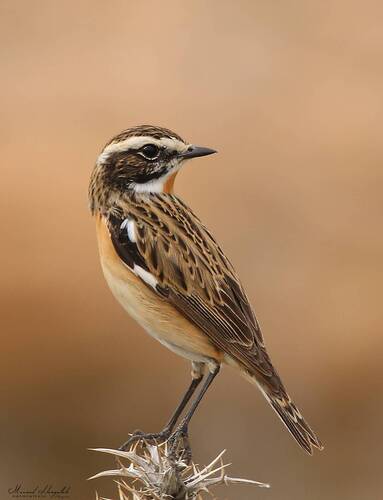 Paapje
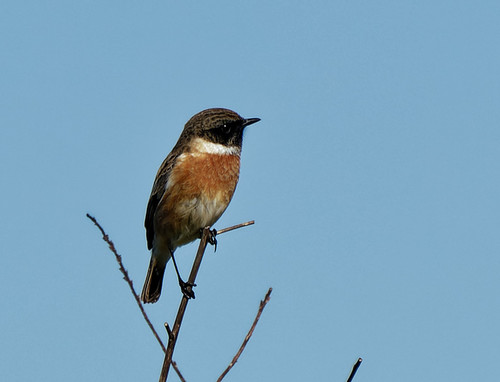 Roodborsttapuit
Kort gezegd
Het meest betrouwbare veldkenmerk om Paapje van Roodborsttapuit te scheiden, is de gedurfde lichte supercilium (wenkbrauw) van het Paapje, die altijd aanwezig en duidelijk is in alle leeftijden en geslachten, terwijl Roodborsttapuit dit kenmerk mist. Bovendien is het Paapje slanker met langere vleugels en toont het een lichtere, wittere buik en meer opvallend wit in de staart wanneer deze wordt geflikkerd. Roodborsttapuit is compacter en donkerder in het algemeen, vooral in westelijke populaties, en heeft een veel minder uitgesproken of afwezig supercilium. Onvolwassen en vrouwelijke Paapjes kunnen lijken op vrouwelijke/onvolwassen Roodborsttapuiten, maar de sterke supercilium en lichtere onderdelen zijn consistente aanwijzingen. In de vlucht of wanneer ze zitten, let op de langere primaire projectie van het Paapje en de meer rechtopstaande houding in vergelijking met de gedrongen, kortere vleugels van de Roodborsttapuit.
Herkenningstips
- Supercilium (wenkbrauw): Paapje toont altijd een sterke lichte supercilium, duidelijk in alle leeftijden en geslachten; Roodborsttapuit mist dit, of toont op zijn best een vage, slecht gedefinieerde wenkbrauw bij sommige vrouwtjes/onvolwassen vogels.
- Buikkleur: Paapje heeft een lichte buff tot witte buik, vaak contrasterend met de oranje-buff borst; de buik van Roodborsttapuit is meestal donkerder, soms wit bij mannetjes maar minder uitgebreid en vaak gestreept bij vrouwtjes/onvolwassen vogels.
- Algemene tint: Paapje is lichter en minder verzadigd, vooral in vergelijking met de donkere, rijke tinten van westelijke Roodborsttapuit (S. r. hibernans). Roodborsttapuit is over het algemeen donkerder en meer 'roetachtig' boven, vooral in vochtige Atlantische gebieden.
- Romp kleur: De romp van het Paapje is gemêleerd bruin, passend bij de rug; de romp van Roodborsttapuit is klein, wit en vaak gestreept met zwart, maar nooit zo licht of onopgemerkt als Siberische Roodborsttapuit.
- Vleugelvlekken: Mannetje Paapje toont het hele jaar door kleine witte vleugelvlekken (grotere en binnenste mediane dekkveren); vrouwtje Paapje kan kleinere of geen vleugelvlekken tonen. Mannetjes Roodborsttapuit hebben een kleine witte schoudervlek, vrouwtjes alleen een buff of vage vlek.
- Gezichtspatroon: Mannetje Paapje in broedkleed heeft een zwartachtige masker omrand door wit; mannetje Roodborsttapuit heeft een geheel zwarte kop met een witte halve kraag maar geen supercilium.
- Primaire projectie: Paapje heeft langere, meer puntige vleugels (aangepast voor migratie), zichtbaar als een langere primaire projectie voorbij de tertials wanneer het zit; Roodborsttapuit heeft kortere en rondere vleugels.
- Structuur/jizz: Paapje lijkt slanker, langer-vleugelig en minder 'gedrongen'; Roodborsttapuit is compacter en rond lichaam.
- Staartpatroon: De staart van het Paapje is zwartachtig met prominente witte basissen op de buitenste veren, vaak geflikkerd wanneer geflikkerd; de staart van Roodborsttapuit is donkerder met minder opvallend wit.
- Gedrag: Paapje flikkert vaak zowel staart als vleugels, toont witte flitsen; Roodborsttapuit flikkert minder vaak met de vleugels en lijkt meer statisch.
- Habitat/seizoen: In westelijke en noordelijke hooglanden is Paapje waarschijnlijker in de zomer; Roodborsttapuit is het hele jaar door wijdverspreid, vooral in laaglanden en kustgebieden in de winter.
- Geslacht/leeftijd valkuilen: Vrouwelijke en onvolwassen Paapjes kunnen lijken op vrouwelijke/onvolwassen Roodborsttapuiten, maar de supercilium en lichtere buik zijn consistente aanwijzingen. Mannetje Roodborsttapuit is donkerder en meer contrasterend, met een zwarte kop en witte kraag.
- Subspecies verwarring: Lichte zuidelijke Roodborsttapuiten (S. r. rubicola) kunnen in algemene tinten op Paapje lijken, maar missen nog steeds de sterke supercilium en hebben een ander romp patroon.
- Vluchtzicht: In de vlucht toont Paapje langere vleugels en meer wit in de staart; Roodborsttapuit lijkt korter-vleugelig en minder contrasterend.
- Rui timing: Niet meestal veld-diagnostisch, maar let op dat volwassen Paapjes een volledige post-broedrui hebben, terwijl juvenielen een gedeeltelijke rui hebben, wat de scherpte van de verenkanten aan het einde van de zomer kan beïnvloeden.
Grootte
Beide soorten zijn vergelijkbaar in grootte, dicht bij Roodborst. Paapje is iets groter en slanker (12–14 cm lang, 13–26 g) vergeleken met Roodborsttapuit (11.5–13 cm, 13–17 g) [wikipedia][avonet]. Het verschil is subtiel en zelden diagnostisch in het veld, maar Paapje lijkt vaak langer en minder compact, deels door de langere vleugelprojectie.
Verenkleed
-
Juveniele/onvolwassen vogels: Onvolwassen Paapjes en vrouwtjes kunnen lijken op die van Roodborsttapuit, maar Paapje toont altijd een sterke lichte supercilium en een wittere, minder gestreepte buik. Onvolwassen/vrouwelijke Roodborsttapuiten zijn doffer, missen een sterke supercilium en hebben donkerdere, meer gestreepte onderdelen. Beide kunnen wat wit in de vleugels tonen, maar mannelijke Paapjes (zelfs in niet-broedkleed) behouden kleine witte vleugelvlekken, terwijl vrouwelijke Roodborsttapuiten vaak alleen een buff-witte schoudervlek hebben.
-
Volwassenen (broedkleed): Mannetje Paapje heeft een zwartachtige gezichtsmasker omrand door een sterke witte supercilium en malar streep, oranje-buff keel en borst, en witte vleugelvlekken. Mannetje Roodborsttapuit heeft een zwarte kop, oranje keel en borst, witte buik, en een witte halve kraag, maar mist de sterke supercilium en heeft een veel kleinere witte romp en vleugelvlek. Vrouwelijke Paapje is lichter, met een buff supercilium en minder contrast in het algemeen; vrouwelijke Roodborsttapuit is bruiner en mist de supercilium, met alleen een vage of buff-witte schoudervlek.
-
In de vlucht: Paapje toont langere, meer puntige vleugels en een meer opvallende witte basis op de buitenste staartveren, terwijl de vleugels van Roodborsttapuit korter zijn en het staartpatroon minder opvallend is.
Gedrag
Beide soorten zitten rechtop op struiken of hoge stelen en jagen op insecten, maar Paapje lijkt vaak actiever, flikkert zowel staart als vleugels om witte flitsen te tonen, vooral mannetjes. De bewegingen van het Paapje zijn iets wendbaarder en minder 'gedrongen' dan die van Roodborsttapuit, die de neiging heeft ronder en compacter te lijken wanneer hij zit. Beide kunnen vergelijkbare foerageerstrategieën gebruiken, maar de langere vleugels van het Paapje zijn duidelijker in de vlucht en wanneer ze zich uitstrekken.
Habitat
Beide soorten komen voor in open land met verspreide struiken, maar Paapje is waarschijnlijker in ruige graslanden, weilanden en hooglandweiden, vooral in westelijk en noordelijk Europa. Roodborsttapuit is meer katholiek, te vinden in heidevelden, kustduinen en ruige graslanden met bramen of gorse, en is waarschijnlijker in laagland en kustgebieden, vooral buiten het broedseizoen. Paapje is een langeafstandsmigrant (broedt in Europa/Azië, overwintert in Afrika), terwijl Roodborsttapuit meestal resident of een kortafstandsmigrant is, dus Roodborsttapuit is waarschijnlijker in Europa in de winter.