

Temmincks strandloper vs Taigastrandloper
Calidris temminckii versus Calidris subminuta
Speel een quiz met Temmincks strandloper en Taigastrandloper
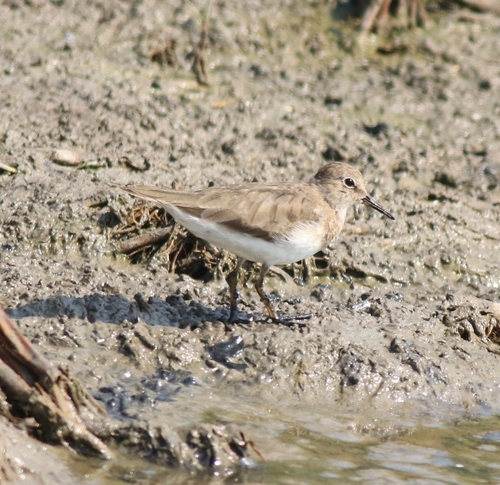 Temmincks strandloper
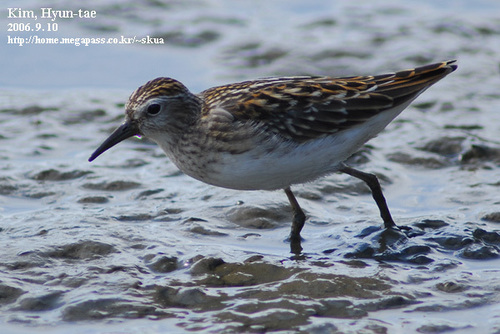 Taigastrandloper
Kort gezegd
Het meest betrouwbare veldkenmerk tussen Temmincks strandloper en Taigastrandloper is de structuur van de poten en tenen: Taigastrandloper heeft duidelijk langere, slanker tenen, vooral de middelste, wat het een slanker uiterlijk op de grond geeft. Beide soorten hebben geelachtige poten, maar die van Temminck zijn doffer en soms bruinachtig, terwijl die van Taigastrandloper helderder geel zijn. In juveniele verenkleed is Taigastrandloper helderder gepatterneerd boven met roestkleurige tonen en witte mantelstrepen, terwijl Temmincks eenvoudiger en doffer is. Temmincks strandloper toont witte buitenste staartveren, een belangrijk kenmerk in de vlucht of tijdens het poetsen, terwijl het staartpatroon van Taigastrandloper minder onderscheidend is. Structuur en subtiele verenkleedverschillen, vooral in de bovenkant en het gezicht, zijn cruciaal voor scheiding.
Herkenningstips
- Tenenlengte en structuur: Taigastrandloper heeft veel langere, slanker tenen, vooral de middelste teen, wat het een spinnige uitstraling geeft. Dit is zichtbaar wanneer de vogel staat of op modder loopt. Temmincks strandloper heeft kortere, dikkere tenen.
- Poten kleur: Beide hebben geelachtige poten, maar die van Temminck zijn dof geel of bruinachtig, terwijl die van Taigastrandloper een helderder, duidelijker geel zijn. Dit is het beste te beoordelen in goed licht en kan subtiel zijn.
- Staartpatroon in de vlucht: Temmincks strandloper toont witte buitenste staartveren, een sterk kenmerk wanneer de staart is uitgespreid of in de vlucht. De staart van Taigastrandloper is minder contrasterend en mist deze witte rand.
- Juveniele bovenkant: Juveniele Taigastrandloper is helderder en meer gepatterneerd boven, met roestkleurige tonen en duidelijke witte mantelstrepen. Juveniele Temmincks is eenvoudiger, doffer bruin met weinig contrast en geen sterke mantelstrepen.
- Supercilium en kroon: Taigastrandloper van alle leeftijden toont een bleek supercilium (wenkbrauw) en een bruine kroon, wat een meer contrasterend gezichtspatroon geeft. Temmincks is eenvoudiger van gezicht, met minder opvallend supercilium en een uniformer hoofd.
- Borstenpatroon: Temmincks strandloper heeft vaak een donkerder, meer gedefinieerde borstvlek, vooral in de winter, terwijl de borst van Taigastrandloper gelijkmatiger lichtbruin gespikkeld is.
- Snavel: Beide hebben korte, dunne, donkere snavels, maar de snavel van Taigastrandloper kan iets fijner en scherper lijken. Dit is een klein kenmerk en niet altijd betrouwbaar in het veld.
- Lichaamsvorm en jizz: Temmincks strandloper is compact, met een ronde buik, korte poten en een horizontale houding. Taigastrandloper lijkt langer-genekt, slanker en staat rechterop, deels door zijn langere poten en tenen.
- Primaire projectie: Temmincks strandloper heeft langere vleugels in verhouding tot zijn lichaam, wat zichtbaar kan zijn wanneer hij rust (primaire vleugels die voorbij de staart uitsteken). De primaire vleugels van Taigastrandloper bereiken de staartpunt maar steken niet zo ver uit.
- Onderkant kleur: Beide zijn wit aan de onderkant, maar Temmincks kan een abruptere overgang van de donkere borst naar de witte buik vertonen, terwijl Taigastrandloper gelijkmatiger licht is.
- Vlucht jizz: In de vlucht lijkt Temmincks compact en snel, met prominente witte buitenste staartveren. Taigastrandloper lijkt lichter, met minder staartcontrast en een zwakkere vleugelband.
- Habitat micro-keuze: Als beide aanwezig zijn, kan Taigastrandloper de voorkeur geven aan nattere of meer begroeide randen, waarbij hij zijn lange tenen gebruikt om op drijvende vegetatie of zachtere modder te lopen.
- Seizoenscontext: In Europa is Taigastrandloper een zeldzame dwaalgast; Temmincks is regelmatig. Als je buiten Azië bent, overweeg dan altijd zeldzaamheid.
- Verenkleed valkuilen: In dof licht kunnen poten kleur en subtiele bovenkant verschillen moeilijk te beoordelen zijn. Focus indien mogelijk op structuur en staartpatroon.
- Stem: Niet betrouwbaar gescheiden in het veld met de gegeven informatie, maar de vluchtroep van Taigastrandloper wordt naar verluidt onderscheidend geacht onder strandlopers.
Grootte
Beide zijn kleine strandlopers, maar Taigastrandloper weegt gemiddeld iets meer (30,5 g vs. 26,05 g voor Temmincks strandloper) en kan iets langer lijken (13–16 cm vs. 13,5–15 cm). In het veld is dit verschil subtiel en gemakkelijk gemaskeerd door houding. Temmincks strandloper heeft kortere poten en langere vleugels, wat het een compacter, minder slank uiterlijk geeft in vergelijking met de langer-toed, langer-genekte uitstraling van Taigastrandloper.
Verenkleed
- Juveniele/onvolwassen vogels: Juveniele Taigastrandloper zijn duidelijk helderder boven, met roestkleurige tonen en duidelijke witte mantelstrepen, terwijl juveniele Temmincks eenvoudiger bruin zijn met weinig contrast en geen sterke mantelstrepen. Taigastrandloper toont ook een bleek supercilium en bruine kroon, wat minder gemarkeerd is in Temmincks.
- Volwassenen (broed): Temmincks strandloper is over het algemeen dof bruin boven met enkele roestkleurige of zwartachtige mantelveren, maar nooit zo helder of gepatterneerd als Taigastrandloper. Volwassen Taigastrandloper zijn rijker bruin boven met donkerdere veercentra en een duidelijke lichte lijn boven het oog.
- Volwassenen (niet-broed/winter): Beide soorten worden grijzer boven, maar Temmincks is dof grijs tot bruinachtig-grijs, terwijl Taigastrandloper grijs boven is met een nog zichtbaar bleek supercilium. Onderkanten zijn wit bij beide, maar Temmincks heeft vaak een donkerder borstvlek.
- Vlucht/bovenstaart: Temmincks strandloper heeft witte buitenste staartveren, een sterk veldkenmerk in de vlucht of wanneer de staart is uitgespreid. De staart van Taigastrandloper is minder contrasterend.
Gedrag
Beide foerageren actief op moddervlaktes, pikken met het zicht en soms boren. Taigastrandloper lijkt vaak delicater en slanker, met een kenmerkende houding door zijn lange tenen en poten die goed naar achteren zijn geplaatst. Temmincks strandloper is compacter, vaak voedend met een horizontale houding. In gemengde groepen kan Taigastrandloper rechterop en 'losser-gewricht' in beweging lijken.
Habitat
Beide soorten gebruiken vergelijkbare modderige of moerassige habitats tijdens migratie en winter. Temmincks strandloper is wijdverspreid in de Oude Wereld, terwijl Taigastrandloper voornamelijk een Aziatische soort is en een zeldzame dwaalgast naar Europa. Habitat is geen sterke scheider in overlappend bereik, maar Taigastrandloper kan worden aangetroffen in iets nattere of meer begroeide microhabitats vanwege zijn langere tenen.
Geluid
Geen onderscheidende vocale verschillen zijn beschreven in de gegeven notities. Beide soorten hebben typische hoogfrequente strandloperroepen, maar de vluchtroep van Taigastrandloper wordt gezegd onderscheidend te zijn onder strandlopers (details niet verstrekt).
Temmincks strandloper · Taigastrandloper · Mijn lastige vogels