

Steltstrandloper vs Temmincks strandloper
Calidris himantopus versus Calidris temminckii
Speel een quiz met Steltstrandloper en Temmincks strandloper
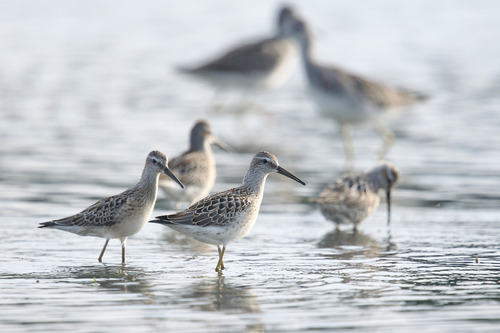 Steltstrandloper
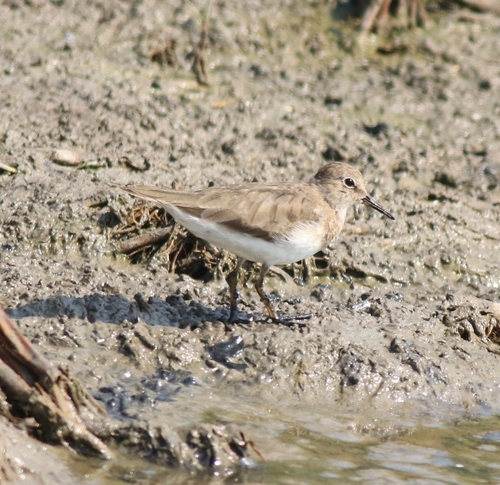 Temmincks strandloper
Kort gezegd
Het meest betrouwbare veldkenmerk tussen Steltstrandloper en Temmincks strandloper is grootte en structuur: Steltstrandloper is duidelijk groter en langerbenig, met een langere, licht gebogen snavel en een rechtopstaande houding, terwijl Temmincks strandloper veel kleiner, korterbenig is en een rechte, fijne snavel heeft. In de vlucht mist Steltstrandloper een vleugelstreep en toont een witte staart, terwijl Temmincks strandloper een eenvoudige, compacte vogel is met witte buitenste staartveren maar geen sterk vleugelpatroon. Juvenielen van beide soorten kunnen verwarrend zijn, maar juveniele Steltstrandlopers behouden een sterk koppatroon en witte supercilium, terwijl juveniele Temmincks strandlopers eenvoudiger zijn. Focus op beenkleur, snavelvorm en grootte voor snelle scheiding, vooral op afstand.
Herkenningstips
- Grootte is een primaire scheiding: Steltstrandloper is bijna twee keer zo zwaar als Temmincks strandloper en duidelijk langer in het veld. Gebruik dit wanneer de vogels samen zijn of wanneer je een goed gevoel voor schaal hebt.
- Beenkleur en lengte: Steltstrandloper heeft lange, groenachtig gele benen die zelfs op afstand duidelijk zijn; Temmincks strandloper heeft veel kortere, dof geelachtige of bruine benen, waardoor hij dichter bij de grond lijkt.
- Snavelvorm en lengte: De snavel van Steltstrandloper is lang en slechts licht gebogen, nooit duidelijk gebogen; Temmincks strandloper heeft een korte, rechte, fijne snavel. Dit is vooral nuttig wanneer de vogels zich voeden.
- Koppatroon (alle leeftijden): Steltstrandloper toont een sterke witte supercilium boven het oog, zelfs bij juvenielen en wintervogels. Temmincks strandloper heeft een veel minder duidelijk gezichtspatroon, zonder sterke supercilium.
- Onderlichaamspatroon (broedende volwassenen): Volwassen Steltstrandlopers zijn sterk gebarend onder met zwartachtige strepen op een witte achtergrond; volwassen Temmincks strandlopers zijn eenvoudig wit onder met alleen een donkerder borst.
- Rug en mantel (juvenielen): Juveniele Steltstrandloper heeft een bruinachtige rug met witte franjes en een sterk koppatroon; juveniele Temmincks strandlopers zijn eenvoudiger bruin boven en missen duidelijke witte franjes of gedurfde gezichtstekens.
- Vluchtpatroon (alle leeftijden): Steltstrandloper toont een witte staart en mist een vleugelstreep; Temmincks strandloper heeft witte buitenste staartveren maar verder eenvoudige vleugels, zonder sterke vleugelstreep of staartvlek.
- Beenprojectie in de vlucht: De lange benen van Steltstrandloper steken vaak uit voorbij de staart in de vlucht; de korte benen van Temmincks strandloper doen dat niet.
- Jizz en voedingsgedrag: Steltstrandloper is rechtop, vaak dieper waderend, en beweegt met een doordachte gang; Temmincks strandloper is gehurkt, snel, en schiet langs de waterkant.
- Plumage in de winter: Steltstrandloper is grijs boven, wit onder, met een aanhoudende witte supercilium; Temmincks strandloper is dof grijs of bruinachtig grijs boven, wit onder, en mist een sterke supercilium.
- Associatie met andere vogels: Steltstrandloper kan worden aangetroffen met grotere shorebirds (bijv. gele benen), terwijl Temmincks strandloper meestal met andere kleine strandlopers of alleen is.
- Habitatvoorkeur: Steltstrandloper geeft de voorkeur aan ondiep open water, Temmincks strandloper geeft de voorkeur aan modderige of grasachtige randen.
- Snavelkleur: Beide soorten hebben donkere snavels, maar de lengte en lichte kromming van de snavel van Steltstrandloper is een beter veldkenmerk.
- Stem: Niet diagnostisch op basis van beschikbare notities.
- Valstrikken: Juveniele Steltstrandloper kan worden verward met strandloper soorten vanwege het ontbreken van barring onder, maar het sterke koppatroon, de grootte, en de beenlengte blijven betrouwbaar. Temmincks strandloper is altijd kleiner en eenvoudiger, met een minder gemarkeerd gezicht.
Grootte
Steltstrandloper is aanzienlijk groter (18–23 cm lengte, 50–70 g massa, 37–42 cm vleugelspanwijdte) dan Temmincks strandloper (13.5–15 cm lengte, ~26 g massa). In het veld is dit verschil duidelijk wanneer beide samen worden gezien, maar zelfs alleen lijkt Steltstrandloper langbenig en slank, terwijl Temmincks strandloper klein, compact en laag bij de grond is. De snavel van Steltstrandloper is ook proportioneel langer en zwaarder dan de fijne, korte snavel van Temmincks strandloper.
Verenkleed
Juveniele en niet-broedende plumage worden het vaakst verward. Juveniele Steltstrandlopers hebben een sterke witte supercilium en een bruinachtige rug met witte franjes, maar missen de zware barring onder die bij volwassenen te zien is; hun koppatroon blijft gedurfd. Juveniele Temmincks strandlopers zijn eenvoudiger, met bruine bovenkanten en een gedempt gezichtspatroon, zonder sterke supercilium. In de vlucht toont Steltstrandloper een witte staart en geen vleugelstreep, terwijl Temmincks strandloper witte buitenste staartveren toont maar verder eenvoudige vleugels. Broedende volwassen Steltstrandlopers zijn sterk gebarend onder met roodachtig-oranje boven en onder de supercilium, terwijl volwassen Temmincks strandlopers meestal saai bruin zijn met enkele roestkleurige of zwartachtige mantelveren. In de winter is Steltstrandloper grijs boven en wit onder met een aanhoudende witte supercilium; Temmincks strandloper is dof grijs of bruinachtig grijs boven en wit onder, met een donkerdere borst maar zonder sterke gezichtsmarkeringen.
Gedrag
Steltstrandloper voedt zich typisch met een meer rechtopstaande, stalkende gang, vaak dieper waderend door zijn langere benen, en kan met zijn langere, licht gebogen snavel doorboren. Temmincks strandloper wordt waarschijnlijker gezien terwijl hij langs de waterkant kruipt, zich voedend in een gehurkte houding, en snel beweegt met korte, snelle stappen. Steltstrandloper kan zich associëren met gele benen of andere grotere shorebirds, terwijl Temmincks strandloper meestal wordt aangetroffen met andere kleine strandlopers of alleen.
Habitat
Steltstrandloper geeft de voorkeur aan ondiepe zoetwater wetlands, vaak dieper waderend dan de meeste kleine strandlopers, en wordt waarschijnlijker in Noord-Amerika aangetroffen. Temmincks strandloper is een Oude Wereld soort, die de voorkeur geeft aan modderige randen, poelen en natte weiden, typisch in Eurazië. Overlap is zeldzaam, maar in zeldzame situaties kan de keuze van habitat een aanwijzing zijn: Steltstrandloper is waarschijnlijker in open, ondiep water, Temmincks strandloper op modderige randen of grasachtige randen.
Steltstrandloper · Temmincks strandloper · Mijn lastige vogels