

Correlimos Zancolín vs Correlimos de Temminck
Calidris himantopus frente a Calidris temminckii
Juega un quiz con Correlimos Zancolín y Correlimos de Temminck
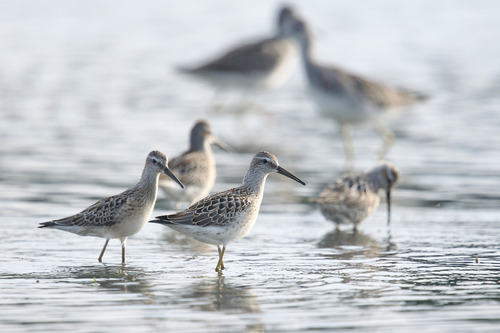 Correlimos Zancolín
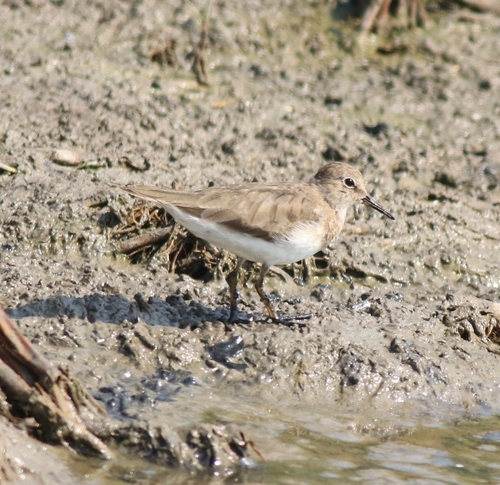 Correlimos de Temminck
En breve
La marca de campo más confiable entre el Correlimos Zancolín y el Correlimos de Temminck es el tamaño y la estructura: el Correlimos Zancolín es claramente más grande y de patas más largas, con un pico más largo y ligeramente curvado hacia abajo y una postura más erguida, mientras que el Correlimos de Temminck es mucho más pequeño, de patas más cortas y tiene un pico recto y fino. En vuelo, el Correlimos Zancolín carece de una barra alar y muestra una rabadilla blanca, mientras que el Correlimos de Temminck es un ave compacta y sencilla con plumas de la cola externas blancas pero sin un patrón alar fuerte. Los juveniles de ambas especies pueden ser confusos, pero los juveniles del Correlimos Zancolín retienen un patrón de cabeza fuerte y un supercilio blanco, mientras que los juveniles del Correlimos de Temminck son más simples en general. Concéntrate en el color de las patas, la forma del pico y el tamaño para una separación rápida, especialmente a distancia.
Consejos de identificación
- El tamaño es un separador principal: El Correlimos Zancolín tiene casi el doble de masa que el Correlimos de Temminck y es notablemente más largo en el campo. Usa esto cuando las aves estén juntas o cuando tengas una buena sensación de escala.
- Color y longitud de las patas: El Correlimos Zancolín tiene patas largas de color amarillo verdoso que son obvias incluso a distancia; el Correlimos de Temminck tiene patas mucho más cortas, de color amarillo apagado o marrón, lo que lo hace parecer más cerca del suelo.
- Forma y longitud del pico: El pico del Correlimos Zancolín es largo y solo ligeramente curvado hacia abajo, nunca evidentemente curvado; el Correlimos de Temminck tiene un pico corto, recto y fino. Esto es especialmente útil cuando las aves están alimentándose.
- Patrón de cabeza (todas las edades): El Correlimos Zancolín muestra un fuerte supercilio blanco sobre el ojo, incluso en juveniles y aves invernales. El Correlimos de Temminck tiene un patrón facial mucho menos distintivo, sin un supercilio fuerte.
- Patrón de partes inferiores (adultos en cría): Los adultos del Correlimos Zancolín están fuertemente barrados por debajo con barras negruzcas sobre un fondo blanco; los adultos del Correlimos de Temminck son completamente blancos por debajo con solo un pecho más oscuro.
- Espalda y manto (juveniles): El juvenil del Correlimos Zancolín tiene una espalda marrón con bordes blancos y un fuerte patrón de cabeza; los juveniles del Correlimos de Temminck son más marrones y carecen de bordes blancos obvios o marcas faciales audaces.
- Patrón de vuelo (todas las edades): El Correlimos Zancolín muestra una rabadilla blanca y carece de una barra alar; el Correlimos de Temminck tiene plumas de cola externas blancas pero alas de otro modo simples, sin una barra alar fuerte o parche en la rabadilla.
- Proyección de las patas en vuelo: Las patas largas del Correlimos Zancolín a menudo se proyectan más allá de la cola en vuelo; las patas cortas del Correlimos de Temminck no lo hacen.
- Jizz y comportamiento alimenticio: El Correlimos Zancolín es erguido, a menudo vadeando más profundo, y se mueve con un paso deliberado; el Correlimos de Temminck está agachado, es rápido y corre a lo largo del borde del agua.
- Plumaje en invierno: El Correlimos Zancolín es gris por encima, blanco por debajo, con un supercilio blanco persistente; el Correlimos de Temminck es de color gris apagado o marrón grisáceo por encima, blanco por debajo, y carece de un supercilio fuerte.
- Asociación con otras aves: El Correlimos Zancolín puede encontrarse con aves playeras más grandes (por ejemplo, los Tringa), mientras que el Correlimos de Temminck suele estar con otros pequeños correlimos o solo.
- Preferencia de hábitat: El Correlimos Zancolín prefiere aguas abiertas poco profundas, el Correlimos de Temminck prefiere márgenes fangosos o herbosos.
- Color del pico: Ambas especies tienen picos oscuros, pero la longitud y la ligera curva del pico del Correlimos Zancolín son una mejor marca de campo.
- Voz: No es diagnóstica según las notas disponibles.
- Trampas: El juvenil del Correlimos Zancolín puede confundirse con especies de correlimos debido a la falta de barrado por debajo, pero el fuerte patrón de cabeza, el tamaño y la longitud de las patas siguen siendo confiables. El Correlimos de Temminck siempre es más pequeño y más simple, con un rostro menos marcado.
Tamaño
El Correlimos Zancolín es sustancialmente más grande (18–23 cm de longitud, 50–70 g de masa, 37–42 cm de envergadura) que el Correlimos de Temminck (13.5–15 cm de longitud, ~26 g de masa). En el campo, esta diferencia es obvia cuando ambos se ven juntos, pero incluso individualmente, el Correlimos Zancolín parece de patas largas y delgado, mientras que el Correlimos de Temminck es pequeño, compacto y bajo al suelo. El pico del Correlimos Zancolín también es proporcionalmente más largo y pesado que el pico fino y corto del Correlimos de Temminck.
Plumaje
El plumaje juvenil y no reproductor se confunde con mayor frecuencia. Los juveniles del Correlimos Zancolín tienen un fuerte supercilio blanco y una espalda marrón con bordes blancos, pero carecen del fuerte barrado por debajo que se observa en los adultos; su patrón de cabeza sigue siendo audaz. Los juveniles del Correlimos de Temminck son más simples, con partes superiores marrones y un patrón facial sutil, careciendo de un supercilio fuerte. En vuelo, el Correlimos Zancolín muestra una rabadilla blanca y sin barra alar, mientras que el Correlimos de Temminck muestra plumas de cola externas blancas pero alas de otro modo simples. Los adultos en cría del Correlimos Zancolín están fuertemente barrados por debajo con un color rojizo-naranja por encima y por debajo del supercilio, mientras que los adultos del Correlimos de Temminck son en su mayoría de un marrón apagado con algunas plumas de manto rufas o negruzcas. En invierno, el Correlimos Zancolín es gris por encima y blanco por debajo con un supercilio blanco persistente; el Correlimos de Temminck es de color gris apagado o marrón grisáceo por encima y blanco por debajo, con un pecho más oscuro pero sin marcas faciales fuertes.
Comportamiento
El Correlimos Zancolín se alimenta típicamente con un paso más erguido y de acecho, a menudo vadeando más profundo debido a sus patas más largas, y puede hurgar con su pico más largo y ligeramente curvado hacia abajo. El Correlimos de Temminck es más probable que se vea arrastrándose a lo largo del borde del agua, alimentándose en una postura agachada y moviéndose rápidamente con pasos cortos y rápidos. El Correlimos Zancolín puede asociarse con los Tringa o con otras aves playeras más grandes, mientras que el Correlimos de Temminck se encuentra generalmente con otros pequeños correlimos o solo.
Hábitat
El Correlimos Zancolín prefiere humedales de agua dulce poco profundos, a menudo vadeando en aguas más profundas que la mayoría de los pequeños correlimos, y es más probable que se encuentre en América del Norte. El Correlimos de Temminck es una especie del Viejo Mundo, que prefiere márgenes fangosos, charcas y praderas húmedas, típicamente en Eurasia. La superposición es rara, pero en situaciones de vagabundeo, la elección del hábitat puede ser una pista: el Correlimos Zancolín es más probable que se encuentre en aguas abiertas y poco profundas, el Correlimos de Temminck en bordes fangosos o márgenes herbosos.
Correlimos Zancolín · Correlimos de Temminck · Mis aves difíciles