

Gevlekte nothura vs Witmaskeribis
Nothura maculosa versus Plegadis chihi
Speel een quiz met Gevlekte nothura en Witmaskeribis
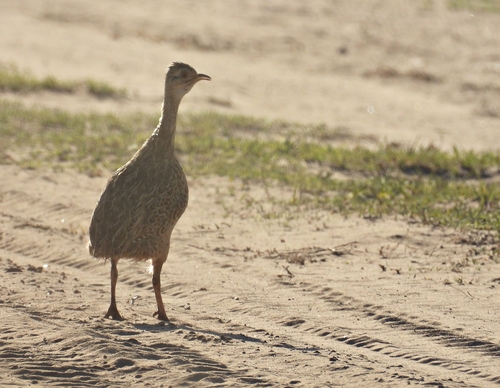 Gevlekte nothura
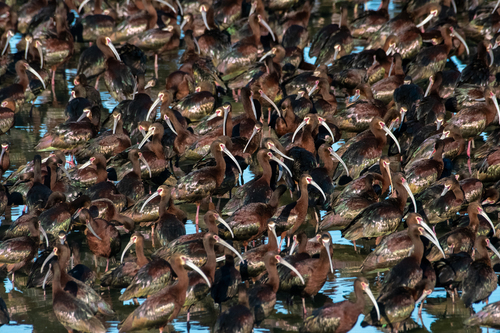 Witmaskeribis
Kort gezegd
Het meest betrouwbare veldkenmerk om Gevlekte nothura van Witmaskeribis te scheiden, is de algehele structuur en jizz: Gevlekte nothura is een compacte, op de grond levende tinamou met korte benen en een klein hoofd, terwijl Witmaskeribis een grote, langbenige wader is met een lange, gebogen snavel en een verlengde nek. In de vlucht of op de grond is de ibis veel groter en slanker, met een kenmerkende wader-silhouet, terwijl de nothura kwartelachtig is en nooit gezien wordt terwijl hij waadt. Ook de verschillen in verenkleed zijn sterk: Gevlekte nothura vertoont bruine en buff strepen en barrières, vooral op de borst en flanken, terwijl Witmaskeribis donker, glanzend en ongepatroniseerd is, behalve voor subtiele broedmarkeringen op het gezicht. Het habitat is een sterke aanwijzing: nothura in droge graslanden, ibis in moerassen.
Herkenningstips
- Grootte en Structuur: Witmaskeribis is veel groter, met een lange nek, benen en gebogen snavel; Gevlekte nothura is compact, kortbenig en kwartelachtig. Dit verschil is zelfs op afstand duidelijk.
- Snavelvorm: Nothura heeft een korte, rechte snavel; ibis heeft een lange, slanke, naar beneden gebogen snavel. Alleen de snavelvorm is diagnostisch in elke duidelijke weergave.
- Benenlengte: Ibis heeft lange, steltenachtige benen die zowel in de vlucht als op de grond zichtbaar zijn; de benen van de nothura zijn kort en strekken zich nooit verder dan de staart in de vlucht.
- Vlucht Silhouet: Ibis vliegt met nek en benen uitgestrekt, wat een lange, horizontale profiel vormt; nothura vliegt met een compacte, ronde lichaam, korte staart en geen zichtbare nekverlenging.
- Verenpatroon: Nothura is bruin boven met buff strepen en barrières op de onderdelen (alle leeftijden); ibis is uniform donker en glanzend, zonder strepen of barrières.
- Gezicht en Oogkleur: Broed ibis toont een roze kale gezicht met een witte veeromranding en rode ogen; nothura heeft een gestreepte kroon en een witte keel, zonder kale huid of heldere oogkleur. Niet-broed ibis mist de witte rand maar heeft nog steeds een kale gezicht en rode ogen.
- Benenkleur: Ibis benen zijn felrood (vooral in het broedseizoen); de benen van de nothura zijn dof geelachtig-grijs of bruin.
- Habitat: Nothura wordt alleen gevonden in droge graslanden; ibis wordt alleen gevonden in moerassen en wetlands. Het habitat alleen is meestal voldoende om ze te scheiden.
- Gedrag: Nothura loopt of rent op de grond, vliegt zelden op; ibis wordt vaak gezien terwijl hij waadt, in de modder prikt, of in groepen vliegt.
- Jongere Verwarring: Jongere ibis missen de witte gezichtsrand maar zijn nog steeds donker en ongepatroniseerd, met een lange snavel en benen; jongere nothura zijn gestreept en gebarricadeerd zoals volwassenen.
- Onderwing/Vluchtpatroon: Er zijn geen onderscheidende leeftijdspecifieke bovenwing of vluchtpatronen beschreven voor beide soorten, dus vertrouw op structuur en verenkleed.
- Stem: Er zijn geen vocalisaties beschreven in de notities; gebruik geen stem voor scheiding.
- Context: Als gezien in een groep, vooral in vlucht boven water, is het bijna zeker een ibis; nothura zijn solitair of in paren en vormen nooit een groep in de open lucht.
- Valstrikken: Op lange afstand kan een verre ibis op het land bruinachtig lijken, maar de lange snavel en benen zullen nog steeds zichtbaar zijn. Een nothura toont nooit de verhoudingen of het gedrag van de ibis.
- Wanneer Onzeker: Als je de snavel of benen niet kunt zien, gebruik dan habitat en algehele vorm—compact en gestreept in droog gras (nothura) vs. slank en donker in wetlands (ibis).
Grootte
Witmaskeribis is dramatisch groter en zwaarder dan Gevlekte nothura. De ibis meet 46–56 cm in lengte met een lichaamsgewicht van ongeveer 612,5 g [wikidata], terwijl de nothura slechts 24–25,5 cm lang is [wikipedia] en veel lichter (exact gewicht niet gegeven, maar tinamou's van deze grootte zijn typisch onder de 300 g). In het veld torent de ibis boven de nothura uit, met veel langere benen, nek en snavel. De nothura is kwartelgroot; de ibis is dichter bij een kleine reiger in bulk en statuur.
Verenkleed
Er zijn geen leeftijdspecifieke bovenwing of vluchtpatronen beschreven voor beide soorten, dus de focus ligt op het algehele lichaamsverenkleed. Gevlekte nothura (alle leeftijden) is bruin boven met buff strepen, en de onderdelen zijn buff met zwarte en bruine strepen op de borst en barrières op de flanken. De kroon is zwart gestreept met buff, en de keel is wit. Het verenkleed van de nothura is cryptisch en gepatterniseerd voor camouflage in gras. In tegenstelling tot dat is Witmaskeribis donker en glanzend over het algemeen, zonder strepen of barrières op het lichaam. Broed volwassenen hebben een roze kale gezicht omrand met witte veren, een grijze snavel, en rode ogen en benen; niet-broed volwassenen missen de witte gezichtsrand maar blijven donker en glanzend. Jongere ibis zijn vergelijkbaar met volwassenen maar doffer, en missen de witte gezichtsrand. Er is geen barrières of strepen op het lichaam op enige leeftijd. Dus, elke vogel met sterke strepen of barrières op de onderdelen is een nothura; elke vogel met een uniform donker glanzend lichaam en lange snavel is een ibis.
Gedrag
Gevlekte nothura is een terrestrische, op de grond levende vogel, meestal gezien terwijl hij loopt of rent in graslanden en vliegt zelden op behalve wanneer hij opgeschrikt wordt. Hij waadt of zwemt nooit. Witmaskeribis is een sociale, koloniale wader, vaak gezien terwijl hij in ondiep water prikt met zijn lange snavel, door moerassen loopt, of in groepen vliegt met nek en benen uitgestrekt. De ibis wordt zelden ver van water gevonden en wordt bijna altijd gezien in natte omgevingen. Hun gedragingen zijn zo verschillend dat verwarring onwaarschijnlijk is, behalve in een statische, close-up weergave.
Habitat
Gevlekte nothura wordt gevonden in droge, grasachtige habitats—open graslanden, pampas en savannes—over het oosten en zuiden van Brazilië, Paraguay, Bolivia, Uruguay en noordelijk Argentinië [wikipedia]. Hij vermijdt wetlands. Witmaskeribis is strikt geassocieerd met moerassen, wetlands en overstroomde velden, nestelend in dichte moerasvegetatie of lage bomen en voeden in ondiep water. Zijn verspreidingsgebied overlapt met nothura in delen van Zuid-Amerika, maar de twee soorten bezetten volledig verschillende habitats. Als de vogel in een wetland is, is het bijna zeker een ibis; in droge graslanden, een nothura.