

Motmot

Sjirpleeuwerik vs Kaapse langsnavelleeuwerik

Chersomanes albofasciata versus Certhilauda curvirostris

Speel een quiz met Sjirpleeuwerik en Kaapse langsnavelleeuwerik
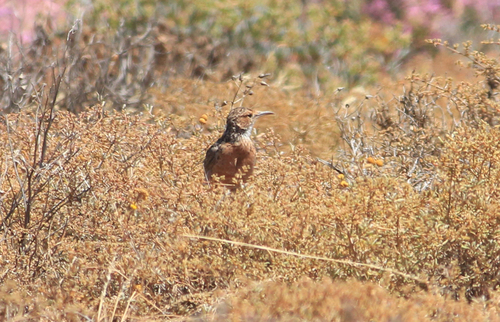
Sjirpleeuwerik (Chersomanes albofasciata) Sjirpleeuwerik
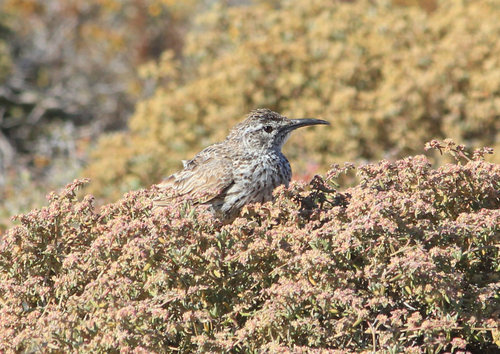
Kaapse langsnavelleeuwerik (Certhilauda curvirostris) Kaapse langsnavelleeuwerik

Media

Laden…

Kort gezegd

The most reliable field separation between Spike-heeled Lark and Cape Long-billed Lark is structural: Spike-heeled Lark is distinctly smaller and more compact, with a proportionally shorter, straighter bill, while Cape Long-billed Lark is larger and notably long-billed with a pronounced downcurve. Both species can show considerable plumage variation across their many subspecies, but the bill shape and size difference are consistent. In the field, be alert for differences in jizz—Spike-heeled Lark appears more upright and compact, whereas Cape Long-billed Lark is rangier and bulkier. Habitat overlap is possible, but Cape Long-billed Lark is more tied to the Karoo and coastal fynbos, while Spike-heeled Lark favors drier grasslands and shrublands. Plumage alone is often unreliable due to overlap and local variation, so focus on structure and context.

Herkenningstips

  1. Bill shape and length: Spike-heeled Lark has a shorter, straighter, and stubbier bill; Cape Long-billed Lark's bill is much longer, more decurved, and often appears almost sickle-shaped. This is the single most reliable field mark for all ages and seasons.
  2. Overall size and jizz: Spike-heeled Lark is smaller and more compact, often with a more upright stance. Cape Long-billed Lark is larger, bulkier, and longer-tailed, with a more horizontal posture.
  3. Tail and wing proportions: Cape Long-billed Lark has a longer tail and wings relative to body size, giving it a stretched appearance, especially in flight. Spike-heeled Lark is shorter-tailed and more compact.
  4. Plumage variation: Both species are variable, but Spike-heeled Lark may show warmer, rufous tones in some populations, while Cape Long-billed Lark can be paler or greyer. However, this is not reliable due to overlap and subspecific variation.
  5. Juvenile/immature flight marks: No distinctive juvenile or immature upperwing or flight pattern differences are documented between these two species. Do not rely on wing pattern for separation.
  6. Habitat context: If in Karoo or coastal fynbos, especially in southwestern South Africa, Cape Long-billed Lark is more likely. In drier grasslands or shrubland, especially outside the Karoo, Spike-heeled Lark is more likely. However, ranges can overlap, so use with caution.
  7. Behavior: Spike-heeled Lark is more likely to run or walk in short bursts, often flicking its tail, and flushes more readily. Cape Long-billed Lark is heavier, moves more deliberately, and may be less prone to flush.
  8. Perched posture: Spike-heeled Lark often appears more upright and alert; Cape Long-billed Lark is more horizontal and elongated.
  9. Bill color and contrast: Both species can show pale or horn-colored bills, but the length and curvature are more important than color for ID.
  10. Voice: Not diagnostic based on available sources; do not rely on song or call for separation in the field.
  11. Sex and season: No strong sexual dimorphism or seasonal plumage change to aid separation; both sexes and all seasons are best separated by structure.
  12. Pitfalls: Beware of local variation and overlap in plumage tones; do not rely on color alone. Immature birds are not reliably separable by plumage or wing pattern.
  13. Side-by-side comparison: If both species are present, the size and bill differences are obvious. When alone, focus on bill shape and overall proportions.
  14. Subspecies confusion: Both species have multiple subspecies with local variation; always prioritize structure over plumage.
  15. Summary tip: If you see a long, strongly decurved bill on a large, pale lark in the Karoo or fynbos, it's Cape Long-billed Lark. If the bird is smaller, more compact, with a shorter, straighter bill in drier grassland or shrubland, it's Spike-heeled Lark.

Grootte

Spike-heeled Lark is significantly smaller, with an adult body mass of about 24.7g [wikidata]. Cape Long-billed Lark is larger and heavier (no precise mass given, but consistently described as a large lark). In the field, Cape Long-billed Lark looks bulkier, with a longer body and tail. The difference is especially apparent when both species are seen side by side, but even singly, the Cape Long-billed Lark's size and bill length are striking compared to the daintier Spike-heeled Lark.

Verenkleed

There are no well-documented, age-specific upperwing or flight pattern differences between these two species in the available sources. Both show considerable plumage variation across their many subspecies, with rufous, sandy, or greyish tones, and both can appear streaked or plain depending on age and region. Juvenile and immature plumages are not described as reliably separable in flight or perched. Adult Spike-heeled Larks may appear slightly warmer or more rufous in some populations, while Cape Long-billed Lark can be paler or greyer, but this is not consistent enough for confident ID. In summary, plumage is highly variable and best used only in conjunction with structural features.

Gedrag

Spike-heeled Lark often appears more upright and alert, with a tendency to run or walk in short bursts, sometimes flicking its tail. Cape Long-billed Lark is more likely to appear heavy-bodied and deliberate in its movements, often foraging on the ground in a more horizontal posture. Both species are terrestrial and can be secretive, but Cape Long-billed Lark may be less prone to flushing at close range. In flight, Cape Long-billed Lark appears longer-winged and longer-tailed, while Spike-heeled Lark is more compact and agile.

Habitat

Spike-heeled Lark is found in a range of dry, open habitats across southern Africa, favoring subtropical or tropical dry shrubland and seasonally wet or flooded grassland [wikipedia]. Cape Long-billed Lark is more localized to southwestern Africa, especially the semi-arid Karoo, coastal fynbos, and dry lowland or highveld grasslands [wikipedia]. Both can occur in agricultural areas, but Cape Long-billed Lark is more closely associated with the Karoo and fynbos, while Spike-heeled Lark is more widespread in drier, open grasslands and shrubland. Habitat alone is not diagnostic where ranges overlap, but can support an ID when combined with structure.

Stuur een betere beschrijving

Gebruik dezelfde onderdelen als de vergelijking. Je tekst staat meteen live.

The most reliable field separation between Spike-heeled Lark and Cape Long-billed Lark is structural: Spike-heeled Lark is distinctly smaller and more compact, with a proportionally shorter, straighter bill, while Cape Long-billed Lark is larger and notably long-billed with a pronounced downcurve. Both species can show considerable plumage variation across their many subspecies, but the bill shape and size difference are consistent. In the field, be alert for differences in jizz—Spike-heeled Lark appears more upright and compact, whereas Cape Long-billed Lark is rangier and bulkier. Habitat overlap is possible, but Cape Long-billed Lark is more tied to the Karoo and coastal fynbos, while Spike-heeled Lark favors drier grasslands and shrublands. Plumage alone is often unreliable due to overlap and local variation, so focus on structure and context.

  1. Bill shape and length: Spike-heeled Lark has a shorter, straighter, and stubbier bill; Cape Long-billed Lark's bill is much longer, more decurved, and often appears almost sickle-shaped. This is the single most reliable field mark for all ages and seasons.
  2. Overall size and jizz: Spike-heeled Lark is smaller and more compact, often with a more upright stance. Cape Long-billed Lark is larger, bulkier, and longer-tailed, with a more horizontal posture.
  3. Tail and wing proportions: Cape Long-billed Lark has a longer tail and wings relative to body size, giving it a stretched appearance, especially in flight. Spike-heeled Lark is shorter-tailed and more compact.
  4. Plumage variation: Both species are variable, but Spike-heeled Lark may show warmer, rufous tones in some populations, while Cape Long-billed Lark can be paler or greyer. However, this is not reliable due to overlap and subspecific variation.
  5. Juvenile/immature flight marks: No distinctive juvenile or immature upperwing or flight pattern differences are documented between these two species. Do not rely on wing pattern for separation.
  6. Habitat context: If in Karoo or coastal fynbos, especially in southwestern South Africa, Cape Long-billed Lark is more likely. In drier grasslands or shrubland, especially outside the Karoo, Spike-heeled Lark is more likely. However, ranges can overlap, so use with caution.
  7. Behavior: Spike-heeled Lark is more likely to run or walk in short bursts, often flicking its tail, and flushes more readily. Cape Long-billed Lark is heavier, moves more deliberately, and may be less prone to flush.
  8. Perched posture: Spike-heeled Lark often appears more upright and alert; Cape Long-billed Lark is more horizontal and elongated.
  9. Bill color and contrast: Both species can show pale or horn-colored bills, but the length and curvature are more important than color for ID.
  10. Voice: Not diagnostic based on available sources; do not rely on song or call for separation in the field.
  11. Sex and season: No strong sexual dimorphism or seasonal plumage change to aid separation; both sexes and all seasons are best separated by structure.
  12. Pitfalls: Beware of local variation and overlap in plumage tones; do not rely on color alone. Immature birds are not reliably separable by plumage or wing pattern.
  13. Side-by-side comparison: If both species are present, the size and bill differences are obvious. When alone, focus on bill shape and overall proportions.
  14. Subspecies confusion: Both species have multiple subspecies with local variation; always prioritize structure over plumage.
  15. Summary tip: If you see a long, strongly decurved bill on a large, pale lark in the Karoo or fynbos, it's Cape Long-billed Lark. If the bird is smaller, more compact, with a shorter, straighter bill in drier grassland or shrubland, it's Spike-heeled Lark.

Spike-heeled Lark is significantly smaller, with an adult body mass of about 24.7g [wikidata]. Cape Long-billed Lark is larger and heavier (no precise mass given, but consistently described as a large lark). In the field, Cape Long-billed Lark looks bulkier, with a longer body and tail. The difference is especially apparent when both species are seen side by side, but even singly, the Cape Long-billed Lark's size and bill length are striking compared to the daintier Spike-heeled Lark.

There are no well-documented, age-specific upperwing or flight pattern differences between these two species in the available sources. Both show considerable plumage variation across their many subspecies, with rufous, sandy, or greyish tones, and both can appear streaked or plain depending on age and region. Juvenile and immature plumages are not described as reliably separable in flight or perched. Adult Spike-heeled Larks may appear slightly warmer or more rufous in some populations, while Cape Long-billed Lark can be paler or greyer, but this is not consistent enough for confident ID. In summary, plumage is highly variable and best used only in conjunction with structural features.

Spike-heeled Lark often appears more upright and alert, with a tendency to run or walk in short bursts, sometimes flicking its tail. Cape Long-billed Lark is more likely to appear heavy-bodied and deliberate in its movements, often foraging on the ground in a more horizontal posture. Both species are terrestrial and can be secretive, but Cape Long-billed Lark may be less prone to flushing at close range. In flight, Cape Long-billed Lark appears longer-winged and longer-tailed, while Spike-heeled Lark is more compact and agile.

Spike-heeled Lark is found in a range of dry, open habitats across southern Africa, favoring subtropical or tropical dry shrubland and seasonally wet or flooded grassland [wikipedia]. Cape Long-billed Lark is more localized to southwestern Africa, especially the semi-arid Karoo, coastal fynbos, and dry lowland or highveld grasslands [wikipedia]. Both can occur in agricultural areas, but Cape Long-billed Lark is more closely associated with the Karoo and fynbos, while Spike-heeled Lark is more widespread in drier, open grasslands and shrubland. Habitat alone is not diagnostic where ranges overlap, but can support an ID when combined with structure.

Wijzigingen weggooien?

Je hebt niet-opgeslagen wijzigingen. Als je nu weggaat, gaan die verloren.

Sjirpleeuwerik · Kaapse langsnavelleeuwerik · Mijn lastige vogels