

Californische ral vs Virginiaral
Rallus obsoletus versus Rallus limicola
Speel een quiz met Californische ral en Virginiaral
 Californische ral
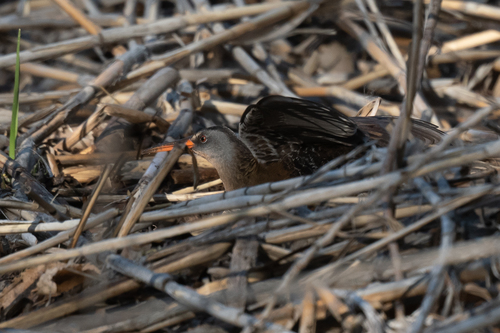 Virginiaral
Kort gezegd
Het meest betrouwbare veldkenmerk om Californische ral van Virginiaral te scheiden is de grootte: Ridgway's is veel groter en robuuster, met een lange, zware, naar beneden gebogen snavel, terwijl Virginiaral duidelijk kleiner en delicater is met een slanker, korter, roodachtig snavel. Beide soorten zijn geheimzinnige moerasvogels met bruinachtige verenkleed en een vergelijkbare railachtige structuur, maar Californische ral vertoont een meer kaneelbruine kleur in het algemeen en een opvallende witachtige staartvlek, terwijl Virginiaral grijze wangen, een witachtige keel en een gedurfde lichte supercilium heeft. Juveniele en onvolwassen verenkleed worden niet in detail beschreven voor Ridgway's, maar juveniele Virginiaral zijn opmerkelijk donkerder en zwartachtig aan de onderzijde. In de vlucht zijn beide soorten terughoudend om op te vliegen, maar Ridgway's lijkt zwaarder en langer. Habitatoverlap is mogelijk, maar Ridgway's is voornamelijk beperkt tot brakwatergetijdenmoerassen van de Pacifische kust, terwijl Virginiaral wijdverspreider is in zoetwatermoerassen.
Herkenningstips
- Grootte is het meest directe aanwijzing: Californische ral is veel groter en robuuster dan Virginiaral. Als je een rail ziet die bijna kipgrootte lijkt, is het bijna zeker Ridgway's; Virginiaral is dichter bij de grootte van een spreeuw of kleine lijster.
- Snavelstructuur: Californische ral heeft een lange, zware en sterk naar beneden gebogen snavel, die vaak massief lijkt voor het hoofd. Virginiaral's snavel is lang en slank, maar korter, delicater en roodachtig van kleur.
- Verenkleuren: Californische ral is over het algemeen kaneelbruin met een bleke kastanjebruine borst en een opvallende witachtige staartvlek, vooral zichtbaar wanneer de vogel wegloopt of in de vlucht is. Virginiaral is donkerder bruin boven, met grijze wangen, een gedurfde lichte supercilium en een witachtige keel. Het algehele effect is een meer gepatterneerde, minder uniforme vogel.
- Gezichtspatroon: Virginiaral vertoont een duidelijke grijze wang en een lichte lijn boven het oog (supercilium), wat Ridgway's mist. Ridgway's gezicht is meer uniform bruin-grijs.
- Staartvlek: Californische ral heeft een opvallende witachtige staartvlek, een nuttig kenmerk als het van achteren of in de vlucht wordt gezien. Virginiaral mist dit kenmerk.
- Pootkleur: Virginiaral heeft oranje-bruin poten, wat een ondersteunend kenmerk kan zijn van dichtbij. De pootkleur van Californische ral is minder onderscheidend in de aantekeningen.
- Staart: Virginiaral's staart is kort en vaak omhoog gehouden, soms met witachtige onderstaartdekken zichtbaar. Californische ral's staart is ook kort maar niet zo vaak omhoog gehouden of prominent.
- Juveniel verenkleed: Juveniele Virginiaral zijn zwartachtig bruin boven met roestkleurige veerranden en donker onder; het juveniele verenkleed van Californische ral is niet gedetailleerd, maar verwacht een grotere, blekere en minder contrasterende vogel.
- Vlucht jizz: Beide soorten zijn terughoudend om te vliegen, maar wanneer ze dat doen, lijkt Californische ral zwaar, lang van lichaam en langzaam, terwijl Virginiaral compacter, snel en direct is.
- Habitat: Californische ral is bijna altijd in brakwatergetijdenmoerassen met pickleweed en cordgrass, vooral aan de Pacifische kust. Virginiaral is waarschijnlijker in zoetwater of gemengde moerassen met riet en riet, en is wijdverspreid in Noord-Amerika.
- Gedrag: Virginiaral kan op vegetatie klimmen terwijl hij foerageert en is waarschijnlijker om te duiken of te zwemmen om gevaar te ontvluchten. Californische ral is waarschijnlijker om te lopen of te rennen voor dekking.
- Seizoensgebondenheid: Californische ral is resident in zijn kustgebied, terwijl Virginiaral migrerend kan zijn of alleen in het broedseizoen in sommige gebieden aanwezig is.
- Stem: Niet beschreven in de aantekeningen, dus vertrouw hier niet op vocalisaties voor scheiding.
- Overlap: Waar beide soorten voorkomen, gebruik grootte, snavelvorm en gezichtspatroon als je eerste controles. Als je een duidelijk zicht op de staart hebt, is de witachtige vlek diagnostisch voor Ridgway's.
- Valkuilen: Slechte uitzichten in dicht moeras kunnen zelfs grote rails klein laten lijken. Probeer altijd een gevoel van schaal te krijgen en controleer de combinatie van snavelgrootte, gezichtspatroon en staartkleur voordat je een beslissing neemt.
Grootte
Californische ral is substantially larger and heavier than Virginiaral. While precise mass for Ridgway's is not provided, Virginiaral averages about 89 g and measures 20–27 cm in length with a 32–38 cm wingspan. Ridgway's is described as a large rail, appearing much bulkier and longer-bodied in the field. This size difference is often obvious even at a distance or in flight, and is a primary field separation point.
Verenkleed
- Juvenile/immature plumage: Virginiaral juveniles are blackish brown above with rufous feather edges, dark brown to black below, and a brownish bill and legs. Their face is grayish brown. Californische ral juvenile plumage is not detailed, but adults are described as cinnamon-brown with a pale chestnut breast and a conspicuous whitish rump patch.
- Adult plumage: Californische ral is overall grayish brown with a strong cinnamon wash, pale chestnut breast, and a distinctive whitish rump patch. Virginiaral adults are mainly brown, darker on the back and crown, with gray cheeks, a bold pale stripe over the eye, and a whitish throat. Their legs are orange-brown and bill is reddish. Both have long toes and short tails, but Virginiaral's tail is proportionally shorter and often cocked up.
- Flight views: No detailed wing pattern is given for either species, but Californische ral should appear larger and more cinnamon-toned, while Virginiaral will show a smaller, darker, and more compact profile.
Gedrag
Beide soorten zijn geheimzinnig en geven de voorkeur aan lopen of rennen door dichte moerasvegetatie in plaats van te vliegen. Californische ral is vooral terughoudend om te vliegen en is het meest actief bij zonsopgang, zonsondergang of 's nachts. Virginiaral is ook schuw en vaker gehoord dan gezien, maar is in staat om door vegetatie te klimmen en duikt of zwemt af en toe om gevaar te ontvluchten. Virginiaral kan worden gezien terwijl hij op planten klimt tijdens het foerageren, een gedrag dat minder vaak wordt opgemerkt bij Ridgway's. Beide soorten doorzoeken modder of ondiep water naar ongewervelden, maar Californische ral is waarschijnlijker te zien in brakwatergetijdenmoerassen, terwijl Virginiaral flexibeler is in het gebruik van habitat.
Habitat
Californische ral is bijna volledig beperkt tot brakwatergetijdenmoerassen langs de Pacifische kust, vooral in gebieden die gedomineerd worden door pickleweed en cordgrass, af en toe met riet. Het wordt het vaakst aangetroffen in getijdenmoerassen en op de ecotone tussen moddervlak en begroeid moeras. Virginiaral, hoewel ook een moeraspecialist, is wijdverspreider en gebruikelijker in zoetwater- en brakwatermoerassen in Noord-Amerika. Het nestelt in dichte opkomende vegetatie zoals riet, riet en gras, en is minder gebonden aan getijdenhabitats. Overlap is mogelijk in sommige brakwatermoerassen, maar Ridgway's is de verwachte soort in getijdenzoutmoerassen van de Westkust.