

Motmot

ニシオニクイナ 対 コオニクイナ

Rallus obsoletus 対 Rallus limicola

ニシオニクイナとコオニクイナのクイズ
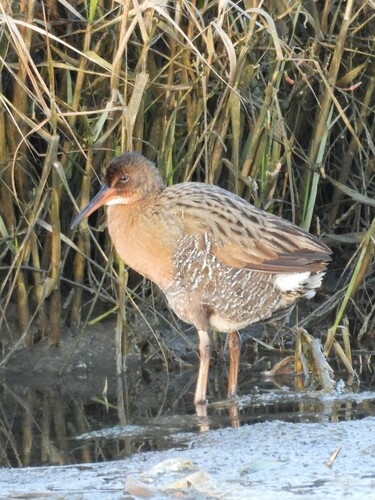
ニシオニクイナ (Rallus obsoletus) ニシオニクイナ
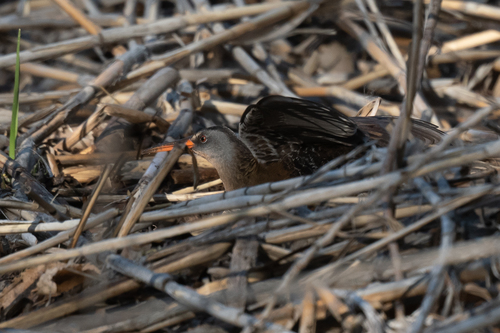
コオニクイナ (Rallus limicola) コオニクイナ

メディア

読み込み中…

要点

ニシオニクイナとコオニクイナを区別する最も信頼できるフィールドマークはサイズです:Ridgway'sははるかに大きくてがっしりしており、長くて重い下向きに曲がったくちばしを持っていますが、コオニクイナは明らかに小さく、より繊細で、細くて短い赤みがかったくちばしを持っています。両種は茶色がかった羽毛と似たようなレールのような構造を持つ秘密主義の湿地の鳥ですが、ニシオニクイナは全体的にシナモンブラウンの色合いを示し、目立つ白っぽい尾羽の斑点があります。一方、コオニクイナは灰色の頬、白っぽい喉、そして大胆な淡い眉斑を持っています。Ridgway'sの幼鳥と未成熟の羽毛は詳細には記載されていませんが、コオニクイナの幼鳥は特に暗く、黒っぽいです。飛行中、両種は逃げるのをためらいますが、Ridgway'sはより重く、長く見えます。生息地の重複は可能ですが、Ridgway'sは主に太平洋沿岸の塩水の干潟に制限されているのに対し、コオニクイナは淡水の湿地に広く分布しています。

識別のコツ

  1. サイズは最も即座の手がかりです: ニシオニクイナはコオニクイナよりもはるかに大きくてがっしりしています。もし、ほぼ鶏のサイズに見えるレールを見たら、それはほぼ確実にRidgway'sです;コオニクイナはサイズ的にスターリングや小さなツグミに近いです。
  2. くちばしの構造: ニシオニクイナは長くて重く、強く下向きに曲がったくちばしを持ち、頭に対してしばしば巨大に見えます。コオニクイナのくちばしは長くて細いですが、短く、より繊細で、赤みがかった色です。
  3. 羽毛のトーン: ニシオニクイナは全体的にシナモンブラウンで、淡い栗色の胸と目立つ白っぽい尾羽の斑点を持ち、特に鳥が後ろに歩いているときや飛んでいるときに目立ちます。コオニクイナは上面が暗い茶色で、灰色の頬、太い淡い眉斑、白っぽい喉を持っています。全体的な効果は、よりパターン化され、均一性の少ない鳥です。
  4. 顔のパターン: コオニクイナは明確な灰色の頬と目の上の淡い線(眉斑)を示しますが、Ridgway'sにはこれがありません。Ridgway'sの顔はより均一に茶色がかった灰色です。
  5. 尾羽の斑点: ニシオニクイナは目立つ白っぽい尾羽の斑点を持ち、後ろから見たり飛んでいるときに役立つマークです。コオニクイナにはこの特徴がありません。
  6. 足の色: コオニクイナはオレンジがかった茶色の足を持ち、近距離での支持マークになることがあります。ニシオニクイナの足の色はメモにおいてはあまり特徴的ではありません。
  7. 尾: コオニクイナの尾は短く、しばしば上に持ち上げられ、時には白っぽい尾羽の覆いを露出させます。ニシオニクイナの尾も短いですが、頻繁に持ち上げられたり目立ったりすることはありません。
  8. 幼鳥の羽毛: コオニクイナの幼鳥は上面が黒っぽい茶色で、ルフスの羽毛の縁があり、下面は暗いです;ニシオニクイナの幼鳥の羽毛は詳細には記載されていませんが、より大きく、淡い、対照の少ない鳥を期待してください。
  9. 飛行の特徴: 両種は飛ぶのをためらいますが、飛ぶとき、ニシオニクイナは重く、長い体形で遅く見え、コオニクイナはよりコンパクトで、迅速かつ直接的です。
  10. 生息地: ニシオニクイナはほぼ常にピクルウィードやコードグラスのある塩水の干潟にいます、特に太平洋沿岸で。コオニクイナはカヤツリグサや葦のある淡水または混合湿地にいる可能性が高く、北アメリカ全体に広く分布しています。
  11. 行動: コオニクイナは採餌中に植物に登ることがあり、危険を避けるために潜ったり泳いだりする可能性が高いです。ニシオニクイナは隠れるために歩いたり走ったりする可能性が高いです。
  12. 季節性: ニシオニクイナは沿岸の範囲に常駐していますが、コオニクイナは渡り鳥であったり、一部の地域では繁殖期にのみ存在することがあります。
  13. 声: メモには記載されていないので、ここでの区別に声を頼らないでください。
  14. 重複: 両種が生息する場所では、サイズ、くちばしの形、顔のパターンを最初のチェックとして使用してください。尾羽の明白な斑点が見える場合、白っぽい斑点はRidgway'sの診断的な特徴です。
  15. 落とし穴: 密な湿地での視界が悪いと、大きなレールでも小さく見えることがあります。常にスケール感を得るようにし、呼びかける前にくちばしのサイズ、顔のパターン、尾羽の色の組み合わせを確認してください。

大きさ

ニシオニクイナはコオニクイナよりもかなり大きく、重いです。Ridgway'sの正確な質量は提供されていませんが、コオニクイナは平均約89gで、長さは20〜27cm、翼幅は32〜38cmです。Ridgway'sは大きなレールとして記載されており、フィールドでははるかにがっしりして長い体形に見えます。このサイズの違いは、距離や飛行中でもしばしば明らかであり、主要なフィールドの区別点です。

羽色

行動

両種は秘密主義で、飛ぶよりも密な湿地の植生を歩いたり走ったりすることを好みます。ニシオニクイナは特に飛ぶのをためらい、夜明け、夕暮れ、または夜に最も活発です。コオニクイナも内気で、見られるよりも聞かれることが多いですが、植生を登ることができ、時折危険を避けるために潜ったり泳いだりします。コオニクイナは採餌中に植物に登るのが見られることがあり、これはRidgway'sではあまり見られない行動です。両種は無脊椎動物のために泥や浅い水を探りますが、ニシオニクイナは塩水の干潟で見られる可能性が高く、コオニクイナは生息地の利用においてより柔軟です。

生息環境

ニシオニクイナはほぼ完全に太平洋沿岸の塩水の干潟に制限されており、特にピクルウィードやコードグラスが優勢な地域で、時折バルラッシュがあります。最も頻繁に潮汐のスルーや泥地と植生の湿地のエコトーンで見られます。コオニクイナは湿地の専門家でもありますが、北アメリカ全体の淡水および塩水の湿地により広く分布し、一般的です。彼らはカヤツリグサ、葦、草などの密な出現植物に巣を作り、潮汐の生息地にあまり依存していません。いくつかの塩水の湿地では重複が可能ですが、Ridgway'sは西海岸の潮汐の塩水湿地で期待される種です。

より良い説明を送る

比較と同じ項目を使ってください。文章はすぐに公開されます。

The most reliable field mark to separate Ridgway's Rail from Virginia Rail is size: Ridgway's is much larger and bulkier, with a long, heavy, downward-curving bill, while Virginia Rail is distinctly smaller and more delicate with a slimmer, shorter reddish bill. Both species are secretive marsh birds with brownish plumage and similar rail-like structure, but Ridgway's Rail shows a more cinnamon-brown coloration overall and a conspicuous whitish rump patch, whereas Virginia Rail has gray cheeks, a whitish throat, and a bold pale supercilium. Juvenile and immature plumages are not described in detail for Ridgway's, but Virginia Rail juveniles are notably darker and blackish below. In flight, both species are reluctant to flush, but Ridgway's appears heavier and longer. Habitat overlap is possible, but Ridgway's is mostly restricted to brackish tidal marshes of the Pacific coast, while Virginia Rail is more widespread in freshwater marshes.

  1. Size is the most immediate clue: Ridgway's Rail is much larger and bulkier than Virginia Rail. If you see a rail that looks nearly chicken-sized, it is almost certainly Ridgway's; Virginia Rail is closer to a starling or small thrush in size.
  2. Bill structure: Ridgway's Rail has a long, heavy, and strongly downcurved bill, often appearing massive for the head. Virginia Rail's bill is long and slim, but shorter, more delicate, and reddish in color.
  3. Plumage tone: Ridgway's Rail is overall cinnamon-brown with a pale chestnut breast and a conspicuous whitish rump patch, especially visible when the bird is walking away or in flight. Virginia Rail is darker brown above, with gray cheeks, a bold pale supercilium, and a whitish throat. The overall effect is a more patterned, less uniform bird.
  4. Face pattern: Virginia Rail shows a distinct gray cheek and pale line over the eye (supercilium), which Ridgway's lacks. Ridgway's face is more uniformly brownish-gray.
  5. Rump patch: Ridgway's Rail has a conspicuous whitish rump patch, a useful mark if seen from behind or in flight. Virginia Rail lacks this feature.
  6. Leg color: Virginia Rail has orange-brown legs, which can be a supporting mark at close range. Ridgway's Rail's leg color is less distinctive in the notes.
  7. Tail: Virginia Rail's tail is short and often held cocked upward, sometimes exposing whitish undertail coverts. Ridgway's Rail's tail is also short but not as frequently cocked or as prominent.
  8. Juvenile plumage: Virginia Rail juveniles are blackish brown above with rufous feather edges and dark below; Ridgway's Rail juvenile plumage is not detailed, but expect a larger, paler, and less contrasting bird.
  9. Flight jizz: Both species are reluctant to fly, but when they do, Ridgway's Rail appears heavy, long-bodied, and slow, while Virginia Rail is more compact, quick, and direct.
  10. Habitat: Ridgway's Rail is almost always in brackish tidal marshes with pickleweed and cordgrass, especially on the Pacific coast. Virginia Rail is more likely in freshwater or mixed marshes with cattails and reeds, and is widespread across North America.
  11. Behavior: Virginia Rail may climb on vegetation while foraging and is more likely to dive or swim to escape danger. Ridgway's Rail is more likely to walk or run for cover.
  12. Seasonality: Ridgway's Rail is resident in its coastal range, while Virginia Rail may be migratory or present only in breeding season in some areas.
  13. Voice: Not described in the notes, so do not rely on vocalizations for separation here.
  14. Overlap: Where both species occur, use size, bill shape, and face pattern as your first checks. If you have a clear view of the rump, the whitish patch is diagnostic for Ridgway's.
  15. Pitfalls: Poor views in dense marsh can make even large rails look small. Always try to get a sense of scale, and check for the combination of bill size, face pattern, and rump color before making a call.

Ridgway's Rail is substantially larger and heavier than Virginia Rail. While precise mass for Ridgway's is not provided, Virginia Rail averages about 89 g and measures 20–27 cm in length with a 32–38 cm wingspan. Ridgway's is described as a large rail, appearing much bulkier and longer-bodied in the field. This size difference is often obvious even at a distance or in flight, and is a primary field separation point.

  • Juvenile/immature plumage: Virginia Rail juveniles are blackish brown above with rufous feather edges, dark brown to black below, and a brownish bill and legs. Their face is grayish brown. Ridgway's Rail juvenile plumage is not detailed, but adults are described as cinnamon-brown with a pale chestnut breast and a conspicuous whitish rump patch.
  • Adult plumage: Ridgway's Rail is overall grayish brown with a strong cinnamon wash, pale chestnut breast, and a distinctive whitish rump patch. Virginia Rail adults are mainly brown, darker on the back and crown, with gray cheeks, a bold pale stripe over the eye, and a whitish throat. Their legs are orange-brown and bill is reddish. Both have long toes and short tails, but Virginia Rail's tail is proportionally shorter and often cocked up.
  • Flight views: No detailed wing pattern is given for either species, but Ridgway's Rail should appear larger and more cinnamon-toned, while Virginia Rail will show a smaller, darker, and more compact profile.

Both species are secretive and prefer to walk or run through dense marsh vegetation rather than fly. Ridgway's Rail is especially reluctant to fly and is most active at dawn, dusk, or night. Virginia Rail is also shy and more often heard than seen, but is capable of climbing through vegetation and occasionally dives or swims to escape danger. Virginia Rail may be seen climbing on plants while foraging, a behavior less often noted in Ridgway's. Both species probe mud or shallow water for invertebrates, but Ridgway's Rail is more likely to be seen in brackish tidal sloughs, while Virginia Rail is more flexible in habitat use.

Ridgway's Rail is almost entirely restricted to brackish tidal marshes along the Pacific coast, especially in areas dominated by pickleweed and cordgrass, occasionally with bulrush. It is most often found in tidal sloughs and at the ecotone between mudflat and vegetated marsh. Virginia Rail, while also a marsh specialist, is more widespread and common in freshwater and brackish marshes across North America. It nests in dense emergent vegetation such as cattails, reeds, and grasses, and is less tied to tidal habitats. Overlap is possible in some brackish marshes, but Ridgway's is the expected species in tidal saltmarshes of the West Coast.

変更を破棄しますか?

保存していない編集があります。今離れると失われます。

ニシオニクイナ · コオニクイナ · 苦手な鳥