

Pycroftstormvogel vs Duifprion
Pterodroma pycrofti versus Pachyptila turtur
Speel een quiz met Pycroftstormvogel en Duifprion
 Pycroftstormvogel
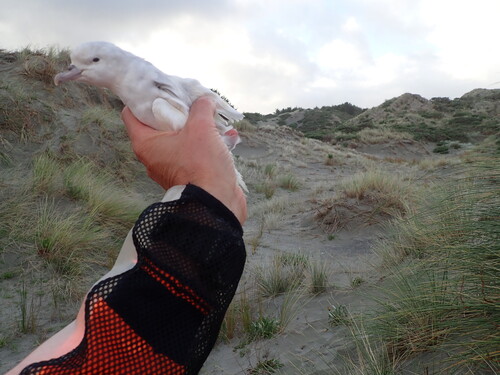 Duifprion
Kort gezegd
Het meest betrouwbare veldkenmerk tussen Pycroftstormvogel en Duifprion is het patroon van de snavel en het gezicht: Pycroftstormvogel heeft een donkere vlek rond het oog en een meer typische stormvogel-snavel, terwijl Duifprion een bleke blauwe snavel heeft en een sterke oogvlek mist. In de vlucht tonen beide een donker 'M'-patroon op de bovenvleugels, maar de blauw-grijze tinten van Duifprion en de wigvormige staart met een donkere punt zijn onderscheidend. De grootte is vergelijkbaar, maar Pycroftstormvogel is iets zwaarder. De context kan helpen: Pycroftstormvogel broedt alleen op een paar eilanden in Nieuw-Zeeland, terwijl Duifprion wijdverspreid is op het zuidelijk halfrond.
Herkenningstips
- Snavel kleur en vorm: Duifprion heeft een bleke blauwe snavel, terwijl Pycroftstormvogel een donkere, meer typische stormvogel-snavel heeft. Dit is het nuttigst van dichtbij of bij goed licht.
- Gezichtspatroon: Pycroftstormvogel toont een donkere vlek rond het oog, wat een gemaskerde uitstraling creëert. Duifprion mist dit, waardoor het er meer open uitziet.
- Borstriem: Pycroftstormvogel kan een vage grijze band over de borst tonen, die afwezig is bij Duifprion. Dit is subtiel en kan op afstand gemist worden.
- Bovenvleugelpatroon: Beide hebben een donker 'M' over de rug en vleugels, maar het patroon van Duifprion staat op een blauw-grijze achtergrond, terwijl Pycroftstormvogel meer neutraal grijs is.
- Staartvorm en patroon: Duifprion heeft een wigvormige staart met een donkere punt, die zichtbaar kan zijn in de vlucht of wanneer hij zit. Pycroftstormvogel's staart is minder duidelijk gemarkeerd en niet zo wigvormig.
- Onderzijde: Beide zijn wit aan de onderzijde, maar Pycroftstormvogel kan een vage borstriem tonen; anders zijn de onderzijde niet sterk diagnostisch.
- Pootkleur: Duifprion heeft blauwe poten en voeten, maar dit is zelden zichtbaar in het veld.
- Grootte en jizz: Pycroftstormvogel is iets zwaarder en kan iets robuuster lijken, maar dit is geen sterk veldkenmerk tenzij ze naast elkaar worden gezien.
- Vluchtstijl: Er zijn geen sterke verschillen beschreven, maar beide zijn behendig en luchtig in de vlucht.
- Habitat en verspreiding: Als ze buiten het noorden van Nieuw-Zeeland worden gezien, is de kans veel groter dat het Duifprion is. Pycroftstormvogel is sterk gelokaliseerd op een paar eilanden.
- Broedcontext: Bij kolonies geeft Pycroftstormvogel een ti-ti-ti-ti roep, terwijl Duifprion zacht coo't. Deze zijn meestal niet te horen op zee.
- Verwarringsrisico: Beide kunnen verward worden met andere kleine stormvogels en prions; controleer altijd eerst de snavelkleur en het gezichtspatroon.
- Geslacht en leeftijd: Geen sterk seksueel dimorfisme; leeftijdsgerelateerde kenmerken worden niet als diagnostisch beschreven in de bronnen.
- Verlichting valkuilen: Bij slecht licht kan het blauw-grijs van Duifprion moeilijk te beoordelen zijn, dus vertrouw op snavel- en gezichtspatroon.
- Valkuil: Het 'M'-patroon is aanwezig bij beide, dus gebruik dit niet alleen voor identificatie.
Grootte
Beide soorten zijn kleine zeevogels, maar Pycroftstormvogel is iets zwaarder (159 g vs. 139 g [wikidata]). De lengte is bijna identiek (Pycroftstormvogel: 26 cm, Duifprion: 25 cm [wikipedia]). De spanwijdte wordt alleen gegeven voor Duifprion (56 cm), maar over het algemeen is de grootte geen sterke scheiding in het veld. Als ze samen worden gezien, kan Pycroftstormvogel iets robuuster lijken, maar dit is subtiel en gemakkelijk te missen.
Verenkleed
Beide soorten delen een grijze bovenkant met een donker 'M'-patroon over de rug en vleugels, en witte onderzijde. Van dichtbij toont Pycroftstormvogel een vage grijze borstriem en een donkere vlek rond het oog, die niet aanwezig is bij Duifprion. Duifprion heeft een blauw-grijze tint aan de bovenkant, een bleke blauwe snavel en een wigvormige staart met een donkere punt, terwijl de staart van Pycroftstormvogel minder duidelijk gemarkeerd is. Juveniele en onvolwassen pluimages worden niet in detail beschreven voor beide soorten in de bronnen, dus vertrouw op volwassen veldkenmerken. In alle pluimages zijn de snavelkleur en het staartpatroon van Duifprion nuttig, terwijl het gezichtspatroon van Pycroftstormvogel meer uitgesproken is.
Gedrag
Beide soorten zijn pelagisch en vaak in vlucht boven de oceaan te zien. Duifprion staat bekend om zacht te coo'en wanneer hij 's nachts terugkeert naar de nesten, terwijl Pycroftstormvogel een ti-ti-ti-ti roep geeft bij broedkolonies. Het foerageergedrag is vergelijkbaar, waarbij beide soorten zich voeden met kleine mariene prooien aan of nabij het oppervlak. Er zijn geen grote gedragsverschillen beschreven die diagnostisch zouden zijn op zee.
Habitat
Pycroftstormvogel broedt alleen op een handvol kleine eilanden voor de noordkust van Nieuw-Zeeland, waardoor het sterk gelokaliseerd is. Duifprion is veel wijdverspreider en broedt op vele subantartische en gematigde eilanden over het zuidelijk halfrond, waaronder Nieuw-Zeeland, Australië en de Zuid-Atlantische Oceaan. Buiten de broedgebieden komen beide voor op zee, maar Duifprion is veel waarschijnlijker buiten de directe regio van Nieuw-Zeeland.
Geluid
Pycroftstormvogel geeft een ti-ti-ti-ti roep bij broedkolonies, maar dit is zelden te horen op zee. Duifprion keert terug naar het nest met een zachte coo-roep, maar is over het algemeen ook stil op zee. Vocalisaties zijn niet betrouwbaar voor scheiding tenzij bij kolonies.