

Paarse strandloper vs Kleine strandloper
Calidris maritima versus Calidris minuta
Speel een quiz met Paarse strandloper en Kleine strandloper
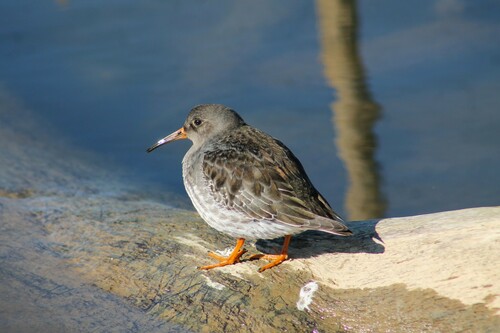 Paarse strandloper
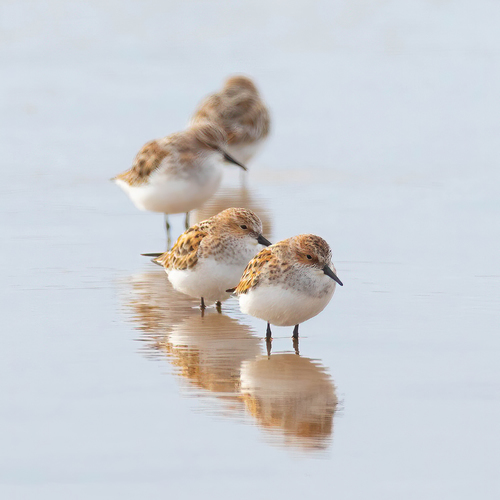 Kleine strandloper
Kort gezegd
De meest betrouwbare manier om Paarse strandloper van Kleine strandloper te onderscheiden is op basis van grootte en structuur: Paarse strandloper is veel robuuster, met een zwaarder lichaam en een dikkere, licht naar beneden gebogen snavel, terwijl Kleine strandloper klein, delicaat en met een fijne snavel is. In de vlucht of in rust toont Kleine strandloper een lange primaire projectie en donkere benen, terwijl Paarse strandloper korte gele benen en een stuggere uitstraling heeft. Juveniele Kleine strandlopers hebben bleke kroonstrepen en een roze borst, terwijl Paarse strandlopers altijd donkerder en meer uniform boven zijn. Habitat is ook een sterke aanwijzing: Paarse strandloper geeft de voorkeur aan rotsachtige kusten, terwijl Kleine strandloper wordt aangetroffen op modderige of zandige vlaktes.
Herkenningstips
- Grootte en bulk: Paarse strandloper is veel groter en zwaarder dan Kleine strandloper; gebruik nabijgelegen steltlopers voor schaal.
- Snavelstructuur: Paarse strandloper heeft een dikkere, middelgrote, licht naar beneden gebogen snavel met een gele basis; de snavel van Kleine strandloper is fijn, recht en volledig donker.
- Benenkleur: Paarse strandloper heeft altijd korte gele benen, terwijl Kleine strandloper lange, donkere benen heeft. Dit is zelfs op afstand zichtbaar.
- Primaire projectie: Kleine strandloper toont een lange primaire projectie voorbij de staart, vooral duidelijk wanneer hij zit of in de vlucht; de vleugels van Paarse strandloper zijn korter en breder.
- Juveniele verenkleed: Juveniele Kleine strandloper heeft bleke kroonstrepen en een roze borst, plus een sterke witte 'V' op de rug. Juveniele Paarse strandlopers zijn donkerder en missen deze bleke markeringen.
- Borst en onderdelen: Paarse strandloper heeft een grijsachtige borst en voornamelijk witte onderdelen, maar de bovenkant is altijd donker en uniform. Kleine strandloper in broedkleed heeft een oranje was op de borst en een witte keel; in de winter is hij eenvoudiger maar nog steeds lichter dan Paarse strandloper.
- Glans van de bovenkant: Paarse strandloper kan een lichte paarse glans boven vertonen, vooral bij goed licht; Kleine strandloper is nooit glanzend.
- Romp en staart: Paarse strandloper heeft een zwarte romp, die zichtbaar kan zijn in de vlucht; de romp van Kleine strandloper wordt niet beschreven als contrasterend.
- Gedrag: Paarse strandloper is langzaam, tam, en zoekt voedsel tussen de rotsen; Kleine strandloper is snel, actief, en voedt zich op open modder of zand.
- Habitat: Paarse strandloper is bijna altijd op rotsachtige kusten in de winter; Kleine strandloper is op modderige vlaktes, zandige kusten, of binnenlandse poelen.
- Vlucht samenstelling: Kleine strandloper komt vaak voor in grote groepen met andere kleine steltlopers; Paarse strandloper is meestal in kleine groepen, soms met steenlopers.
- Stem: Als je een scherpe 'stit' roep hoort, is het Kleine strandloper. De roep van Paarse strandloper is in deze context geen nuttige veldkenmerk.
- Valkuilen: In dof winterlicht kan Kleine strandloper grijzer en minder onderscheidend lijken, maar zal nog steeds veel kleiner, fijner gesnaveld, en donkerbenig zijn in vergelijking met Paarse strandloper. Juveniele Kleine strandlopers zijn vooral onderscheidend met hun bleke kroon en roze tinten.
- Context: Als je een kleine steltloper op een rotsachtige Atlantische kust in de winter vindt, is het bijna zeker Paarse strandloper; op een modderige estuarium is Kleine strandloper veel waarschijnlijker.
- Directe vergelijking: Als beide soorten aanwezig zijn, zijn de verschillen in grootte, structuur, en benen kleur onmiddellijk duidelijk.
Grootte
Paarse strandloper is aanzienlijk groter en zwaarder (ongeveer 72 g vs. 26 g voor Kleine strandloper) en meet 20–22 cm in lengte, vergeleken met de veel kleinere Kleine strandloper. Het verschil is duidelijk in directe vergelijking of wanneer gezien met andere steltlopers: Paarse strandloper lijkt robuust en stevig, terwijl Kleine strandloper klein, slank en delicaat is. De snavel van Paarse strandloper is dikker en licht naar beneden gebogen, met een gele basis; Kleine strandloper heeft een fijne, rechte, volledig donkere snavel. De kleur van de benen is ook een sterke aanwijzing gerelateerd aan de grootte: Paarse strandloper heeft korte gele benen, Kleine strandloper heeft donkere, fijne benen.
Verenkleed
Juveniele Kleine strandlopers zijn onderscheidend met bleke kroonstrepen en een roze borst, en in vers juveniel verenkleed tonen ze een sterke witte 'V' op de rug. Volwassenen in broedkleed hebben een oranje was op de borst en een witte keel. In niet-broed (winter) verenkleed worden Kleine strandlopers eenvoudiger en grijzer, waardoor scheiding moeilijker wordt, maar ze behouden nog steeds een fijne snavel en donkere benen. Paarse strandloper is altijd donkerder boven, met een lichte paarse glans, en heeft een grijsachtige borst en zwarte romp. De onderdelen zijn voornamelijk wit, maar de algehele indruk is veel donkerder en uniformer dan die van Kleine strandloper. De gele basis van de snavel en gele benen zijn consistent in alle leeftijden en seizoenen voor Paarse strandloper. In de vlucht toont Kleine strandloper een lange primaire projectie voorbij de staart, terwijl de vleugels van Paarse strandloper korter en breder lijken.
Gedrag
Paarse strandloper is typisch tam en langzaam bewegend, vaak zoekend naar voedsel tussen de rotsen en zeewier op door golven gewassen kusten. Het is sociaal maar meestal in kleine groepen, soms met steenlopers. Kleine strandloper is veel actiever en sneller, voedt zich snel op open modder of zand, vaak in grote groepen met andere kleine steltlopers. Zijn bewegingen zijn frenetic en het is minder benaderbaar dan Paarse strandloper.
Habitat
Habitat is een sterke scheiding: Paarse strandloper overwintert bijna uitsluitend op rotsachtige, vaak door golven geteisterde Atlantische kusten, zelden op modder of zand. Kleine strandloper wordt aangetroffen op modderige of zandige kustvlaktes, estuaria en de randen van binnenlandse poelen, zelden, zo niet ooit, op rotsachtige kusten. Als je een kleine steltloper op een rotsachtige kust in de winter ziet, is het veel waarschijnlijker dat het Paarse strandloper is; op modderige vlaktes, vooral in grote groepen, is Kleine strandloper de standaard.
Geluid
Kleine strandloper geeft een scherpe 'stit' roep, die onderscheidend is onder kleine steltlopers. De roep van Paarse strandloper is niet beschreven in de notities, dus de stem is alleen diagnostisch als je de scherpe noot van de Kleine strandloper hoort.
Paarse strandloper · Kleine strandloper · Mijn lastige vogels