

Middelste jager vs Zuidpooljager
Stercorarius pomarinus versus Stercorarius maccormicki
Speel een quiz met Middelste jager en Zuidpooljager
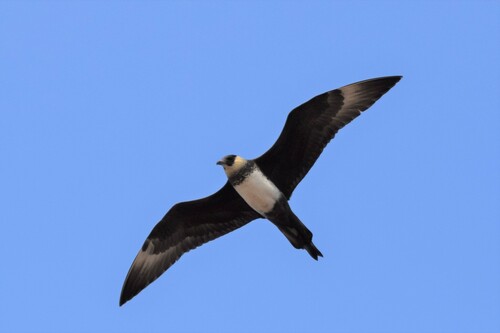 Middelste jager
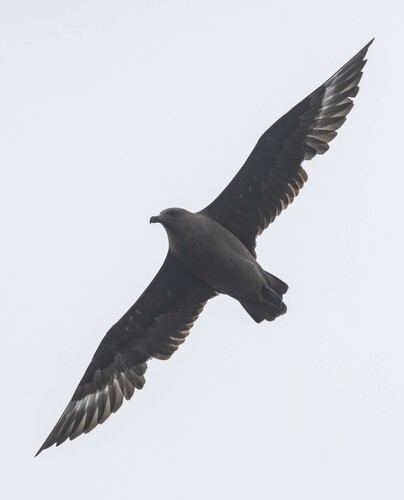 Zuidpooljager
Kort gezegd
Het meest betrouwbare veldkenmerk tussen Middelste jager en Zuidpooljager is de algehele structuur: Zuidpool is veel robuuster en zwaarder, met een massieve tonvormige borst en een krachtigere, directe vlucht, terwijl Middelste nog steeds groot maar slanker en met bredere vleugels is. Bij volwassenen toont de broedkleed van Middelste lange, lepelvormige centrale staartveren, die Zuidpool nooit heeft. Beide soorten kunnen een witte vleugelflits vertonen, maar de flits van Middelste is een diagnostische dubbele flits op de ondervleugel, terwijl die van Zuidpool een enkele, gedurfde witte vlek is. Juvenielen en donkere morfen zijn vooral lastig, maar Middelste is over het algemeen minder massief en toont een meer gemeten, minder krachtige vlucht. Het contrast tussen hoofd en lichaam is sterker bij Zuidpool, vooral bij lichte morfen.
Herkenningstips
- Algehele bulk en borst: Zuidpooljager is veel zwaarder en tonvormig, met een massieve, topzware uitstraling in alle kleedvormen. Middelste is slanker en minder imponerend, met een bredere vleugel maar niet dezelfde borstbulk. Dit is het meest duidelijk in zij-aan-zij weergaven of wanneer een vogel zit.
- Vluchtstijl: De vlucht van Zuidpool is direct en krachtig, wat zijn massa weerspiegelt; die van Middelste is meer gemeten en minder krachtig, met een bredere vleugel en minder topzware uitstraling. Gebruik dit in dynamische, verre weergaven.
- Staartvorm (broedvolwassenen): Middelste jager in broedkleed toont lange, gedraaide, lepelvormige centrale staartveren. Zuidpool toont deze eigenschap nooit. Buiten het broedseizoen is de staartvorm minder diagnostisch.
- Onderwingpatroon: Middelste jager van alle morfen toont een diagnostische dubbele witte flits op de ondervleugel; Zuidpool heeft een enkele, gedurfde witte vlek. Dit is het nuttigst in goede vluchtweergaven.
- Hoofd- en lichaamcontrast (volwassenen): Zuidpool (vooral lichte morfen) toont een sterk contrast tussen een licht (witachtig of stro-bruin) hoofd en donkerder lichaam. Middelste’s hoofd is geelachtig-wit met een zwarte kap, maar het contrast is over het algemeen minder scherp.
- Snavelbasis (juvenielen/donkere morfen): Zuidpool juvenielen en donkere morfen hebben een blauwe snavelbasis, wat kan helpen bij dichtbij weergaven. Middelste mist deze eigenschap.
- Kleedtoon (juvenielen/donkere morfen): Zuidpool is kouder bruin over het algemeen; Middelste is variabel maar mist vaak de koude, ashy toon van Zuidpool.
- Witte vleugelflits (alle leeftijden): Beide soorten tonen een witte vleugelflits, maar die van Middelste is een dubbele flits op de ondervleugel, terwijl die van Zuidpool een enkele, gedurfde vlek is. Dit kan subtiel zijn bij slecht licht of verre weergaven.
- Hoofdkap (volwassenen): Middelste volwassenen hebben een zwarte kap op een geelachtig-wit hoofd; het hoofd van Zuidpool is licht maar mist een echte kap.
- Grootte in context: Als ze met meeuwen worden gezien, zal Zuidpool veel groter en robuuster lijken dan Middelste, dat zelf groter is dan de meeste meeuwen maar niet zo massief als Zuidpool.
- Gedrag bij piraterij: Zuidpool is krachtiger en minder wendbaar dan Middelste bij het achtervolgen van andere vogels.
- Stem: Middelste heeft harde, klapperende roepen en een welke-yew geluid; de stem van Zuidpool is niet onderscheidend in de notities, dus gebruik met voorzichtigheid.
- Habitat: Beide zijn pelagisch en overlappen op zee; vertrouw niet op habitat tenzij de broedlocatie bekend is.
- Valkuilen met juvenielen: Juveniele en donkere morf Middelste kunnen op afstand bijna niet te onderscheiden zijn van Zuidpool; gebruik structuur en vluchtstijl als primaire aanwijzingen.
- Morfenvariatie: Beide soorten hebben lichte, tussenliggende en donkere morfen, maar het hoofd/lichaamcontrast en de staartvorm (in broed Middelste) blijven essentieel.
Grootte
Zuidpooljager is aanzienlijk zwaarder (lichaamsgewicht ~1349g vs Middelste’s ~694g [wikidata]), met een robuustere, tonvormige bouw. Middelste jager is nog steeds groot maar merkbaar slanker en minder imponerend, met een bredere vleugel maar zonder de sheer bulk en borst van Zuidpool. In directe vergelijking lijkt Zuidpool krachtiger en topzwaar, vooral in vlucht of wanneer zij naast elkaar zitten.
Verenkleed
- Juvenielen en donkere morfen: Beide soorten zijn moeilijk te scheiden op deze leeftijd, maar Middelste juvenielen kunnen op afstand bijna niet te onderscheiden zijn van Zuidpool. Zuidpool juvenielen en donkere morfen hebben een koudere bruine toon en een blauwe snavelbasis (als goed gezien), terwijl Middelste juvenielen variabel zijn maar vaak de sterke hoofd/lichaamcontrast van Zuidpool missen.
- Volwassenen (lichte/lichte morfen): Middelste volwassenen (lichte morf) hebben een bruine rug, voornamelijk witte onderdelen, een geelachtig-wit hoofd en nek met een zwarte kap, en een diagnostische dubbele witte flits op de ondervleugel. Zuidpool volwassenen (lichte morf) zijn grijsbruin boven, met een witachtig of stro-bruin hoofd en onderdelen, en het contrast tussen het lichte hoofd en het donkerder lichaam is sterk en onderscheidend. De vleugelflits in Zuidpool is een enkele, gedurfde witte vlek.
- Staart: Broed Middelste volwassenen hebben zeer lange, gedraaide, lepelvormige centrale staartveren, die nooit aanwezig zijn in Zuidpool. Buiten het broedseizoen is de staart van Middelste korter maar mist nog steeds de zware, stompachtige uitstraling van de staart van Zuidpool.
Gedrag
De vlucht van Zuidpooljager is direct en krachtig, wat zijn grotere massa en tonvormige borst weerspiegelt. Het gebruikt brute kracht in plaats van wendbaarheid bij het lastigvallen van andere vogels. Middelste jager, hoewel nog steeds sterk, heeft een meer gemeten en minder krachtige vlucht, met een bredere vleugel en minder topzware uitstraling. Beide soorten zijn kleptoparasitair, maar het piratengedrag van Zuidpool is krachtiger en minder wendbaar dan dat van Middelste.
Habitat
Beide soorten zijn pelagisch buiten het broedseizoen en kunnen in vergelijkbare oceanische contexten verschijnen. Middelste jager is een migrant die in tropische oceanen overwintert, terwijl Zuidpooljager in de Antarctische regio broedt en zich wijd verspreidt op zee. Habitat is niet betrouwbaar diagnostisch tenzij de broedgronden bekend zijn.
Geluid
Middelste jager heeft harde, klapperende roepen en een onderscheidend welke-yew geluid. De vocalisaties van Zuidpooljager worden niet in detail beschreven in de notities, dus de stem is in de meeste veldsituaties geen betrouwbare scheiding.