

Bonte tapuit vs Witkruintapuit
Oenanthe pleschanka versus Oenanthe leucopyga
Speel een quiz met Bonte tapuit en Witkruintapuit
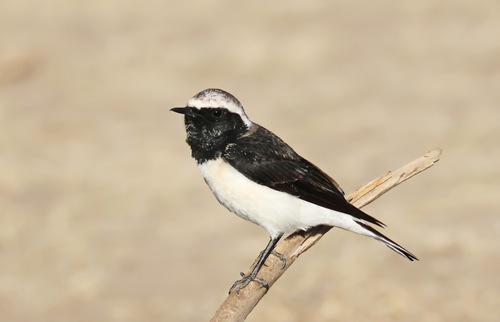 Bonte tapuit
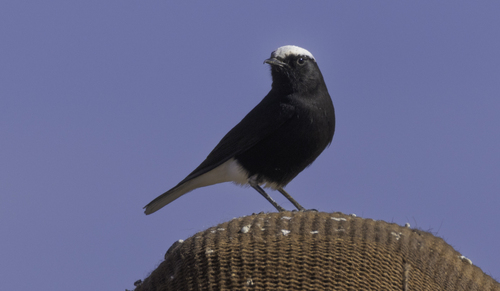 Witkruintapuit
Kort gezegd
Het meest betrouwbare veldkenmerk tussen Bonte tapuit en Witkruintapuit is het staartpatroon: Bonte tapuit toont een omgekeerde zwarte 'T' op een witte staart, terwijl Witkruintapuit alleen een zwart centrum op de staart heeft, zonder de 'T'. Volwassen mannelijke Bonte tapuit heeft een contrasterende lichte kroon en een zwart gezicht/keel, terwijl volwassen Witkruintapuit helemaal zwart is met een witte kroon en staart. Juveniele en vrouwelijke Bonte tapuit zijn bruiner en meer gepattern, terwijl Witkruintapuit (behalve juvenielen) voornamelijk zwart is. Grootte is ook een aanwijzing: Witkruintapuit is merkbaar groter. Habitat en verspreiding overlappen zelden, maar beide kunnen als dwaalgasten in Europa verschijnen. Focus op staartpatroon en algemene kleur voor de snelste scheiding.
Herkenningstips
- Staartpatroon is de sleutel: Zoek naar de omgekeerde zwarte 'T' op een witte staart bij Bonte tapuit (alle leeftijden), versus alleen een zwart centrum op de staart bij Witkruintapuit (geen 'T'). Dit is het meest zichtbaar wanneer de vogel zijn staart opent of flikkert.
- Kleur van de kroon bij volwassenen: Volwassen mannelijke Bonte tapuit heeft een lichtbruine tot witte kroon, contrasterend met een zwart gezicht en keel. Volwassen Witkruintapuit (beide geslachten) heeft een witte kroon, maar is verder helemaal zwart behalve staart/onderstaart.
- Algemene kleur: Mannelijke Bonte tapuit zijn gedurfd gepattern met zwart en wit, terwijl Witkruintapuit bijna volledig zwart is met een witte staart, onderstaart en kroon (bij volwassenen). Vrouwen en juvenielen van Bonte zijn bruiner en meer gepattern; Witkruintapuit is altijd donkerder.
- Verwarring tussen juvenielen/vrouwen: Juveniele Bonte tapuit is bruin en gevlekt boven, met lichte centra op de veren, terwijl juvenile Witkruintapuit dof zwartachtig is zonder een witte kroon. Vrouwelijke Bonte is bruin met buffkleurige tips, nooit helemaal zwart.
- Grootte is belangrijk: Witkruintapuit is ongeveer 3–4 cm langer en merkbaar steviger dan Bonte tapuit. Als de vogel groot lijkt voor een tapuit, overweeg dan Witkruintapuit.
- Vleugelpatroon: Vrouwelijke en juveniele Bonte tapuit tonen bruine vleugels met buffkleurige tips/randen; Witkruintapuit heeft in alle verenkleed een uniform donkere vleugels.
- Gezichtspatroon: Mannelijke Bonte tapuit heeft een zwart masker en keel, met een lichte supercilium (lijn boven het oog). Witkruintapuit mist een lichte supercilium en heeft een zwart gezicht.
- Onderstaart en rug: Beide hebben witte onderstaarten, maar de rug van Bonte tapuit is romig-wit, terwijl de rug van Witkruintapuit zwart is.
- Habitatcontext: In echte woestijn of rotsachtige droge gebieden is Witkruintapuit waarschijnlijker. In steppe of semi-woestijn is Bonte waarschijnlijker. Beide kunnen als dwaalgasten verschijnen.
- Zang: De zang van Witkruintapuit is luider en gevarieerder, vaak met nabootsing. De zang van Bonte is zachter, muzikaler en imitatief maar minder krachtig.
- Snavel en poten: Beide hebben zwarte snavels en poten; niet een nuttige onderscheid.
- Seizoensgebonden slijtage: Mannelijke Bonte tapuit worden witter gekroond en zwarterrugged naarmate de veer randen door het jaar slijten; het verenkleed van Witkruintapuit is stabieler.
- Zittende versus vluchtzicht: Het staartpatroon is het beste zichtbaar wanneer de vogel zijn staart opent of flikkert, of in vlucht. Bij zittende vogels, kijk naar kroon en algemene kleur.
- Valstrikken: Vertrouw niet alleen op de aanwezigheid van een witte kroon—juveniele Witkruintapuit mist deze, en mannelijke Bonte tapuit kan een lichte kroon hebben. Controleer altijd het staartpatroon voor bevestiging.
- Dwaalgasten: Beide zijn zeldzaam in West-Europa; neem niet aan dat het soort op basis van locatie alleen—gebruik verenkleed en structuur.
Grootte
Witkruintapuit is duidelijk groter, met een lengte van 17–18 cm, vergeleken met de kleinere Bonte tapuit van ongeveer 14–14,6 cm [wikipedia]. Dit formaatverschil is vaak zichtbaar in directe vergelijking of met ervaring, maar kan subtiel zijn als ze alleen worden gezien. Beide zijn slanke, rechtopstaande vogels, maar Witkruintapuit lijkt steviger en heeft een langere staart.
Verenkleed
- Juvenielen: Juveniele Bonte tapuit zijn bruin boven met lichte centra op de veren, wat een gevlekte uitstraling creëert. Juveniele Witkruintapuit mist de witte kroon en is voornamelijk zwartachtig, maar minder glanzend dan volwassenen, en kan enkele bruinachtige tinten vertonen.
- Volwassen mannelijke: Mannelijke Bonte tapuit heeft een lichtbruine tot witte kroon, zwart gezicht/keel, zwarte mantel/schouderveren, romig-witte rug en onderstaart, en een kenmerkende staart met een omgekeerde zwarte 'T' op wit. Volwassen Witkruintapuit van beide geslachten is zwart met een witte onderstaart en voornamelijk witte staart, maar alleen een zwart centrum (geen 'T'). Volwassenen hebben een witte kroon, die afwezig is bij Bonte tapuit.
- Vrouwen: Vrouwelijke Bonte tapuit zijn over het algemeen bruiner, met bruine en buffkleurige tinten op de bovenkant, en minder wit op de onderstaart dan Tapuit. Vrouwelijke Witkruintapuit is vergelijkbaar met mannelijke, voornamelijk zwart met een witte onderstaart/staart, en heeft een witte kroon als volwassen.
- Staartpatroon: Bonte tapuit: omgekeerde zwarte 'T' op witte staart. Witkruintapuit: alleen zwart centrum op de staart, geen 'T'.
- Vleugelpatroon: Geen sterke contrasterende vleugelpanelen in beide, maar Bonte tapuit toont bruine en buffkleurige randen op de vleugelveren bij vrouwen en juvenielen, terwijl Witkruintapuit uniform donkervleugelig is.
Gedrag
Beide soorten zijn actief, rechtopstaand, en vaak zittend op rotsen of blootgestelde grond. Bonte tapuit is waarschijnlijker te zien in open, stenige en schaars begroeide gebieden, vaak flikkerend met zijn staart om het staartpatroon te onthullen. Witkruintapuit is even gedurfd, maar kan robuuster lijken en wordt vaak gezien in hardere, echte woestijnomgevingen. Beide jagen op insecten en kunnen zingen vanaf prominente zitplaatsen.
Habitat
Bonte tapuit broedt in open, stenige en schaars begroeide gebieden van Zuidoost-Europa tot Mongolië, en overwintert in India en Noordoost-Afrika. Het is een zeldzame dwaalgast in West-Europa. Witkruintapuit is een inwoner van stenige woestijnen van de Sahara en Arabië tot Irak, zelden zwervend naar Europa. Als gezien in echte woestijn of droge rotsachtige gebieden, is Witkruintapuit waarschijnlijker; Bonte geeft de voorkeur aan steppe en semi-woestijn, maar beide kunnen overlappen tijdens migratie of als dwaalgasten.
Geluid
Bonte tapuit geeft een harde 'zack zack' roep en een laag, muzikaal, variabel lied, soms leeuwerikachtig of fluitend, vaak imitatief. Witkruintapuit heeft een luide, gevarieerde zang met frequente nabootsing, over het algemeen complexer dan de meeste tapuiten. Roepen zijn minder onderscheidend voor scheiding in het veld, maar de zang van Bonte is zachter en vloeiender, terwijl die van Witkruintapuit luider en abrupt is.