

Vaal stormvogeltje vs Chinees stormvogeltje
Hydrobates leucorhous versus Hydrobates monorhis
Speel een quiz met Vaal stormvogeltje en Chinees stormvogeltje
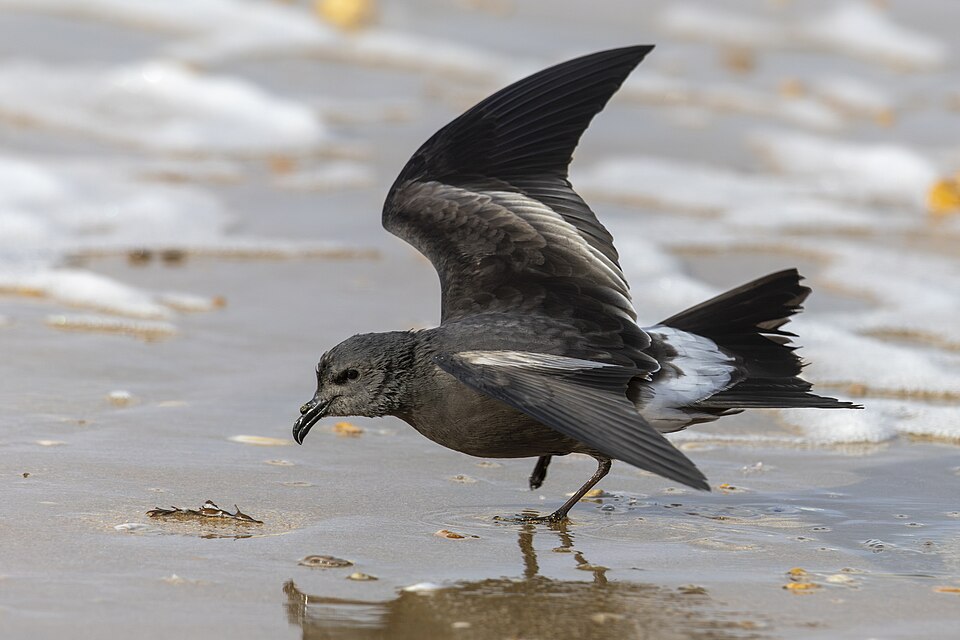 Vaal stormvogeltje
 Chinees stormvogeltje
Kort gezegd
Het meest betrouwbare veldkenmerk om Vaal stormvogeltje van Chinees stormvogeltje te scheiden, is de aanwezigheid of afwezigheid van een witte staart: Leach's toont typisch een witte staartvlek (vaak met een donkere centrale lijn), terwijl Swinhoe's uniform donkerstaart is. Donkerstaart Leach's komen echter voor in de Stille Oceaan en kunnen zeer moeilijk te onderscheiden zijn van Swinhoe's, dus zorgvuldige aandacht voor structuur en subtiele verenkleeddetails is essentieel. Beide soorten zijn vergelijkbaar in grootte en delen een gevorkte staart en fladderende vlucht, maar Swinhoe's is over het algemeen donkerder en mist enige wit op de staart. Bij volledig donkere vogels kan identificatie nauwkeurige inspectie van de vluchtstijl vereisen en in sommige gevallen is het niet mogelijk zonder genetische analyse.
Herkenningstips
- Staartpatroon is de sleutel: Vaal stormvogeltje toont bijna altijd een witte staartvlek, vaak met een donkere centrale lijn; Swinhoe's is volledig donkerstaart. Dit is het meest betrouwbare kenmerk in de Atlantische Oceaan en voor de meeste Leach's wereldwijd.
- Pas op voor donkerstaart Leach's: In de noordoostelijke Stille Oceaan is een aanzienlijk percentage van de Leach's Storm-Petrels donkerstaart en kan het in het veld niet te onderscheiden zijn van Swinhoe's. Als je een donkerstaart vogel in deze regio ziet, kan identificatie niet mogelijk zijn zonder verder bewijs.
- Algemene verenkleedkleur: Swinhoe's is uniform donkerbruin, terwijl Leach's typisch zwarter is met een bleker gezicht en soms een blekere streep op de secundaire dekveren. Deze verschillen zijn subtiel en onbetrouwbaar op zee.
- Staartvorm: Beide soorten hebben een gevorkte staart, maar dit is geen nuttige scheiding tussen hen.
- Vluchtstijl: Beide hebben een fladderende, drijvende vlucht en patteren vaak op het water. Swinhoe's voedt mogelijk meer door te dippen en minder door te patteren, maar dit is een subtiel gedragsverschil en niet altijd zichtbaar.
- Grootte: Beide zijn van dezelfde grootte; gebruik geen grootte om ze te scheiden.
- Habitat en context: Beide zijn pelagisch en zelden vanaf het land te zien. Swinhoe's volgt minder vaak schepen, maar dit is geen betrouwbaar veldkenmerk.
- Geografische context: In de Atlantische Oceaan is een donkerstaart stormvogeltje bijna zeker Swinhoe's, aangezien donkerstaart Leach's daar extreem zeldzaam zijn. In de Stille Oceaan kunnen beide soorten donkerstaart zijn, dus voorzichtigheid is geboden.
- Leeftijd en seizoen: Er zijn geen bekende leeftijdspecifieke verschillen in het bovenste vleugel- of vluchtpatroon tussen deze twee soorten; het staartpatroon is consistent over alle leeftijden.
- Stem: Roepen verschillen, maar zijn niet beschreven in de bronnen en zijn zelden nuttig op zee.
- Structurele details: Beide hebben lange vleugels en vergelijkbare verhoudingen; structuur is geen betrouwbare scheiding.
- Valstrikken: DNA-analyse is gebruikt om Swinhoe's te bevestigen in gebieden waar donkerstaart Leach's voorkomen. In het veld kunnen sommige individuen niet veilig worden geïdentificeerd.
- Samenvatting voor veldgebruik: Als je een stormvogeltje met een witte staart ziet, is het een Leach's. Als de staart volledig donker is, overweeg dan de locatie: in de Atlantische Oceaan is het waarschijnlijk Swinhoe's; in de Stille Oceaan kan het beide zijn, en verder bewijs is nodig.
Grootte
Zowel Leach's als Swinhoe's Storm-Petrels zijn zeer vergelijkbaar in grootte, met lengtes van 18–21 cm en vleugelspanwijdtes van 43–48 cm (Leach's) en 45–48 cm (Swinhoe's) [wikipedia]. Er is geen praktisch formaatverschil in het veld tussen deze twee; beide zijn duidelijk groter dan het Stormvogeltje, maar niet van elkaar te scheiden op basis van grootte alleen.
Verenkleed
- Jong/immatuur/adult niet-broedend: Het belangrijkste onderscheid is de staart: Vaal stormvogeltje toont bijna altijd een witte staartvlek, vaak doormidden gesneden door een donkere lijn, zichtbaar in de vlucht en in rust. Chinees stormvogeltje is volledig donkerbruin, inclusief de staart, zonder wit op enige leeftijd of seizoen. Donkerstaart Leach's komen echter voor, vooral in de Stille Oceaan, en zijn elders zeldzaam. Beide soorten hebben vergelijkbaar algemeen donker verenkleed en een bleke streep op de secundaire dekveren is soms zichtbaar op Leach's, maar is geen sterk veldkenmerk voor scheiding. Swinhoe's is uniform donkerbruin, terwijl Leach's zwarter kan lijken met een iets bleker gezicht.
- Volwassen broedend: Hetzelfde als hierboven; het staartpatroon blijft het meest nuttige kenmerk. Er zijn geen leeftijdspecifieke verschillen in het bovenste vleugelpatroon genoteerd in de bronnen voor beide soorten.
- Valstrik: Donkerstaart Leach's kunnen in het veld niet te onderscheiden zijn van Swinhoe's, vooral op zee.
Gedrag
Beide soorten hebben een fladderende, drijvende vlucht en patteren vaak op het water terwijl ze zich voeden. Vaal stormvogeltje staat bekend om zijn patteren en het oppakken van voedsel van het oppervlak, terwijl Swinhoe's voornamelijk door te dippen voedt en niet zoveel pattert. Beide zijn strikt pelagisch buiten het broedseizoen en zelden vanaf het land te zien, behalve na stormen. Swinhoe's is strikt nachtactief op broedplaatsen, vermijdt landingen op maanverlichte nachten om roofdieren te ontlopen; dit wordt niet specifiek vermeld voor Leach's, maar is typisch voor stormvogels.
Habitat
Beide zijn zeer pelagisch en zelden nabij land te zien, behalve bij broedkolonies of na stormen. Swinhoe's is bijzonder ongrijpbaar, met broedplaatsen in afgelegen gebieden en een neiging om schepen te vermijden, terwijl Leach's waarschijnlijker is om vanaf boten te worden gezien. Beide nestelen in holen en zijn beperkt tot schuifelen op het land.
Geluid
De roepen verschillen, maar er zijn geen veld-identificeerbare vocale details in de bronnen gegeven. De roep van Swinhoe's is verschillend van die van Leach's, maar in de praktijk zijn vocalisaties zelden diagnostisch op zee en worden hier niet beschreven.
Vaal stormvogeltje · Chinees stormvogeltje · Mijn lastige vogels