

Junglemaina vs Grote maina
Acridotheres fuscus versus Acridotheres grandis
Speel een quiz met Junglemaina en Grote maina
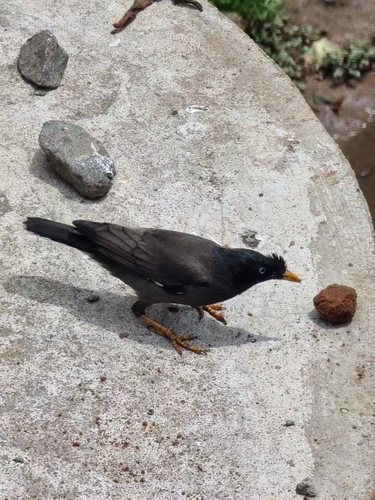 Junglemaina
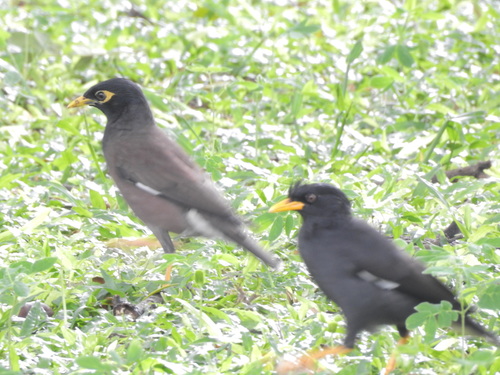 Grote maina
Kort gezegd
Het meest betrouwbare veldkenmerk om Junglemaina van Grote maina te scheiden, is de omvang en het patroon van wit op de vent en staart: Grote maina toont een gedurfde witte zone van de vent tot aan de punt van de staart, terwijl Junglemaina alleen een bleke crèmekleurige of rokerige vent heeft en brede witte punten op de staartveren. In de vlucht tonen beide soorten een witte vleugelvlek, maar het wit van de Grote maina is uitgebreider en de vogel lijkt over het algemeen donkerder en glanzender. Beide hebben een frontale kuif, maar de kuif van de Grote maina is langer en krult vaak meer op. Juveniele Junglemaina zijn bruiner met een bleke keel, terwijl juveniele Grote maina niet in detail zijn beschreven, maar waarschijnlijk donkerder zijn. Gebruik iris kleur en vent patroon voor lokale populaties wanneer mogelijk, maar wees voorzichtig met overlap en variatie.
Herkenningstips
- Vent- en staartpatroon (alle leeftijden): Grote maina toont een gedurfde witte zone van de vent tot aan de punt van de staart, waardoor een continue witte vlek ontstaat wanneer bekeken van achteren of onder. Junglemaina heeft alleen een bleke crèmekleurige of rokerige vent (afhankelijk van de populatie), met brede witte punten op de staartveren maar geen solide witte vent-tot-staart paneel.
- Vleugelvlek in vlucht (alle leeftijden): Beide soorten tonen een witte vleugelvlek aan de basis van de primaire veren, maar de vleugelvlek van de Grote maina is doorgaans uitgebreider en de vogel lijkt over het algemeen zwarter en glanzender in de vlucht, terwijl Junglemaina grijzer is met minder contrast.
- Frontale kuif (volwassenen): Beide hebben een gevederde kuif, maar de kuif van de Grote maina is langer en krult vaak meer op. De kuif van de Junglemaina is korter en rechtop.
- Algemene kleur (volwassenen): Junglemaina is grijs met een donkerder hoofd en vleugels; Grote maina is over het algemeen zwarter en glanzender.
- Snavelkleur (volwassenen): Beide hebben gele snavels, maar Junglemaina toont vaak een donkerder basis met een blauwachtige tint, vooral op de onderkaak. De snavel van de Grote maina is eenvoudig geel.
- Iris kleur (volwassenen, regionaal): Sommige Junglemaina populaties (zuidelijk India) hebben een blauwe iris, andere (noordoost India, Birma, Maleisisch schiereiland) hebben een gele iris. De iris kleur van de Grote maina is niet beschreven, dus gebruik dit kenmerk met voorzichtigheid.
- Juveniele verenkleed: Juveniele Junglemaina zijn bruiner met een bleke keel en een bleker onderlichaam; juveniele Grote maina zijn waarschijnlijk donkerder en glanzender, maar details ontbreken.
- Blootgestelde huid rond het oog: Geen van beide soorten toont blootgestelde huid rond het oog (in tegenstelling tot Treurmaina of Oevermaina), dus dit is geen scheiding tussen de twee.
- Habitat (contextueel): In overlappende gebieden is Junglemaina waarschijnlijker in open, agrarische of stedelijke omgevingen, terwijl Grote maina de voorkeur kan geven aan nattere of meer bosrijke habitats, maar dit is niet diagnostisch.
- Gedrag: Beide soorten foerageren op de grond en kunnen in gemengde groepen worden gezien, maar Junglemaina wordt vaker gezien terwijl hij op vee zit of ploegen volgt.
- Stem: Roepen zijn niet betrouwbaar te scheiden in het veld op basis van de huidige informatie.
- Geslacht en seizoen: Beide soorten zijn seksueel monomorf en vertonen geen sterke seizoensgebonden verenkleedveranderingen, dus deze zijn niet nuttig voor scheiding.
- Valstrikken: Wees voorzichtig met variatie binnen Junglemaina populaties (ventkleur, iris kleur) en mogelijke overlap met Grote maina in Noordoost India. Geef altijd prioriteit aan het vent-tot-staart witte patroon en de algehele glans voor veldscheiding.
- Leucisme: Abnormale bleke of leucistische Junglemaina zijn geregistreerd en kunnen de zaak verwarren; controleer op structurele en patroonkenmerken voordat je op de algehele kleur vertrouwt.
- Gemengde groepen: Beide soorten kunnen samen voorkomen, vooral in Noordoost India. Zorgvuldige observatie van vent/staartpatroon en kuiflengte is essentieel wanneer vogels samen worden gezien.
Grootte
Junglemaina heeft een geregistreerd gemiddeld lichaamsgewicht van 83 g [wikidata], maar er zijn geen metingen beschikbaar voor Grote maina. Beide zijn vergelijkbaar in grootte en structuur, met Junglemaina ongeveer 23 cm in lengte. In het veld is grootte geen betrouwbare scheiding tussen deze twee, aangezien beide robuuste, middelgrote maina's zijn met vergelijkbare verhoudingen.
Verenkleed
- Juveniele/onvolwassen vogels: Juveniele Junglemaina zijn over het algemeen bruiner, met een bleke keel en een bleker onderlichaam, terwijl onvolwassen Grote maina niet in detail is beschreven maar waarschijnlijk donkerder en glanzender is, wat meer overeenkomt met het volwassen patroon.
- Volwassenen: Beide soorten zijn donker met een prominente witte vleugelvlek die zichtbaar is in de vlucht. Junglemaina is over het algemeen grijs met een donkerder hoofd en vleugels, en heeft een bleke crèmekleurige of rokerige vent (afhankelijk van de populatie), met brede witte punten op de staartveren. Grote maina is zwarter en glanzender, met een opvallend wit gebied van de vent tot aan de punt van de staart, waardoor een veel uitgebreidere witte vlek ontstaat wanneer gezien van achteren of onder. Beide hebben een frontale kuif, maar de kuif van de Grote maina is langer en krult vaak op. Beide hebben gele snavels en poten, maar de snavelbasis van Junglemaina is donkerder met een blauwachtige tint bij volwassenen. Iris kleur varieert in Junglemaina (geel of blauw afhankelijk van de regio), maar is niet beschreven voor Grote maina.
Gedrag
Beide soorten zijn omnivoor en foerageren voornamelijk op de grond, vaak in groepen en soms met andere maina's. Junglemaina staat bekend om op grazende zoogdieren te zitten en ploegen te volgen, en wordt vaak gezien in meer stedelijke of agrarische omgevingen. Het gedrag van de Grote maina is niet in detail beschreven, maar als nauwe verwant is het waarschijnlijk vergelijkbaar. Beide soorten gebruiken secundaire holtes voor het nestelen en zijn opportunistisch in hun voedingsgewoonten.
Habitat
Junglemaina is verspreid over een groot deel van het Indisch Subcontinent, maar vermijdt droge zones. Grote maina wordt aangetroffen van Sikkim door Noordoost India en in Indochina. Waar hun gebieden overlappen (Noordoost India), kunnen beide in vergelijkbare habitats worden aangetroffen, maar Junglemaina is waarschijnlijker in open gebieden, agrarisch land en stedelijke randen, terwijl Grote maina de voorkeur kan geven aan nattere of meer bosrijke gebieden. Habitat is geen sterke scheiding waar beide voorkomen.
Geluid
Junglemaina heeft hogere roepen dan Treurmaina, met afgebroken piepende contactroepen. Er is geen specifieke vocale beschrijving beschikbaar voor Grote maina, maar als nauwe verwant zijn de roepen waarschijnlijk vergelijkbaar. Stem is geen betrouwbare scheiding tussen deze twee soorten op basis van beschikbare informatie.