

Motmot

モリハッカ 対 オオハッカ

Acridotheres fuscus 対 Acridotheres grandis

モリハッカとオオハッカのクイズ
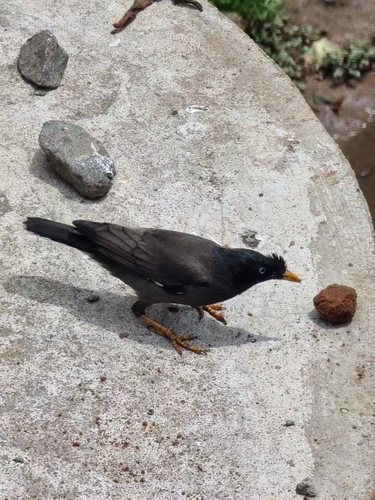
モリハッカ (Acridotheres fuscus) モリハッカ
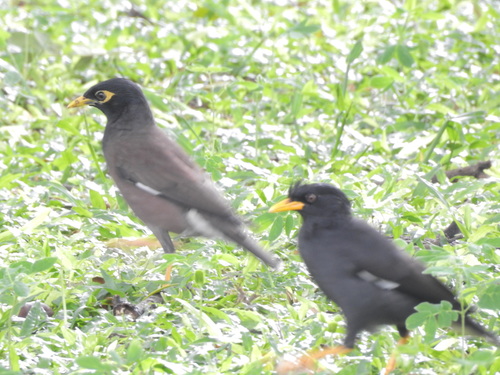
オオハッカ (Acridotheres grandis) オオハッカ

メディア

読み込み中…

要点

ジャングルハッカとオオハッカを区別する最も信頼できるフィールドマークは、腹部と尾の白色の範囲とパターンです:オオハッカは腹部から尾の先端まで大胆な白い領域を示し、一方ジャングルハッカは淡いクリーム色または煙のような腹部と尾羽の広い白い先端のみを持っています。飛行中、両種は白い翼の斑点を示しますが、オオハッカの白はより広範で、全体的に暗く光沢があります。両方とも前頭部に冠羽がありますが、オオハッカの方が長く、しばしばより目立って後ろに巻きます。幼鳥のジャングルハッカはより茶色で淡い喉を持ち、オオハッカの幼鳥は詳細には記述されていませんが、全体的に暗い可能性があります。可能な限り地域の個体群に対して虹彩の色と腹部のパターンを使用しますが、重複や変異に注意してください。

識別のコツ

  1. 腹部と尾のパターン(全ての年齢): オオハッカは腹部から尾の先端まで大胆な白い領域を示し、後ろまたは下から見ると連続した白い斑点を形成します。ジャングルハッカは淡いクリーム色または煙のような腹部(個体群によって異なる)を持ち、尾羽の広い白い先端を持っていますが、腹部から尾にかけての固体の白いパネルはありません。
  2. 飛行中の翼の斑点(全ての年齢): 両種は初列羽の基部に白い翼の斑点を示しますが、オオハッカのものは通常より広範で、飛行中に全体的に黒っぽく光沢がありますが、ジャングルハッカはより灰色でコントラストが少ないです。
  3. 前頭部の冠羽(成鳥): 両方とも房状の冠羽を持っていますが、オオハッカの方が長く、しばしばより目立って後ろに巻きます。ジャングルハッカの冠羽は短く、より直立しています。
  4. 全体の色(成鳥): ジャングルハッカは灰色で、頭部と翼が暗いです;オオハッカは全体的に黒っぽく光沢があります。
  5. くちばしの色(成鳥): 両方とも黄色いくちばしを持っていますが、ジャングルハッカはしばしば暗い基部を示し、特に下顎に青みがかっています。オオハッカのくちばしは単純な黄色です。
  6. 虹彩の色(成鳥、地域的): 一部のジャングルハッカの個体群(南インド)は青い虹彩を持ち、他の個体群(北東インド、ビルマ、マレー半島)は黄色い虹彩を持っています。オオハッカの虹彩の色は記述されていないため、このマークは注意して使用してください。
  7. 幼鳥の羽毛: 幼鳥のジャングルハッカはより茶色で淡い喉と淡い腹部を持ち、オオハッカの幼鳥はおそらくより暗く光沢がありますが、詳細は不足しています。
  8. 目の周りの裸の皮膚: 両種とも目の周りに裸の皮膚を示さない(インドハッカやハイイロハッカとは異なります)、したがってこれは両者の区別にはなりません。
  9. 生息地(文脈的): 重複する地域では、ジャングルハッカは開けた農業地帯や都市環境にいる可能性が高く、オオハッカはより湿ったまたは森林の多い生息地を好むかもしれませんが、これは診断的ではありません。
  10. 行動: 両種は地面で餌を探し、混合群れで見られることがありますが、ジャングルハッカは家畜に止まったり、耕作機の後を追ったりすることがより多いです。
  11. 声: 現在の情報に基づいて、フィールドでの呼び声は信頼できる区別ができません。
  12. 性別と季節: 両種は性別が同形であり、強い季節的な羽毛の変化を示さないため、これらは区別には役立ちません。
  13. 落とし穴: ジャングルハッカの個体群内の変異(腹部の色、虹彩の色)や北東インドにおけるオオハッカとの重複に注意してください。フィールドでの区別には常に腹部から尾にかけての白いパターンと全体の光沢を優先してください。
  14. 白化症: 異常に淡いまたは白化したジャングルハッカが記録されており、問題を混乱させる可能性があります;全体の色に頼る前に構造的およびパターンのマークを確認してください。
  15. 混合群れ: 両種は一緒に出現することがあり、特に北東インドで見られます。鳥が一緒に見られるときは、腹部/尾のパターンと冠羽の長さを注意深く観察することが重要です。

大きさ

ジャングルハッカの記録された平均体重は83 g [wikidata]ですが、オオハッカの測定値は利用できません。両者はサイズと構造が似ており、ジャングルハッカは約23 cmの長さです。フィールドでは、サイズはこれら二つの間で信頼できる区別にはなりません。両者は頑丈で中型のハッカで、比例が似ています。

羽色

行動

両種は雑食性で、主に地面で餌を探し、しばしば群れで行動し、時には他のハッカと一緒に見られます。ジャングルハッカは草食性の哺乳類に止まったり、耕作機の後を追ったりすることで知られ、より都市的または農業的な環境で見られることが多いです。オオハッカの行動は詳細には記述されていませんが、近縁種としておそらく似ているでしょう。両種は巣作りのために二次的な空洞を使用し、餌を探す習性は機会主義的です。

生息環境

ジャングルハッカはインド亜大陸の多くの地域に点在して分布していますが、乾燥地帯を避けます。オオハッカはシッキムから北東インドを経てインドシナにかけて見られます。彼らの分布が重なる地域(北東インド)では、両者は似たような生息地に見られることがありますが、ジャングルハッカは開けた国、農業地帯、都市の端にいる可能性が高く、オオハッカはより湿ったまたは森林の多い地域を好むかもしれません。生息地は両者が存在する場所では強い区別にはなりません。

声

ジャングルハッカはインドハッカよりも高い音の呼び声を持ち、切り詰められたチープ音の接触音を発します。オオハッカに関する特定の声の記述はありませんが、近縁種としてその呼び声はおそらく似ているでしょう。利用可能な情報に基づいて、声はこれら二つの種の間で信頼できる区別にはなりません。

より良い説明を送る

比較と同じ項目を使ってください。文章はすぐに公開されます。

The most reliable field mark to separate Jungle Myna from Great Myna is the extent and pattern of white on the vent and tail: Great Myna shows a bold white area from the vent all the way to the tip of the tail, while Jungle Myna has only a pale creamy or smoky vent and broad white tips to the tail feathers. In flight, both species show a white wing patch, but the Great Myna's white is more extensive and the bird appears overall darker and glossier. Both have a frontal crest, but the Great Myna's is longer and often curls back more noticeably. Juvenile Jungle Mynas are browner with a pale throat, while Great Myna juveniles are not described in detail but are likely darker overall. Use iris color and vent pattern for local populations when possible, but beware of overlap and variation.

  1. Vent and tail pattern (all ages): Great Myna shows a bold white area from the vent to the tip of the tail, forming a continuous white patch when viewed from behind or below. Jungle Myna has only a pale creamy or smoky vent (depending on population), with broad white tips to the tail feathers but not a solid white vent-to-tail panel.
  2. Wing patch in flight (all ages): Both species show a white wing patch at the base of the primaries, but Great Myna's is typically more extensive and the bird appears overall blacker and glossier in flight, while Jungle Myna is greyer with less contrast.
  3. Frontal crest (adults): Both have a tufted crest, but Great Myna's is longer and often curls back more noticeably. Jungle Myna's crest is shorter and more upright.
  4. Overall color (adults): Jungle Myna is grey with a darker head and wings; Great Myna is blacker and glossier overall.
  5. Bill color (adults): Both have yellow bills, but Jungle Myna often shows a darker base with a bluish tinge, especially on the lower mandible. Great Myna's bill is plain yellow.
  6. Iris color (adults, regional): Some Jungle Myna populations (southern India) have a blue iris, others (northeast India, Burma, Malay Peninsula) have a yellow iris. Great Myna's iris color is not described, so use this mark with caution.
  7. Juvenile plumage: Juvenile Jungle Mynas are browner with a pale throat and paler underside; Great Myna juveniles are likely darker and glossier, but details are lacking.
  8. Bare skin around eye: Neither species shows bare skin around the eye (unlike Common or Bank Myna), so this is not a separator between the two.
  9. Habitat (contextual): In overlapping areas, Jungle Myna is more likely in open, agricultural, or urban settings, while Great Myna may prefer wetter or more forested habitats, but this is not diagnostic.
  10. Behavior: Both species forage on the ground and may be seen in mixed flocks, but Jungle Myna is more often seen perching on livestock or following ploughs.
  11. Voice: Calls are not reliably separable in the field based on current information.
  12. Sex and season: Both species are sexually monomorphic and do not show strong seasonal plumage changes, so these are not useful for separation.
  13. Pitfalls: Beware of variation within Jungle Myna populations (vent color, iris color) and possible overlap with Great Myna in Northeast India. Always prioritize the vent-to-tail white pattern and overall glossiness for field separation.
  14. Leucism: Abnormal pale or leucistic Jungle Mynas have been recorded and may confuse the issue; check for structural and pattern marks before relying on overall color.
  15. Mixed flocks: Both species may occur together, especially in Northeast India. Careful observation of vent/tail pattern and crest length is essential when birds are seen together.

Jungle Myna has a recorded average body mass of 83 g [wikidata], but no measurement is available for Great Myna. Both are similar in size and structure, with Jungle Myna about 23 cm in length. In the field, size is not a reliable separator between these two, as both are robust, medium-sized mynas with similar proportions.

  • Juvenile/immature birds: Jungle Myna juveniles are browner overall, with a pale throat and paler underside, while Great Myna immatures are not described in detail but are likely darker and glossier, matching adult pattern more closely.
  • Adults: Both species are dark with a prominent white wing patch visible in flight. Jungle Myna is grey overall with a darker head and wings, and has a pale creamy or smoky vent (depending on population), with broad white tips to the tail feathers. Great Myna is blacker and glossier, with a striking white area from the vent to the tip of the tail, creating a much more extensive white patch when seen from behind or below. Both have a frontal crest, but Great Myna's is longer and often curls back. Both have yellow bills and legs, but Jungle Myna's bill base is darker with a bluish tinge in adults. Iris color varies in Jungle Myna (yellow or blue depending on region), but is not described for Great Myna.

Both species are omnivorous and forage mainly on the ground, often in flocks and sometimes with other mynas. Jungle Myna is known to perch on grazing mammals and follow ploughs, and is often seen in more urban or agricultural settings. Great Myna's behavior is not described in detail, but as a close relative, it is likely similar. Both species use secondary cavities for nesting and are opportunistic in their feeding habits.

Jungle Myna is patchily distributed across much of the Indian Subcontinent, but avoids arid zones. Great Myna is found from Sikkim across Northeast India and into Indochina. Where their ranges overlap (Northeast India), both may be found in similar habitats, but Jungle Myna is more likely in open country, agricultural land, and urban edges, while Great Myna may prefer wetter or more forested areas. Habitat is not a strong separator where both occur.

Jungle Myna has higher-pitched calls than Common Myna, with clipped cheeping contact calls. No specific vocal description is available for Great Myna, but as a close relative, its calls are likely similar. Voice is not a reliable separator between these two species based on available information.

変更を破棄しますか?

保存していない編集があります。今離れると失われます。

モリハッカ · オオハッカ · 苦手な鳥