

Bokje vs Houtsnip
Lymnocryptes minimus versus Scolopax rusticola
Speel een quiz met Bokje en Houtsnip
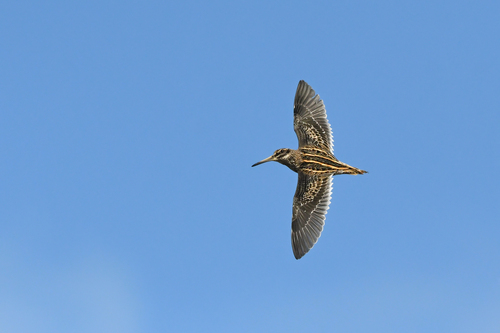 Bokje
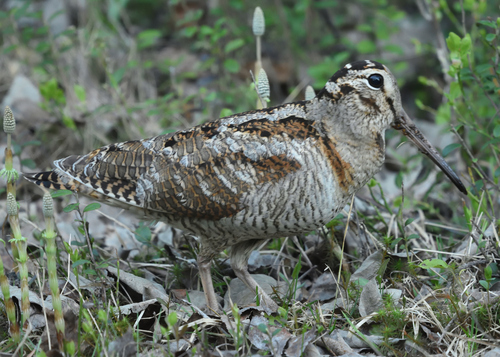 Houtsnip
Kort gezegd
Het meest betrouwbare veldkenmerk om Bokje van Houtsnip te scheiden is grootte en structuur: Bokje is veel kleiner, met een korte snavel en een compacte, stevige bouw, terwijl Houtsnip merkbaar groter is, met een lange, rechte snavel en een meer ronde, stevige uitstraling. In de vlucht toont Bokje spitse, smalle vleugels en kenmerkende geelachtige rugstrepen, terwijl Houtsnip brede, ronde vleugels heeft en deze strepen mist. Het koppatroon is ook belangrijk: Bokje heeft twee bleke laterale kroonstrepen (geen centrale streep), terwijl de kroon van Houtsnip gebarricadeerd is met zwart. Beide soorten zijn cryptisch gecamoufleerd, maar hun voorkeurshabitats en typische gedragingen verschillen, wat identificatie vergemakkelijkt.
Herkenningstips
- Grootte is de eerste controle: Bokje is ongeveer de helft van de lengte en veel lichter dan Houtsnip. Als je een kleine, stevige wader ziet, denk dan aan Bokje; een grote, stevige vogel met een lange snavel wijst op Houtsnip.
- Snavellengte en -vorm: Bokje heeft een relatief korte snavel voor een snip, terwijl de snavel van Houtsnip lang, recht en prominent is—bijna twee keer de lengte van de snavel van Bokje. De kleur van de snavel is geen sterk veldkenmerk, maar de basis van Houtsnip is vleeskleurig met een donkere punt.
- Kop patroon: Bokje heeft twee bleke laterale kroonstrepen (geen centrale streep), gescheiden van de supercilium door een donker gebied. De kroon van Houtsnip is gebarricadeerd met zwart, niet gestreept. Dit is zichtbaar op gezeten of opgeschrikte vogels.
- Bovenste vleugel en vluchtpatroon: In de vlucht toont Bokje spitse, smalle vleugels en duidelijke geelachtige strepen op de rug. Houtsnip heeft brede, ronde vleugels en mist gele rugstrepen. Dit is vooral nuttig wanneer vogels opgeschrikt worden.
- Lichaamsvorm en jizz: Bokje lijkt compact, bijna dik, met een korte nek en staart. Houtsnip is steviger, met een langer lichaam en een meer ronde, stevige uitstraling.
- Gedrag wanneer opgeschrikt: Bokje schrikt alleen op als het bijna wordt aangestoten, vliegt stil voor een korte afstand en valt weer terug in de dekking. Houtsnip schrikt op een grotere afstand, vliegt sterk en onregelmatig, vaak zigzaggend weg.
- Voedingsgedrag: Bokje bobbelt op en neer tijdens het voeden of wanneer het alert is—een unieke, bijna hypnotiserende beweging. Houtsnip bobbelt niet.
- Habitatcontext: Bokje wordt gevonden in open, natte, moerassige grond; Houtsnip is bijna altijd in bos of dichte dekking. Als je een cryptische wader in een bos vindt, is het vrijwel zeker een Houtsnip.
- Onderzijde: Beide hebben bleke onderkanten, maar die van Houtsnip zijn buffkleurig, terwijl die van Bokje bleker en minder warm van toon zijn.
- Oogplaatsing: De ogen van Houtsnip zijn ver naar achteren op het hoofd geplaatst, wat het een kenmerkend profiel en 360-graden zicht geeft. De ogen van Bokje zijn typischer voor een snip.
- Pootkleur: De poten van Houtsnip variëren van grijs tot roze; de pootkleur van Bokje wordt niet als diagnostisch benadrukt.
- Geslacht en leeftijd: Beide soorten zijn vergelijkbaar in verenkleed over geslachten en leeftijden voor velddoeleinden; mannelijke Houtsnippen zijn groter, maar dit is niet gemakkelijk te beoordelen in het veld.
- Vocalisatie: Vertrouw niet op roepen voor scheiding in de winter of migratie; beide zijn meestal stil wanneer ze opgeschrikt worden.
- Valstrikken: Verwar de kopstrepen van Bokje niet met de kroonstangen van Houtsnip; controleer op de aanwezigheid of afwezigheid van een centrale kroonstreep en de aard van het patroon.
- Vluchtafstand: Als de vogel opgeschrikt wordt op zeer korte afstand en snel weer landt, vermoed dan Bokje; als het op afstand opgeschrikt wordt en ver weg vliegt, vermoed dan Houtsnip.
Grootte
Bokje is dramatisch kleiner: de lichaamsmassa gemiddeld ongeveer 50 g, met een lengte van 18–25 cm en een spanwijdte van 30–41 cm. Houtsnip is veel groter, met een lengte van 33–38 cm en een spanwijdte van 55–65 cm (geen massa opgegeven, maar het is aanzienlijk zwaarder). Het verschil is opvallend in het veld, vooral als beide in vergelijkbare contexten worden gezien. Bokje lijkt compact en bijna dik, terwijl Houtsnip stevig is maar met een langer, zwaarder lichaam en een proportioneel veel langere snavel.
Verenkleed
- Jong/Onvolwassen/Volwassen Bokje: Toont een gemarmerde bruine bovenkant met bleke onderkanten, een donkere oogstreep, en, cruciaal, twee bleke laterale kroonstrepen gescheiden van de supercilium door donkere veren. In de vlucht onthult Bokje spitse, smalle vleugels en kenmerkende geelachtige strepen op de rug. Er is geen centrale kroonstreep. Deze kenmerken zijn consistent over leeftijden, aangezien er geen leeftijdspecifieke verschillen in bovenste vleugelpatronen zijn opgemerkt voor Bokje.
- Houtsnip (alle leeftijden): Heeft ingewikkeld gepatternde roodbruine bovenkant en buffkleurige onderkanten, maar het koppatroon is anders: de kroon is gebarricadeerd met zwart, niet gestreept. De vleugels zijn breed en rond (niet spitse), en er zijn geen geelachtige rugstrepen in de vlucht. De basis van de snavel is vleeskleurig met een donkere punt. Beide geslachten lijken vergelijkbaar in het veld, maar mannelijke Houtsnippen zijn groter.
- Belangrijk contrast: In elk verenkleed zijn de kopstrepen van Bokje en de spitse vleugels met gele rugstrepen diagnostisch, terwijl de gebarricadeerde kroon en ronde vleugels van Houtsnip uniek zijn onder deze twee.
Gedrag
Bokje is geheimzinnig en blijft vaak verborgen in moerassige vegetatie, schrikt alleen op bij zeer korte afstand, en vliegt dan een korte afstand voordat het weer in de dekking valt. Zijn vlucht is stil en laag. Wanneer het voedt of verstoord wordt, vertoont Bokje een kenmerkende bobbelbeweging, alsof het op veren staat—een gedrag dat niet door Houtsnip wordt vertoond. Houtsnip daarentegen wordt waarschijnlijker aangetroffen in bos of bosrand, en wanneer het opgeschrikt wordt, vliegt het krachtig weg met een zigzaggende vlucht en brede, ronde vleugels. Houtsnip bobbelt niet tijdens het voeden of lopen.
Habitat
Bokje geeft de voorkeur aan open, natte habitats zoals moerassen, venen, natte weiden en toendra met korte vegetatie, vooral tijdens migratie en winter. Het wordt zelden in bos aangetroffen. Houtsnip is een vogel van bos en woud, nestelend en voedend in gebieden met dichte dekking, hoge heide of bladeren. Hoewel beide op de grond kunnen worden aangetroffen en goed gecamoufleerd zijn, overlappen hun voorkeurshabitats zelden: Bokje is bijna nooit in diep bos, en Houtsnip is zelden in open moeras.
Geluid
Bokje is stil in de winter en roept niet wanneer het opgeschrikt wordt, waardoor het zeer stil is in het veld. Tijdens het broedseizoen voert de man een luchtshow uit met een kenmerkend geluid, maar dit is niet te horen in overwinteringsgebieden. Mannelijke Houtsnippen voeren een displayvlucht ('roding') uit bij schemering in de lente, met een herhaald 'orr, orr, orr, pist' roep. Echter, buiten het broedseizoen is Houtsnip over het algemeen stil en roept zelden wanneer het opgeschrikt wordt. Daarom zijn vocalisaties meestal niet nuttig voor scheiding in de meeste veldsituaties.