

Izabeltapuit vs Westelijke blonde tapuit
Oenanthe isabellina versus Oenanthe hispanica
Speel een quiz met Izabeltapuit en Westelijke blonde tapuit
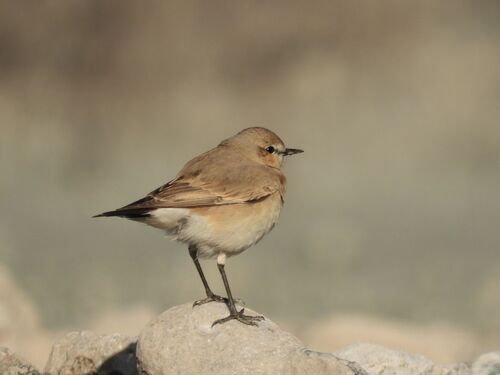 Izabeltapuit
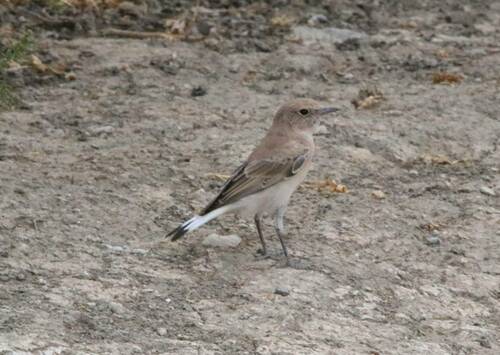 Westelijke blonde tapuit
Kort gezegd
Het meest betrouwbare veldkenmerk tussen Izabeltapuit en Westelijke blonde tapuit is de algehele kleur en het staartpatroon: Izabeltapuit is duidelijk lichter en meer uniform zandkleurig of izabelkleurig, met een lange, rechtopstaande houding en een staart die veel wit aan de basis toont maar een brede zwarte eindband heeft. Westelijke blonde tapuit, vooral mannetjes in broedkleed, toont een opvallend zwart gezichtsmasker, wittere bovenkant en een staart die wit is met smal zwart aan de punt en centrale veren. Vrouwtjes en niet-broedende vogels van beide soorten kunnen verwarrend zijn, maar Izabeltapuit is altijd groter, lichter en mist een sterk zwart masker. In de vlucht of in rust, let op de lichte ondervleugelbedekking van de Izabeltapuit en het uitgebreidere wit op de staartbasis, in tegenstelling tot de zwartere vleugels en scherpere staartpatroon van de Westelijke blonde tapuit. Structurele verschillen (grootte, snavel, houding) en subtiele verenkleeddetails zijn cruciaal, vooral buiten het broedseizoen van het mannetje.
Herkenningstips
- Staartpatroon (alle leeftijden): Izabeltapuit toont een brede zwarte eindband met een grote witte basis op de staart, vooral duidelijk in de vlucht; de buitenste staartveren zijn meestal wit, centrale veren ongeveer een derde wit. De staart van de Westelijke blonde tapuit is meestal wit met zwart beperkt tot het centrale paar en een smalle punt, het wit strekt zich vaak uit tot de punt op de binnenste web.
- Algehele kleur: Izabeltapuit is veel lichter, zandkleurig of izabelkleurig boven en onder, met weinig contrast; Westelijke blonde tapuit is warmer buff of bruin, vooral bij vrouwtjes en niet-broedende vogels.
- Gezichtspatroon (broedend mannetje): Mannetjes van de Westelijke blonde tapuit hebben een gedurfd zwart masker van oorbedekking tot snavel, soms een zwarte keel, en een witte of bijna witte kroon en voorhoofd. Izabeltapuit mist een zwart masker of keel, en toont in plaats daarvan een romig-witte supercilium en lichtbruine oorbedekking.
- Onderwingbedekking: Izabeltapuit heeft witte onderwingbedekking en okselveren (met donkere bases), een subtiele maar consistente markering als goed gezien in de vlucht of tijdens het poetsen. Westelijke blonde tapuit toont deze eigenschap niet.
- Grootte en structuur: Izabeltapuit is groter, langerbenig, en rechtopstaand; Westelijke blonde tapuit is kleiner, compacter, en minder rechtopstaand. Gebruik dit met voorzichtigheid tenzij beide soorten aanwezig zijn voor vergelijking.
- Snavellengte: Izabeltapuit heeft een langere snavel dan Westelijke blonde tapuit, maar dit is subtiel en het beste te gebruiken in combinatie met andere kenmerken.
- Borsten en buik: De borst van de Izabeltapuit is zandkleurig of izabelkleurig buff, buik romig wit; de Westelijke blonde tapuit is wit met een tint buff, maar meestal warmer en contrasterender.
- Supercilium: Izabeltapuit toont een romig-witte supercilium, vaak duidelijker dan bij de Westelijke blonde tapuit, die minder onderscheidend kan zijn of gebroken door het zwarte masker bij mannetjes.
- Oorbedekking: Die van de Izabeltapuit zijn lichtbruin en mengen zich met de rest van het hoofd; die van de Westelijke blonde tapuit zijn vaak opgenomen in het zwarte masker (mannetjes) of warmer bruin (vrouwtjes).
- Habitatcontext: In open, onvruchtbare steppe of hoog plateau, vooral in Centraal-Azië of vergelijkbare habitats, is de Izabeltapuit waarschijnlijker. In rotsachtige, struikachtige mediterrane gebieden wordt de Westelijke blonde tapuit verwacht.
- Geslacht en seizoen: Mannetjes van de Westelijke blonde tapuit in broedkleed zijn het gemakkelijkst te scheiden vanwege het zwarte masker en de wittere kroon. Vrouwtjes en niet-broedende vogels zijn lastiger; vertrouw op staartpatroon, algehele lichtheid, en structuur.
- Associaties: Izabeltapuit is vaak solitair in de winter, soms met andere Oenanthe-soorten tijdens de migratie. De sociale gewoonten van de Westelijke blonde tapuit zijn minder onderscheidend maar niet solitair op dezelfde manier.
- Valkuilen: Vrouwelijke en niet-broedende Westelijke blonde tapuit kunnen erg op de Izabeltapuit lijken, vooral bij slecht licht. Focus op staartpatroon en algehele lichtheid.
- Niet diagnostisch: Geen duidelijke verschillen in vocalisaties of gedetailleerd vleugelpatroon in de vlucht worden beschreven in deze bronnen voor deze twee soorten.
- Bij twijfel: Geef prioriteit aan staartpatroon, algehele kleur, en structuur, vooral voor vogels die niet in volledig broedkleed zijn.
Grootte
Izabeltapuit is noticeably larger and bulkier, with a typical body mass of 29.0g [wikidata], and a length of 15–16.5 cm. Westelijke blonde tapuit is smaller and more delicate, though precise mass is not given in the sources. In the field, Isabelline often appears longer-legged and more upright, while Western Black-eared is more compact and less upright. Use these jizz differences with caution, but size and stance can help when seen side by side.
Verenkleed
-
Juvenile/immature plumage: No explicit details on juvenile wing pattern for either species in the provided notes, so focus must be on overall coloration and tail pattern. Both species have pale lower backs and white upper tail coverts, but Izabeltapuit's tail has a broad black terminal band with a large white base (outer feathers more than half white), while Westelijke blonde tapuit's tail is mostly white except for the central pair and a narrow black tip.
-
Adult breeding plumage: Male Westelijke blonde tapuit is distinctive with a black mask from ear coverts to bill, white or nearly white crown and forehead, and blacker wings. Throat may be black or white. Izabeltapuit is much paler overall, sandy or isabelline above, with a creamy-white supercilium, pale brown ear coverts, and no black mask or throat. Both sexes of Isabelline are similar and lack strong facial contrast.
-
Non-breeding/female plumage: Both species become browner and buffier, but Isabelline remains paler and more uniform, with a sandy or parchment tone, while Western Black-eared (especially females) is warmer brown above and below, and may show some facial contrast. The axillaries and underwing coverts of Isabelline are white, while Western Black-eared's are not described as such.
-
Tail pattern: Isabelline: broad black terminal band, large white base (outer feathers mostly white). Western Black-eared: tail mostly white, black restricted to central feathers and tip, white often extending to tip on inner web.
Gedrag
Izabeltapuit is rechtop en langbenig, vaak gezien terwijl hij rechtop staat op open grond, bewegend met lange sprongen. Westelijke blonde tapuit is compacter en minder rechtopstaand. Beide soorten zijn actief en rusteloos, maar de Izabeltapuit kan solitairder lijken, vooral in de winter, terwijl de Westelijke blonde tapuit niet wordt beschreven als associërend met andere soorten. Beide zijn typische open-land tapuiten, maar de gang en houding van de Izabeltapuit zijn opvallender rechtop.
Habitat
Izabeltapuit geeft de voorkeur aan open, onvruchtbare steppe, hoge plateaus, droge gebieden en semi-aride grond met schaarse vegetatie, vaak in Centraal-Azië, Zuid-Rusland en vergelijkbare habitats in de winter. Westelijke blonde tapuit wordt hier niet in detail beschreven, maar geeft doorgaans de voorkeur aan rotsachtige hellingen, struikgewas en open land in Zuid-Europa en het Middellandse Zeegebied. Als het in klassieke steppe of hoog plateau is, is de Izabeltapuit waarschijnlijker; in rotsachtige mediterrane gebieden wordt de Westelijke blonde tapuit verwacht.
Izabeltapuit · Westelijke blonde tapuit · Mijn lastige vogels