

Bergniltava vs Witkeelvliegenvanger
Cyornis whitei versus Ficedula superciliaris
Speel een quiz met Bergniltava en Witkeelvliegenvanger
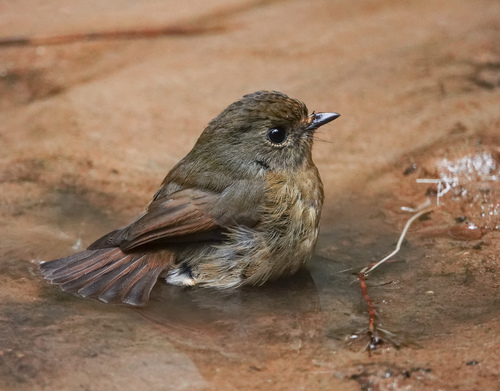 Bergniltava
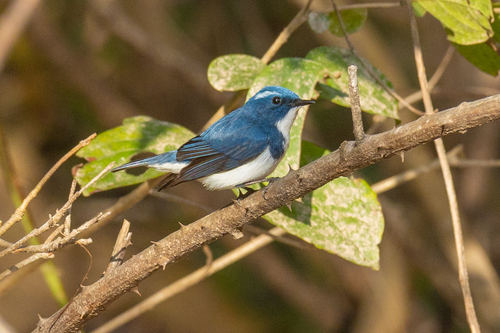 Witkeelvliegenvanger
Kort gezegd
The most reliable field mark to separate Hill Blue Flycatcher from Ultramarine Flycatcher is the presence of a bold white supercilium (eyebrow) and white tail patches on many Ultramarine Flycatchers, especially in the western Himalayas, which are never shown by Hill Blue. Hill Blue Flycatcher lacks any white on the brow or tail, and is a richer blue above with orange underparts, while Ultramarine males are deep blue with a clean white underside and often a striking white brow. Juvenile and immature plumages are not described in detail for either species in these notes, so focus on adult males and typical field views. Structure is similar, but Ultramarine is smaller and stockier. Habitat and range overlap in parts of Northeast India, but Ultramarine is a Himalayan breeder and winters further south, while Hill Blue is a resident of southern China, Northeast India, and Southeast Asia.
Herkenningstips
- White supercilium (eyebrow): Ultramarine Flycatcher males (especially western populations) show a bold white supercilium, which is never present in Hill Blue Flycatcher. This is the quickest field check in most of the range.
- White tail patches: Look for white bases to the outer tail feathers in Ultramarine Flycatcher, especially in western birds. Hill Blue Flycatcher always has a plain blue tail with no white.
- Underpart color: Hill Blue Flycatcher has orange on the throat and breast, fading to whitish on the belly. Ultramarine Flycatcher has a clean white underside from throat to belly, with no orange or buff tones.
- Upperpart blue tone: Hill Blue is a richer, sometimes brighter blue above, while Ultramarine is a deeper, darker blue.
- Size and structure: Ultramarine is smaller, stockier, and more compact than Hill Blue. In direct comparison, Hill Blue appears larger and longer-tailed.
- Tail movement: Ultramarine often jerks its tail and fluffs its head feathers, especially near the nest. Hill Blue is less demonstrative in tail movement.
- Habitat and elevation: In the Himalayas and Northeast India, Ultramarine is found at higher elevations (1800–3200 m) in open, mixed forests, while Hill Blue prefers lower to mid-elevation forests in the same region.
- Seasonal context: If seen in peninsular India in winter, it is almost certainly Ultramarine, as Hill Blue does not winter there. In Southeast Asia, only Hill Blue is expected.
- Female and immature confusion: While not described in detail, females and immatures of both species are likely duller, but the presence or absence of white on the brow and tail remains a useful mark in most populations.
- Clinal variation in Ultramarine: Be aware that eastern Ultramarine Flycatchers may lack a distinct supercilium and white tail patches, so rely more on underpart color and size in these regions.
- Mixed hunting parties: Ultramarine may join mixed-species flocks in winter, while Hill Blue is more solitary or paired.
- Perched vs. in flight: White tail patches on Ultramarine may be most obvious when the bird fans or flicks its tail, so watch for tail movement.
- No distinctive juvenile wing pattern: Neither species is described as having a diagnostic juvenile or first-winter upperwing pattern in these notes, so focus on adult male field marks.
- Voice: Not described here; do not rely on vocalization for separation based on these notes.
- Geographic overlap: In areas where both may occur (e.g., Northeast India), use a combination of supercilium, tail pattern, underpart color, and size for best results.
Grootte
Ultramarine Flycatcher is noticeably smaller and more compact than Hill Blue Flycatcher, with a mass of about 8 grams (per Wikidata). Hill Blue Flycatcher is not given a specific weight here, but is generally a medium-sized Cyornis, larger than the sparrow-sized Ultramarine. In the field, Ultramarine may appear more petite and short-tailed, while Hill Blue has a more typical flycatcher build.
Verenkleed
For adult males, Hill Blue Flycatcher is a rich blue above with orange on the throat and breast, fading to whitish on the belly. It never shows white on the brow or tail. Ultramarine Flycatcher males are deep blue above, with a clean white underside from throat to belly, and—especially in the western Himalayas—a prominent white supercilium and white bases to the outer tail feathers. These white marks are reduced or absent in eastern and southern populations, so beware of this clinal variation. Females and immatures are not described in detail here, but the presence or absence of white on the brow and tail remains a key mark in most populations. No distinctive juvenile or first-winter upperwing patterns are described for either species in these notes.
Gedrag
Ultramarine Flycatcher is often seen singly or in mixed hunting parties during winter, keeping to low trees and bushes and foraging in the foliage canopy, rarely venturing into the open. It frequently jerks its tail and may fluff its head feathers, especially near the nest. Hill Blue Flycatcher behavior is not detailed here, but as a Cyornis, it is likely to be more retiring and less prone to tail-jerking displays. Both species are arboreal and insectivorous.
Habitat
Hill Blue Flycatcher is found in southern China, northeastern India, and Southeast Asia, typically in forested habitats. Ultramarine Flycatcher breeds in the western and eastern Himalayas (1800–3200 m), in open, mixed forests of oak, rhododendron, pine, and fir, and winters in central and peninsular India, sometimes in orchards or gardens. Overlap is possible in Northeast India, but Ultramarine is more associated with higher elevations and migratory movements, while Hill Blue is a resident of lower to mid-elevation forests.