

Grijskopspecht vs Iberische groene specht
Picus canus versus Picus sharpei
Speel een quiz met Grijskopspecht en Iberische groene specht
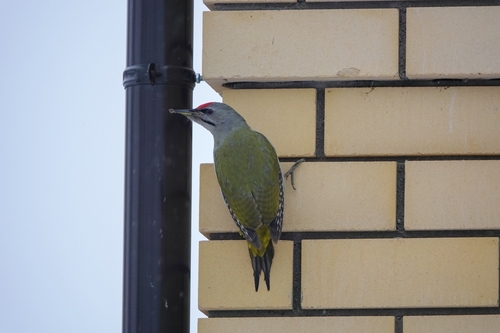 Grijskopspecht
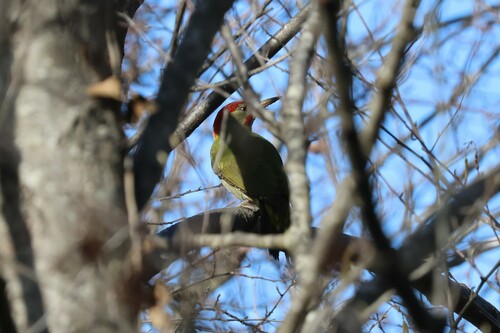 Iberische groene specht
Kort gezegd
The most reliable field mark to separate Grey-headed Woodpecker from Iberian Green Woodpecker is the head pattern: Grey-headed shows a largely grey head with a red forecrown only in the male, while Iberian Green Woodpecker has a greenish head with much less black and a dusky (not black) eye ring. In the field, Grey-headed appears paler and more subdued, especially on the underparts and head, while Iberian Green is brighter green above and lacks the extensive grey. Both are medium-sized woodpeckers with green upperparts, but the head and face details are key. Voice and subtle structural differences can help, but are less obvious at a distance or in poor light.
Herkenningstips
- Head color is key: Grey-headed Woodpecker always shows a pale grey head and face, contrasting with the green back; Iberian Green Woodpecker has a greenish head with little black and no extensive grey. This is the most reliable field mark for all ages and sexes.
- Forecrown in males: Only male Grey-headed Woodpecker has a red forecrown set on a grey head. Iberian Green Woodpecker males do not show this combination; their head is more uniformly greenish.
- Eye ring color: Iberian Green Woodpecker has a dusky (not black) ring around the eye, while Grey-headed Woodpecker's facial markings are more defined with black lores and moustache.
- Female crown pattern: Female Grey-headed Woodpecker lacks the red forecrown and has fine black streaks on the grey crown; female Iberian Green is similar to the male, with little black and a dusky eye ring.
- Underparts: Grey-headed Woodpecker shows pale grey underparts, while Iberian Green Woodpecker is generally brighter and less grey below.
- Upperparts: Both are green above, but Grey-headed is paler and less vivid, especially in the field. Iberian Green is a brighter green overall.
- Bill and structure: Grey-headed Woodpecker has a slimmer bill, shorter neck, and slightly rounder head compared to the European Green Woodpecker, but these differences are not highlighted versus Iberian Green.
- Flight views: No distinctive wing or flight pattern differences are described between these two species, so do not rely on upperwing or tail patterns in flight.
- Voice: If heard well, Grey-headed's song is more melodic and 'dying,' while Iberian Green's is hiss-like. However, these are subtle and not always reliable.
- Geographic context: If you are birding outside the Iberian Peninsula, you are almost certainly seeing Grey-headed Woodpecker. Within Iberia, both may occur, so rely on head pattern.
- Hybrid confusion: Extremely rare hybrids between Grey-headed and European Green Woodpecker exist, but are not a concern for separation from Iberian Green in the field.
- Subspecies confusion: Some eastern Grey-headed Woodpecker subspecies have a black nape and darker green wings, but these do not overlap with Iberian Green Woodpecker's range.
- Sexing pitfalls: Both species show sexual dimorphism in head markings, so confirm sex before using crown color as a mark.
- Juvenile confusion: No specific juvenile or immature field marks are described for separation; head color remains the best mark.
- Do not rely on size: Both species are similar in size and mass; this is not a useful field character.
Grootte
Both species are medium-sized woodpeckers, with Grey-headed Woodpecker measuring 25–26 cm in length and a wingspan of 38–40 cm, weighing around 125 g [wikipedia]. Iberian Green Woodpecker is similar in size, and no meaningful size difference is apparent in the field. Both are about the size of a Eurasian collared dove. Size is not a reliable separation point between these two.
Verenkleed
-
Juvenile/immature plumage: No specific juvenile or immature upperwing pattern differences are described in the sources for these two species, so flight separation by wing pattern is not supported.
-
Adult males: Grey-headed Woodpecker males have a pale grey head with a red forecrown, black lores, and a narrow black moustache. The rest of the upperparts are olive green, with pale grey underparts. Iberian Green Woodpecker males have a greenish head with little black, a dusky (not black) eye ring, and lack the extensive grey of Grey-headed. Their upperparts are also green, but the head is less contrasting.
-
Adult females: Female Grey-headed Woodpecker lacks the red forecrown and instead shows fine black streaks on the crown. Female Iberian Green Woodpecker is similar to the male but with even less black on the head and the same dusky eye ring.
-
Both sexes: Grey-headed always shows a grey face and head, while Iberian Green Woodpecker's head is greenish with a less contrasting face. The folded primaries of Grey-headed are barred brown-black on grey-white, but this is not highlighted as a field mark versus Iberian Green. Both have green backs and wings, but Grey-headed is generally paler and less vivid.
Gedrag
No significant behavioral differences are noted in the sources that would help separate these two species in the field. Both are typical woodpeckers in their habits, foraging on trees and sometimes on the ground.
Habitat
Grey-headed Woodpecker is widespread across Eurasia, including central and eastern Palaearctic regions, while Iberian Green Woodpecker is endemic to the Iberian Peninsula. If you are outside Iberia, you are unlikely to encounter Iberian Green Woodpecker. Within Iberia, both may occur in similar wooded habitats, so habitat is not a reliable separator there.
Geluid
Both species have similar calls, but Grey-headed Woodpecker's territorial song is described as more melodic and cleaner, consisting of 10–15 notes of declining pitch, often sounding melancholic or 'dying.' Iberian Green Woodpecker's call is described as sibilant or hiss-like, and it lacks the explosive 'laughter' of the European Green Woodpecker. However, these differences are subtle and may be hard to judge without experience.
Grijskopspecht · Iberische groene specht · Mijn lastige vogels