

Grote stekelkruin vs Sprokkelaar
Phacellodomus ruber versus Anumbius annumbi
Speel een quiz met Grote stekelkruin en Sprokkelaar
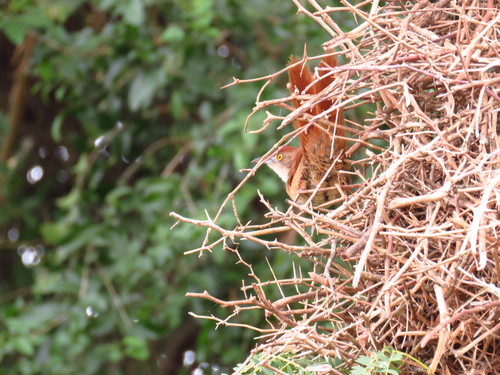 Grote stekelkruin
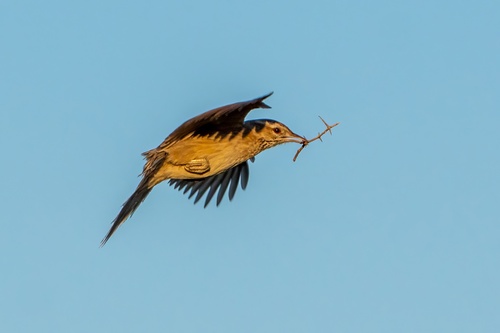 Sprokkelaar
Kort gezegd
Het meest betrouwbare veldkenmerk tussen de Grote stekelkruin en Sprokkelaar is de algemene roestkastanjebruine kleur van de Grote stekelkruin, vooral in de vleugels en staart, vergeleken met de doffere, gestreepte en meer bruinachtige Sprokkelaar. Juveniele verenkleed verschilt: jonge Grote stekelkruinen tonen een minder gedefinieerde kroonvlek en bruinachtige vlekken op de borst, terwijl juvenile Sprokkelaars geen roestkleur op het voorhoofd hebben en ochraceuze kelen met minder duidelijke bovenste strepen hebben. In de vlucht of zittend, let op de uniforme roestkleurige vleugels en staart van de Grote stekelkruin versus de bruine vleugels en staart van de Sprokkelaar met contrasterend wit op de staartpunten. Beide soorten overlappen in verspreiding en habitat, maar hun structuur en verenkleed bieden consistente scheiding.
Herkenningstips
- Vleugel- en staartkleur (alle leeftijden): De Grote stekelkruin toont uniforme roestkastanjebruine vleugels en staart, zowel in de vlucht als zittend. De vleugels van de Sprokkelaar zijn dof bruin met donkere centra/tips, en de staart is donkerbruin tot zwartachtig met wit aan de tips van de buitenste veren—let op dit contrast wanneer de vogel zijn staart opent of in de vlucht.
- Juveniel verenkleed: Juveniele Grote stekelkruin heeft een minder duidelijke roestkleurige kroonvlek en bruinachtige vlekken op de borst, maar toont nog steeds roestkleurige tonen. Juveniele Sprokkelaar mist roestkleur op het voorhoofd, heeft een ochraceuze keel, en minder duidelijke bovenste strepen—deze kenmerken zijn subtiel maar nuttig als ze goed worden gezien.
- Kroon- en koppatroon: De kroon van de Grote stekelkruin is roestkastanjebruin met bleke strepen, die overgaan in een rijke roestkleurige rug. De Sprokkelaar heeft een zandbruin kroon met smalle zwartachtige strepen, een doffe roestkleurige voorhoofd en een veel prominentere, brede witachtige supercilium.
- Gezichtspatroon: Het gezicht van de Grote stekelkruin is roestbruin met een blekere supercilium en oorbedekking, en een witachtige malarzone. Het gezicht van de Sprokkelaar is lichter bruinachtig tot grijsbruin, met een brede witachtige supercilium en een middelgrote bruinachtige post-oculaire streep.
- Onderdelen: De onderdelen van de Grote stekelkruin zijn bleek met een lichte bruinachtige tint op de borst en een witachtige buik. De Sprokkelaar heeft een witte keel met een lijn van zwarte spikkels aan de zijkanten, een iets roestkleurige lichtbruine en buffy bovenborst met vage strepen, en een bleke buffy buik.
- Staartvorm: De centrale staartveren van de Sprokkelaar zijn puntig, en de buitenste veren zijn minder puntig maar tonen wit aan de tips. De staart van de Grote stekelkruin is meer uniform van vorm en roestkastanjebruin overal.
- Algemene kleurindruk: De Grote stekelkruin is consistent roestkastanjebruin en rijk aan kleur, vooral op de vleugels en staart. De Sprokkelaar is doffer, bruiner, en gestreept, met minder verzadiging en meer contrast in de staart.
- Structuur en jizz: De Grote stekelkruin lijkt robuuster en steviger, beweegt vaak opzettelijk. De Sprokkelaar is slanker, actiever, en kan pipitachtig lijken, vooral wanneer hij foerageert in open gebieden.
- Snavelkleur: De snavel van de Grote stekelkruin is zwartachtig tot donkergrijs hoorn boven, bleekgrijs tot grijsachtig groen onder. De snavel van de Sprokkelaar is dof bruinachtig boven, grijs tot lichtgrijs met een donkere punt onder—dit is subtiel en zelden diagnostisch in het veld.
- Iris kleur: De Grote stekelkruin heeft een lichtgele tot oranje iris; de iris van de Sprokkelaar is bruin tot roestkleurig. Dit kan nuttig zijn bij close-ups maar is variabel.
- Pootkleur: Beide soorten hebben grijsachtige tot olijf- of groenachtige poten, niet een sterke scheiding.
- Habitatcontext: Als gezien in dichte oeverstruiken of bosranden, is de Grote stekelkruin waarschijnlijker. In open land of grasgebieden met verspreide struiken, wordt de Sprokkelaar favoriet, maar de overlap is uitgebreid.
- Nestplaatsing (indien gezien): Het nest van de Grote stekelkruin is een grote, kegelvormige structuur die vaak boven water hangt. Het nest van de Sprokkelaar is ook groot en bulky maar niet zo consistent boven water geplaatst.
- Valstrikken: Pas op voor lichtomstandigheden die de Sprokkelaar roestiger kunnen laten lijken of de Grote stekelkruin doffer. Juveniele verenkleed kan verwarrend zijn, maar de aanwezigheid of afwezigheid van roestkleur op het voorhoofd en het patroon van de keel en borst zijn nuttig.
- Niet diagnostisch: Vocalisaties, geslacht en seizoen zijn niet betrouwbaar verschillend in het veld op basis van beschikbare bronnen.
Grootte
De Grote stekelkruin is iets groter en zwaarder, met een lengte van 19–21 cm en een gewicht van 35–51 g, waardoor het de zwaarste en grootste stekelkruin in zijn verspreidingsgebied is. De Sprokkelaar is iets kleiner met 18–20 cm en 27–45 g. In het veld is dit formaatverschil subtiel maar kan het opvallen als beide soorten samen worden gezien. De Grote stekelkruin lijkt ook robuuster en steviger, terwijl de Sprokkelaar slanker en meer pipitachtig van bouw is. [wikipedia]
Verenkleed
- Juveniel/onvolwassen: Juveniele Grote stekelkruinen hebben een minder gedefinieerde roestkleurige kroonvlek en bruinachtige vlekken op de borst, maar behouden de algemene roestkleurige tonen en uniforme kastanjebruine vleugels/staart. Juveniele Sprokkelaars missen enige roestkleur op het voorhoofd, hebben een ochraceuze (geelachtig-bruin) keel, minder duidelijke strepen boven en donkerdere onderdelen. Deze verschillen zijn het meest zichtbaar bij close-ups of bij goed licht.
- Volwassenen: Volwassen Grote stekelkruinen zijn rijk roestbruin tot kastanjebruin boven, met een roestkastanjebruine kroon (bleek gestreept), uniforme roestkastanjebruine vleugels en een roestkastanjebruine staart. Hun gezicht is roestbruin met een bleke supercilium en oorbedekking, en een witachtige malarzone. Onderste delen zijn bleek met een lichte bruinachtige tint op de borst, vervagend naar een witachtige buik.
Volwassen Sprokkelaars zijn dof bruin boven met een dof roestkleurig voorhoofd, zandbruin kroon met smalle zwartachtige strepen, en een brede witachtige supercilium. Hun vleugels zijn dof bruin met donkere centra en tips, niet roestkleurig. De staart is donkerbruin tot zwartachtig bruin, met het centrale paar puntig en de buitenste veren tonen wit nabij de uiteinden—a key mark in flight or when fanned. Onderste delen zijn gestreept en buffy, met een witte keel omrand door zwarte spikkels en een roestkleurige lichtbruine bovenborst. - Belangrijke contrasten: De Grote stekelkruin is veel uniformer en roestkleuriger in het algemeen, vooral in de vleugels en staart; de Sprokkelaar is gestreept, doffer en toont staartpatronen met wit.
Gedrag
De Grote stekelkruin lijkt vaak robuuster en opzettelijker in beweging, vaak gezien terwijl hij foerageert of laag zittend in dichte vegetatie of nabij water. De Sprokkelaar is slanker, actiever en geeft soms een pipitachtige indruk, vaak gezien in meer open gebieden of op blootgestelde zitplaatsen. Beide soorten bouwen grote, opvallende taknesten, maar het nest van de Grote stekelkruin is typisch kegelvormig en hangt boven water, terwijl het nest van de Sprokkelaar ook bulky is maar niet zo consistent boven water geplaatst.
Habitat
Beide soorten overlappen breed in verspreiding (Argentinië, Brazilië, Paraguay, Uruguay) en kunnen in vergelijkbare habitats worden gevonden. De Grote stekelkruin geeft de voorkeur aan gebieden met dichte struikvegetatie, vaak nabij water, en is waarschijnlijker te vinden in oeverstruiken of bosranden. De Sprokkelaar is flexibeler, komt voor in open land, graslanden met verspreide struiken, en soms nabij menselijke bewoning. Als gezien in zeer open of grasachtige gebieden, is de Sprokkelaar waarschijnlijker, maar habitat alleen is niet diagnostisch.