

Greater Thornbird vs Firewood-gatherer
Phacellodomus ruber contro Anumbius annumbi
Fai un quiz con Greater Thornbird e Firewood-gatherer
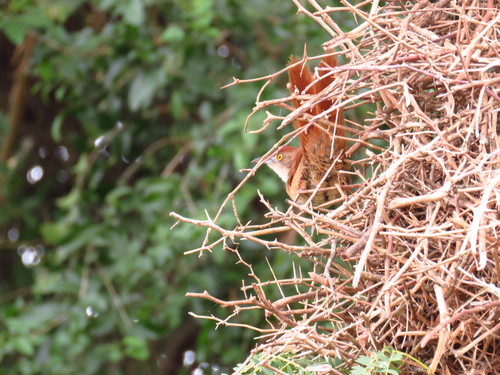 Greater Thornbird
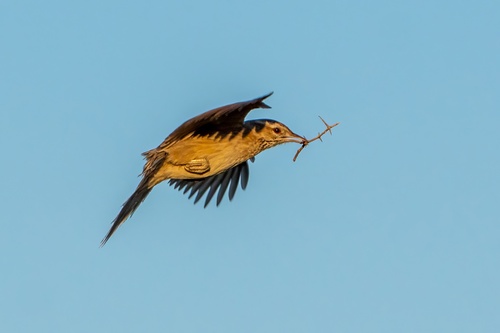 Firewood-gatherer
In breve
Il segno di campo più affidabile tra Greater Thornbird e Firewood-gatherer è la colorazione rufous-chestnut complessiva del Greater Thornbird, specialmente nelle ali e nella coda, rispetto al Firewood-gatherer più opaco, striato e più marrone. Le piume giovanili differiscono: i giovani Greater Thornbirds mostrano una macchia coronale meno definita e una maculatura marrone sul petto, mentre i giovani Firewood-gatherers mancano di rufous sulla fronte e hanno gole ocra con striature superiori meno distinte. In volo o posati, cerca le ali e la coda uniformemente rufous del Greater Thornbird rispetto alle ali e alla coda marroni del Firewood-gatherer con bianco contrastante sulle punte della coda. Entrambe le specie si sovrappongono in distribuzione e habitat, ma la loro struttura e piumaggio offrono una separazione costante.
Consigli di identificazione
- Colore delle ali e della coda (tutte le età): Il Greater Thornbird mostra ali e coda uniformemente rufous-chestnut, sia in volo che posato. Le ali del Firewood-gatherer sono marroni opache con centri/punte più scuri, e la coda è marrone scuro fino a nerastra con bianco alle punte delle piume esterne—cerca questo contrasto quando l'uccello apre la coda o in volo.
- Piumaggio giovanile: Il giovane Greater Thornbird ha una macchia coronale rossa meno definita e una maculatura marrone sul petto, ma mostra ancora toni rufous. Il giovane Firewood-gatherer manca di rufous sulla fronte, ha una gola ocra e striature superiori meno distinte—queste caratteristiche sono sottili ma utili se viste bene.
- Modello coronale e della testa: La corona del Greater Thornbird è rufous chestnut con striature chiare, che si fonde in una ricca schiena rossa. Il Firewood-gatherer ha una corona marrone sabbioso con striature nere strette, una fronte rufous opaca e un supercilium bianco molto più prominente e largo.
- Modello facciale: Il viso del Greater Thornbird è marrone rufescente con un supercilium più chiaro e copritrici auricolari, e un'area malare bianca. Il viso del Firewood-gatherer è marrone chiaro fino a grigio, con un ampio supercilium bianco e una striscia post-oculare marrone medio.
- Parte inferiore: Le parti inferiori del Greater Thornbird sono chiare con una sfumatura marrone chiaro sul petto e un ventre bianco. Il Firewood-gatherer ha una gola bianca con una linea di macchie nere sui lati, un petto superiore di un marrone chiaro e buffo leggermente rossastro con striature sfocate, e un ventre buffo chiaro.
- Forma della coda: Le piume centrali della coda del Firewood-gatherer sono appuntite, e le piume esterne sono meno appuntite ma mostrano bianco alle punte. La coda del Greater Thornbird è più uniformemente formata e rufous-chestnut in tutto.
- Impressione di colore complessiva: Il Greater Thornbird è costantemente rufous-chestnut e ricco di colore, specialmente sulle ali e sulla coda. Il Firewood-gatherer è più opaco, marrone e striato, con meno saturazione e più contrasto nella coda.
- Struttura e jizz: Il Greater Thornbird appare più massiccio e robusto, spesso muovendosi deliberatamente. Il Firewood-gatherer è più snello, più attivo e può sembrare simile a un pipit, specialmente quando cerca cibo in aree aperte.
- Colore del becco: Il becco del Greater Thornbird è nerastro fino a grigio scuro sopra, grigio chiaro fino a verde grigiastro sotto. Il becco del Firewood-gatherer è marrone opaco sopra, grigio fino a grigio chiaro con una punta scura sotto—questo è sottile e raramente diagnostico in campo.
- Colore dell'iride: Il Greater Thornbird ha un'iride gialla chiara fino a arancione; l'iride del Firewood-gatherer è marrone fino a rossastro. Questo può essere utile in viste ravvicinate ma è variabile.
- Colore delle gambe: Entrambe le specie hanno gambe grigie fino a olivastre o verdastre, non c'è una forte separazione.
- Contesto dell'habitat: Se visto in folti cespugli ripariali o al margine del bosco, è più probabile che sia un Greater Thornbird. In campagna aperta o aree erbose con cespugli sparsi, è favorito il Firewood-gatherer, ma la sovrapposizione è estesa.
- Posizionamento del nido (se visto): Il nido del Greater Thornbird è una grande struttura a forma di cono spesso appesa sopra l'acqua. Il nido del Firewood-gatherer è anche grande e ingombrante ma non è posizionato così costantemente sopra l'acqua.
- Trappole: Fai attenzione alle condizioni di illuminazione che possono far apparire il Firewood-gatherer più rufous o il Greater Thornbird più opaco. Le piume giovanili possono essere confuse, ma la presenza o l'assenza di rufous sulla fronte e il modello della gola e del petto sono utili.
- Non diagnostico: Le vocalizzazioni, il sesso e la stagione non sono affidabilmente diversi in campo in base alle fonti disponibili.
Taglia
Il Greater Thornbird è leggermente più grande e pesante, misurando 19–21 cm e pesando 35–51 g, rendendolo il thornbird più pesante e grande nella sua area. Il Firewood-gatherer è un po' più piccolo a 18–20 cm e 27–45 g. In campo, questa differenza di dimensioni è sottile ma può essere evidente se entrambe le specie sono viste insieme. Il Greater Thornbird appare anche più massiccio e robusto, mentre il Firewood-gatherer è più snello e più simile a un pipit nella struttura. [wikipedia]
Piumaggio
- Giovanile/immaturo: I giovani Greater Thornbirds hanno una macchia coronale rossa meno definita e una maculatura marrone sul petto, ma mantengono i toni rufous complessivi e ali/coda uniformemente chestnut. I giovani Firewood-gatherers mancano di qualsiasi rufous sulla fronte, hanno una gola ocra (marrone-giallastra), striature superiori meno distinte e parti inferiori più scure. Queste differenze sono più evidenti in viste ravvicinate o con buona luce.
- Adulti: Gli adulti del Greater Thornbird sono di un ricco marrone rosso a chestnut sopra, con una corona rufous chestnut (striata chiara), ali uniformemente rufous-chestnut e una coda rufous chestnut. Il loro viso è marrone rufescente con un supercilium chiaro e copritrici auricolari, e un'area malare bianca. Le parti inferiori sono chiare con una sfumatura marrone chiaro sul petto, sfumando in un ventre bianco.
Gli adulti del Firewood-gatherer sono marroni opachi sopra con una fronte rufous opaca, corona marrone sabbioso con striature nere strette e un ampio supercilium bianco. Le loro ali sono marroni opache con centri e punte più scure, non rufous. La coda è marrone scuro fino a nerastra, con la coppia centrale appuntita e le piume esterne che mostrano bianco vicino alle estremità—un segno chiave in volo o quando è aperta. Le parti inferiori sono striate e buffe, con una gola bianca bordata di macchie nere e un petto superiore marrone chiaro rossastro. - Contrasti chiave: Il Greater Thornbird è molto più uniforme e rufous nel complesso, specialmente nelle ali e nella coda; il Firewood-gatherer è più striato, più opaco e mostra un modello di coda con bianco.
Comportamento
Il Greater Thornbird tende ad apparire più massiccio e più deliberato nei movimenti, spesso visto cercare cibo o posato in basso in vegetazione densa o vicino all'acqua. Il Firewood-gatherer è più snello, più attivo e a volte dà un'impressione simile a un pipit, spesso visto in aree più aperte o su posatoi esposti. Entrambe le specie costruiscono grandi nidi di rami evidenti, ma il nido del Greater Thornbird è tipicamente a forma di cono e appeso sopra l'acqua, mentre il nido del Firewood-gatherer è anche ingombrante ma non è posizionato così costantemente sopra l'acqua.
Habitat
Entrambe le specie si sovrappongono ampiamente in distribuzione (Argentina, Brasile, Paraguay, Uruguay) e possono essere trovate in habitat simili. Il Greater Thornbird favorisce aree con vegetazione cespugliosa densa, spesso vicino all'acqua, ed è più probabile trovarlo in cespugli ripariali o ai margini del bosco. Il Firewood-gatherer è più flessibile, presente in campagna aperta, praterie con cespugli sparsi e talvolta vicino a insediamenti umani. Se visto in aree molto aperte o erbose, è più probabile che sia un Firewood-gatherer, ma l'habitat da solo non è diagnostico.
Greater Thornbird · Firewood-gatherer · I miei uccelli difficili