

Rosse fluiteend vs Indische fluiteend
Dendrocygna bicolor versus Dendrocygna javanica
Speel een quiz met Rosse fluiteend en Indische fluiteend
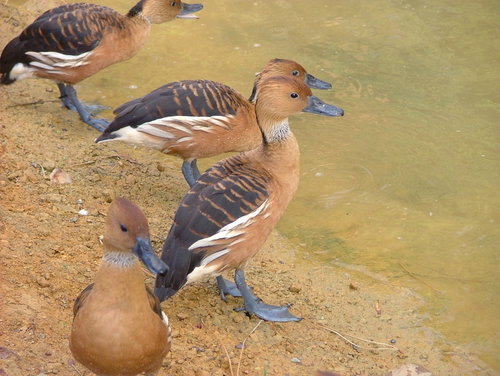 Rosse fluiteend
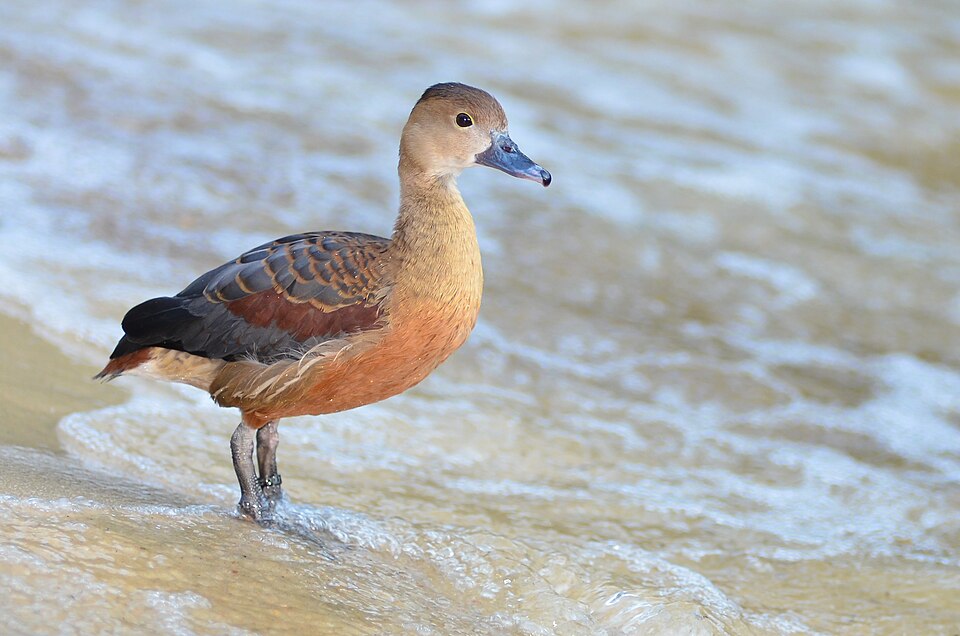 Indische fluiteend
Kort gezegd
Het meest betrouwbare veldkenmerk om de Rosse fluiteend van de Indische fluiteend te scheiden, is de kleur van de bovenste staartdekken in vlucht: Rosse toont een opvallende witte band over de rug en een zwarte staart, terwijl Indische kastanjebruine bovenste staartdekken heeft zonder wit. Dit verschil is zichtbaar in alle leeftijden en is vooral diagnostisch wanneer de vogels wegvliegen. Rosse is ook groter en heeft langere poten, met een rijkere buffkleurige kop en nek, terwijl Indische compacter is met een donkere kroon en een gele tot oranje oogring. Beide soorten zijn vergelijkbaar in algemene vorm en gedrag, maar aandacht voor het staartpatroon, de kleur van de kroon en de grootte zal de meeste veldidentificaties oplossen.
Herkenningstips
- Witte rug in vlucht (alle leeftijden): Rosse fluiteend toont een gedurfde witte band over de rug en zwarte staart wanneer hij wegvliegt; Indische fluiteend toont hier nooit wit, maar heeft kastanjebruine bovenste staartdekken. Dit is het meest betrouwbare kenmerk in elke verenkleed.
- Kleur van de kroon (alle leeftijden): Indische fluiteend heeft een solide donkere (zwartachtige) kroon, in contrast met het lichtere gezicht en de nek; Rosse heeft een donkere streep over de kroon en nek, maar geen solide kap. Dit is zichtbaar bij zittende en zwemmende vogels.
- Flankstrepen (volwassen en jong): Rosse toont bleke (witachtige) strepen op de flanken, vooral wanneer hij opgevouwen of aan het poetsen is; Indische mist deze of toont alleen vage bleke randen.
- Oogring (volwassen en jong): Indische fluiteend heeft een duidelijke oranje tot gele oogring, die Rosse mist. Dit kan moeilijk te zien zijn op afstand, maar is nuttig van dichtbij.
- Algemene kleurtoon: Rosse is rijker buffkleurig op hoofd, nek en borst, met een donkerdere rug; Indische is meer uniform kastanjebruin.
- Snavel en poten: Rosse heeft een langere, grijze snavel en lange grijze poten, wat een slanker indruk geeft; Indische is compacter met proportioneel kortere poten.
- Grootte: Rosse is groter en zwaarder, maar let op overlap en afstandseffecten—gebruik alleen bij directe vergelijking.
- Zittende houding: Rosse staat hoger en rechterop, met een langere nek en poten; Indische heeft een kortere nek en is compacter.
- Vluchtstijl: Beide vliegen met snelle vleugelslagen, maar Indische houdt vaak zijn hoofd onder het lichaam in vlucht; Rosse lijkt meer op gelijke hoogte.
- Stem: Rosse geeft een duidelijke, muzikale fluit ('kee-wee-ooo'); Indische geeft een repetitieve, piepende tweeklank. Roepen zijn nuttig als ze goed te horen zijn, maar kunnen verwarrend zijn op afstand.
- Habitatcontext: In Zuid- en Zuidoost-Azië is Indische veel gebruikelijker, vooral in stedelijke wetlands; Rosse is lokaal en minder waarschijnlijk in stadsparken.
- Jongere verwarring: Jongere Rosse is lichter onder en doffer in het algemeen, maar toont nog steeds de witte rug in vlucht; jongere Indische lijkt op de volwassen, maar mist de witte rug en heeft een donkere kroon.
- Geslachtsverschillen: Beide geslachten zijn vergelijkbaar in veldkenmerken; vrouwelijke Rosse zijn iets doffer en kleiner, maar dit is meestal niet nuttig in het veld.
- Valkuilen: Vertrouw niet op de algemene bruine kleur of de algemene vorm—beide zijn vergelijkbaar. Kijk altijd eerst naar het rug-/staartpatroon en de kleur van de kroon.
- Wanneer kenmerken falen: In slecht licht of op afstand, concentreer je op de structuur van de groep en het habitat, maar probeer geen identificatie zonder een duidelijk zicht op de rug of kroon.
Grootte
Rosse fluiteend is duidelijk groter en zwaarder (gemiddeld volwassen gewicht 682 g) in vergelijking met Indische fluiteend (525 g). Rosse lijkt ook langere poten te hebben en is over het algemeen meer langwerpig, met een langere nek en snavel. Indische fluiteend is compacter en iets korter in lichaamslengte en vleugelspanwijdte. In gemengde groepen of zij aan zij zal Rosse hoger staan en er bulker uitzien, maar grootte alleen kan moeilijk te beoordelen zijn op afstand of in isolatie.
Verenkleed
- Jongere en volwassen vluchtbeelden: Rosse fluiteend toont altijd een gedurfde witte halve maan of band over de rug, die scherp contrasteert met de zwarte staart—dit is zichtbaar in alle verenkleden en leeftijden. Indische fluiteend mist deze witte; in plaats daarvan zijn de bovenste staartdekken kastanjebruin, wat mengt met de rest van de rug en staart.
- Kroon en nek: Indische fluiteend heeft een merkbaar donkere (zwartachtige) kroon, zelfs bij jongeren, terwijl Rosse een donkere streep over de kroon en achterkant van de nek heeft, maar geen solide donkere kap. Het hoofd, de nek en de borst van Rosse zijn een rijkere buff (rosse) kleur, terwijl Indische meer uniform kastanjebruin is.
- Flankstrepen: Rosse toont bleke (witachtige) strepen op de flanken, wat kan helpen bij zittende vogels; Indische mist deze of toont alleen vage bleke randen.
- Oogring: Indische fluiteend heeft een duidelijke oranje tot gele ring rond het oog, afwezig bij Rosse.
- Jongere verschillen: Jongere Rosse is lichter onder en doffer in het algemeen, maar toont nog steeds de witte rug in vlucht. Jongere Indische lijkt op de volwassen, maar met minder contrast en mist nog steeds de witte rug.
Gedrag
Beide soorten worden vaak in groepen rond wetlands aangetroffen en kunnen worden gezien zittend op bomen of rustend op de grond. Indische fluiteend is vooral sociaal en kan meer geneigd zijn om op bomen te zitten of boomholtes te gebruiken voor het nestelen. Beide voeden zich voornamelijk met plantaardig materiaal in wetlands, waarbij ze dabben en soms duiken. Rosse kan vaker worden gezien met een slanker, langer potige gang. Indische staat bekend om zijn meer nachtelijke gedrag en rust vaak gedurende de dag.
Habitat
Rosse fluiteend heeft een veel bredere wereldwijde verspreiding, komt voor in de Amerika's, Afrika en Azië, terwijl Indische fluiteend beperkt is tot het Indische subcontinent en Zuidoost-Azië. Beide geven de voorkeur aan laagland wetlands met overvloedige vegetatie, zoals meren, moerassen en rijstvelden. In overlappende Aziatische gebieden kunnen beide samen voorkomen, maar Rosse is over het algemeen minder gebruikelijk en meer lokaal. Indische is vaak overvloedig in stedelijke wetlands en kan worden aangetroffen in grotere dagroestplaatsen.
Geluid
Beide soorten hebben prominente fluitgeluiden. Rosse geeft een duidelijke 'kee-wee-ooo' fluit, vaak gehoord 's nachts of in vlucht, en ruziënde vogels geven een harde herhaalde 'kee.' Indische fluiteend produceert een repetitieve, piepende tweeklank, soms beschreven als 'zeeziek,' en is zeer vocaal in vlucht. De roepen zijn vergelijkbaar, maar Rosse is duidelijker en muzikaler, terwijl Indische meer nasaal en piepend is. Geslachtsverschillen in de roepen van Rosse bestaan, maar zijn subtiel en meestal niet nuttig in het veld.