

Motmot

アカリュウキュウガモ 対 リュウキュウガモ

Dendrocygna bicolor 対 Dendrocygna javanica

アカリュウキュウガモとリュウキュウガモのクイズ
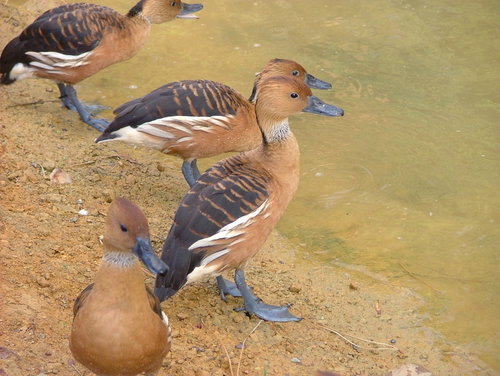
アカリュウキュウガモ (Dendrocygna bicolor) アカリュウキュウガモ
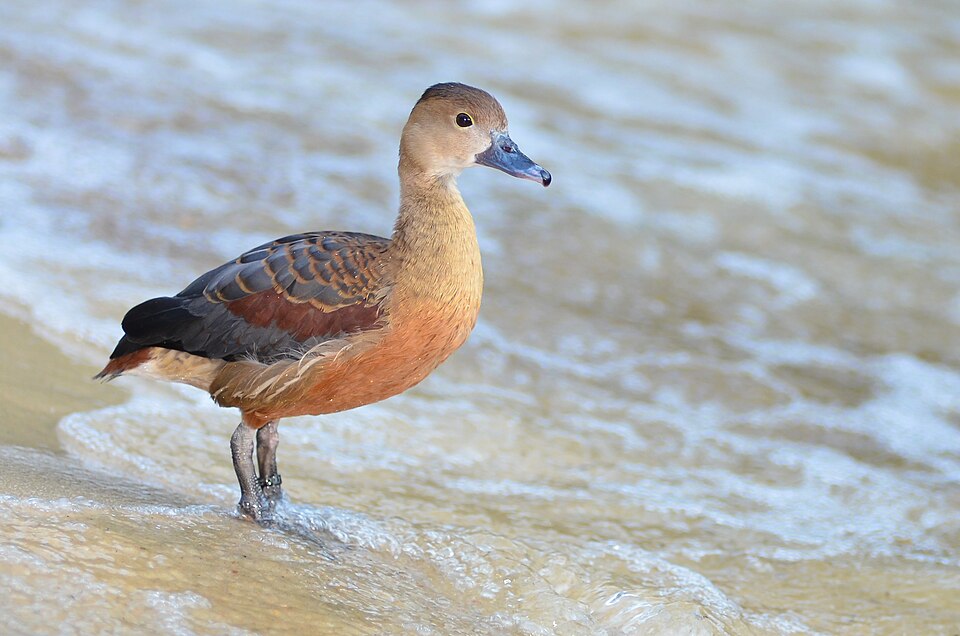
リュウキュウガモ (Dendrocygna javanica) リュウキュウガモ

メディア

読み込み中…

要点

アカリュウキュウガモとリュウキュウガモを区別する最も信頼できるフィールドマークは、飛行中の上尾羽の色です:Fulvousは、尻と黒い尾にわたる目立つ白い帯を示し、Lesserは白がなく栗色の上尾羽を持っています。この違いはすべての年齢で見られ、特に鳥が飛び去るときに診断的です。Fulvousはまた、より大きく、脚が長く、より豊かなバフ色の頭と首を持ち、Lesserはよりコンパクトで、暗い冠と黄色からオレンジ色のアイリングを持っています。両種は全体的な形状と行動が似ていますが、尾のパターン、冠の色、サイズに注意を払うことで、ほとんどのフィールド識別が解決されます。

識別のコツ

  1. 飛行中の白い尻(すべての年齢): アカリュウキュウガモは、飛び去るときに尻と黒い尾にわたる大胆な白い帯を示します;リュウキュウガモはここに白を示さず、代わりに栗色の上尾羽を持っています。これは、すべての羽衣で最も信頼できるマークです。
  2. 冠の色(すべての年齢): リュウキュウガモは、顔と首が淡い色と対照的な固体の暗い(黒っぽい)冠を持っています;Fulvousは冠と後頭部に暗いストライプがありますが、固体のキャップはありません。これは、止まっている鳥や泳いでいる鳥で見ることができます。
  3. 脇のストライプ(成鳥と幼鳥): Fulvousは、特に羽をふくらませたり、毛づくろいをしているときに脇に淡い(白っぽい)ストライプを示します;Lesserはこれを欠いているか、わずかに淡いエッジしか示しません。
  4. アイリング(成鳥と幼鳥): リュウキュウガモは、Fulvousにはない明確なオレンジから黄色のアイリングを持っています。これは遠くから見るのは難しいですが、近くでは役立ちます。
  5. 全体的な色調: Fulvousは頭、首、胸がより豊かなバフ色で、背中は暗いです;Lesserはより均一に栗色の茶色です。
  6. くちばしと脚: Fulvousは長く灰色のくちばしと長い灰色の脚を持ち、細長い印象を与えます;Lesserはよりコンパクトで、相対的に脚が短いです。
  7. サイズ: Fulvousはより大きく、ずっしりとしていますが、重なりや距離の影響に注意してください—直接比較のみに使用してください。
  8. 止まっている姿勢: Fulvousはより高く、より直立して立ち、首と脚が長いです;Lesserは首が短く、よりコンパクトです。
  9. 飛行スタイル: 両者は急速な羽ばたきで飛びますが、Lesserは飛行中に頭を体の下に持つことが多いです;Fulvousはより水平に見えます。
  10. 声: Fulvousは明確で音楽的なホイッスル('kee-wee-ooo')を出します;Lesserは反復的で喘ぎ声の二音の呼び声を出します。呼び声はよく聞こえれば役立ちますが、距離があると混乱することがあります。
  11. 生息地の文脈: 南アジアと東南アジアでは、Lesserは特に都市の湿地で非常に一般的です;Fulvousは局所的で、都市公園ではあまり見られません。
  12. 幼鳥の混乱: 幼鳥のFulvousは下側がより淡く、全体的に鈍いですが、飛行中に白い尻を示します;幼鳥のLesserは成鳥に似ていますが、白い尻がなく、暗い冠を持っています。
  13. 性差: 両性はフィールドマークが似ています;Fulvousの雌はわずかに鈍く、小さいですが、これは通常フィールドでは役立ちません。
  14. 落とし穴: 全体的な茶色の色や一般的な形状に頼らないでください—両者は似ています。まず尻/尾のパターンと冠の色を探してください。
  15. マークが失敗したとき: 照明が悪い場合や遠くからの視界では、群れの構造と生息地に焦点を当てますが、尻や冠の明確な視界なしに識別を試みないでください。

大きさ

アカリュウキュウガモは、リュウキュウガモ(525 g)と比較して明らかに大きく、重い(平均成鳥の質量682 g)です。Fulvousはまた、脚が長く、全体的により細長く見え、首とくちばしが長いです。リュウキュウガモはよりコンパクトで、体長と翼幅がわずかに短いです。混合群れや並んでいるとき、Fulvousはより高く立ち、ずっしりと見えますが、サイズだけでは距離や孤立した状態では判断が難しいことがあります。

羽色

行動

両種は湿地の周りで群れを成していることが多く、木に止まったり、地面で休んでいるのを見ることができます。リュウキュウガモは特に群れを成す傾向があり、木に止まったり、巣作りのために木の穴を利用する可能性が高いです。両者は主に湿地で植物材料を食べ、時には潜水します。Fulvousはより細長い脚で歩いているのがよく見られます。Lesserはより夜行性で、日中はよく休んでいます。

生息環境

アカリュウキュウガモは、アメリカ、アフリカ、アジアに分布するはるかに広い全球的範囲を持っていますが、リュウキュウガモはインド亜大陸と東南アジアに制限されています。両者は湖、湿地、稲作地など、豊富な植生を持つ低地の湿地を好みます。重複するアジアの地域では、両者が一緒に発生することがありますが、Fulvousは一般的にあまり見られず、より局所的です。Lesserは都市の湿地で豊富に見られ、大きな日中の休息地に見られることがあります。

声

両種は目立つホイッスル呼び声を持っています。Fulvousは明確な「kee-wee-ooo」のホイッスルを出し、夜や飛行中によく聞かれ、争っている鳥は厳しい反復的な「kee」を出します。リュウキュウガモは反復的で喘ぎ声の二音の呼び声を出し、時には「船酔い」と表現され、飛行中に非常に声を出します。呼び声は似ていますが、Fulvousはより明確で音楽的で、Lesserはより鼻にかかり、喘ぎ声です。Fulvousの呼び声には性差が存在しますが、微妙で通常はフィールドでは役立ちません。

より良い説明を送る

比較と同じ項目を使ってください。文章はすぐに公開されます。

The most reliable field mark to separate Fulvous Whistling-Duck from Lesser Whistling-Duck is the color of the upper tail coverts in flight: Fulvous shows a striking white band across the rump and black tail, while Lesser has chestnut upper tail coverts with no white. This difference is visible in all ages and is especially diagnostic when the birds are flying away. Fulvous is also larger and longer-legged, with a richer buff head and neck, while Lesser is more compact with a dark crown and a yellow to orange eye-ring. Both species are similar in overall shape and behavior, but careful attention to tail pattern, crown color, and size will resolve most field identifications.

  1. White rump in flight (all ages): Fulvous Whistling-Duck shows a bold white band across the rump and black tail when flying away; Lesser Whistling-Duck never shows white here, instead having chestnut upper tail coverts. This is the single most reliable mark in any plumage.
  2. Crown color (all ages): Lesser Whistling-Duck has a solid dark (blackish) crown, contrasting with the paler face and neck; Fulvous has a dark stripe down the crown and nape but not a solid cap. This is visible in perched and swimming birds.
  3. Flank stripes (adult and juvenile): Fulvous shows pale (whitish) stripes on the flanks, especially when fluffed or preening; Lesser lacks these or shows only faint pale edges.
  4. Eye-ring (adult and juvenile): Lesser Whistling-Duck has a distinct orange to yellow eye-ring, which Fulvous lacks. This can be hard to see at distance but is useful at close range.
  5. Overall color tone: Fulvous is richer buff on head, neck, and breast, with a darker back; Lesser is more uniformly chestnut brown.
  6. Bill and legs: Fulvous has a longer, grey bill and long grey legs, giving a lanky impression; Lesser is more compact with proportionally shorter legs.
  7. Size: Fulvous is larger and bulkier, but beware overlap and distance effects—use only in direct comparison.
  8. Perched jizz: Fulvous stands taller and more upright, with a longer neck and legs; Lesser is shorter-necked and more compact.
  9. Flight style: Both fly with rapid wingbeats, but Lesser often holds its head below the body in flight; Fulvous appears more level.
  10. Voice: Fulvous gives a clear, musical whistle ('kee-wee-ooo'); Lesser gives a repetitive, wheezy two-note call. Calls are helpful if heard well but can be confusing at a distance.
  11. Habitat context: In South and Southeast Asia, Lesser is much more common, especially in urban wetlands; Fulvous is local and less likely in city parks.
  12. Juvenile confusion: Juvenile Fulvous is paler below and duller overall but still shows the white rump in flight; juvenile Lesser is similar to adult but lacks the white rump and has a dark crown.
  13. Sex differences: Both sexes are similar in field marks; Fulvous females are slightly duller and smaller, but this is not usually useful in the field.
  14. Pitfalls: Do not rely on overall brown color or general shape—both are similar. Always look for the rump/tail pattern and crown color first.
  15. When marks fail: In poor light or distant views, focus on flock structure and habitat, but do not attempt identification without a clear view of the rump or crown.

Fulvous Whistling-Duck is distinctly larger and heavier (average adult mass 682 g) compared to Lesser Whistling-Duck (525 g). Fulvous also appears longer-legged and more elongated overall, with a longer neck and bill. Lesser Whistling-Duck is more compact and slightly shorter in body length and wingspan. In mixed flocks or side-by-side, Fulvous will stand taller and look bulkier, but size alone can be hard to judge at a distance or in isolation.

  • Juvenile and adult flight views: Fulvous Whistling-Duck always shows a bold white crescent or band across the rump, sharply contrasting with the black tail—this is visible in all plumages and ages. Lesser Whistling-Duck lacks this white; instead, its upper tail coverts are chestnut, blending with the rest of the back and tail.
  • Crown and neck: Lesser Whistling-Duck has a noticeably dark (blackish) crown, even in juveniles, while Fulvous has a dark stripe down the crown and back of the neck but not a solid dark cap. Fulvous's head, neck, and breast are a richer buff (fulvous) color, while Lesser is more uniformly chestnut brown.
  • Flank stripes: Fulvous shows pale (whitish) stripes on the flanks, which can help in perched birds; Lesser lacks these or shows only faint pale edges.
  • Eye-ring: Lesser Whistling-Duck has a distinct orange to yellow ring around the eye, absent in Fulvous.
  • Juvenile differences: Juvenile Fulvous is paler below and duller overall, but still shows the white rump in flight. Juvenile Lesser is similar to adult but with less contrast and still lacks the white rump.

Both species are often found in flocks around wetlands and can be seen perching on trees or resting on the ground. Lesser Whistling-Duck is especially gregarious and may be more likely to perch in trees or use tree holes for nesting. Both feed mainly on plant material in wetlands, dabbling and sometimes diving. Fulvous may be seen more often walking with a lankier, long-legged gait. Lesser is noted for being more nocturnal and often rests during the day.

Fulvous Whistling-Duck has a much broader global range, occurring in the Americas, Africa, and Asia, while Lesser Whistling-Duck is restricted to the Indian subcontinent and Southeast Asia. Both favor lowland wetlands with abundant vegetation, such as lakes, marshes, and rice paddies. In overlapping Asian regions, both may occur together, but Fulvous is generally less common and more local. Lesser is often abundant in urban wetlands and may be found in larger daytime roosts.

Both species have prominent whistling calls. Fulvous gives a clear 'kee-wee-ooo' whistle, often heard at night or in flight, and quarrelling birds give a harsh repeated 'kee.' Lesser Whistling-Duck produces a repetitive, wheezy two-note call, sometimes described as 'seasick,' and is very vocal in flight. The calls are similar but Fulvous is clearer and more musical, while Lesser is more nasal and wheezy. Sex differences in Fulvous calls exist but are subtle and not usually useful in the field.

変更を破棄しますか?

保存していない編集があります。今離れると失われます。

アカリュウキュウガモ · リュウキュウガモ · 苦手な鳥