

Houtsnip vs Poelsnip
Scolopax rusticola versus Gallinago media
Speel een quiz met Houtsnip en Poelsnip
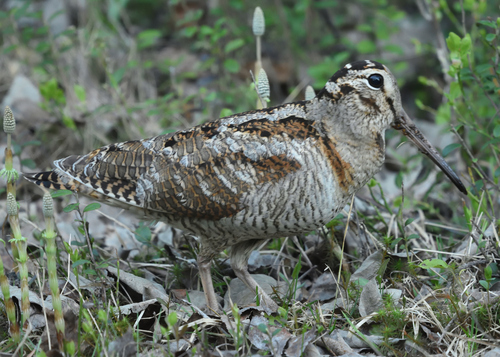 Houtsnip
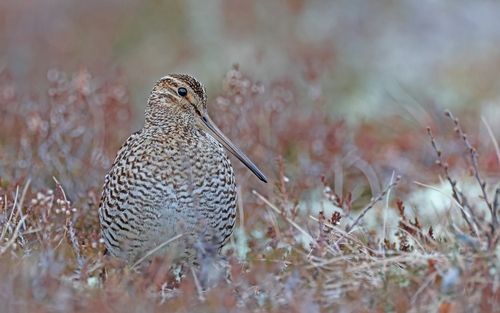 Poelsnip
Kort gezegd
Het meest betrouwbare veldkenmerk is het koppatroon: Houtsnip toont gedurfde zwarte strepen over de kroon, terwijl Poelsnip een donkere streep door het oog heeft en een meer gestreepte kop. In de vlucht toont Poelsnip een opvallende lichte vleugelstreep en witte buitenste staartveren, die beide ontbreken bij Houtsnip. Structureel is Houtsnip groter, met een langere, rechte snavel en ronde vleugels, terwijl Poelsnip gedrongen maar kortsnaveliger is. Habitat is ook een sterke aanwijzing: Houtsnip geeft de voorkeur aan dichte bossen, Poelsnip aan open moerassen en natte weilanden. Als je een cryptisch gepatternde wader in het bos ziet met een gestreepte kroon, is het vrijwel zeker een Houtsnip; in open moeras, let op de vleugelstreep en gestreepte kop van Poelsnip.
Herkenningstips
- Koppatroon is de sleutel: Houtsnip toont gedurfde zwarte strepen over de kroon (van kant tot kant); Poelsnip heeft een donkere streep door het oog en een meer gestreepte (longitudinale) kop. Dit geldt voor alle leeftijden en seizoenen.
- Vleugelstreep in de vlucht: Poelsnip van alle leeftijden toont een lichte vleugelstreep over de bovenvleugel, vooral duidelijk in de vlucht. Houtsnip toont nooit een vleugelstreep; zijn bovenvleugel is uniform gepatterned.
- Witte buitenste staart: Poelsnip fanned zijn staart om witte buitenveren te tonen, vooral tijdens de balts of wanneer hij opgeschrikt wordt; de staart van Houtsnip is uniform gepatterned zonder wit.
- Snavellengte en -vorm: Houtsnip heeft een lange, rechte snavel (6–8 cm), vleeskleurig aan de basis met een donkere punt. De snavel van Poelsnip is korter (6–7 cm) en minder opvallend in het veld.
- Grootte en bulk: Houtsnip is groter en robuuster (33–38 cm, 55–65 cm vleugelspanwijdte) dan Poelsnip (26–30 cm, 43–50 cm vleugelspanwijdte). In de vlucht lijkt Houtsnip zwaarder en ronder.
- Vleugelvorm: Houtsnip heeft ronde vleugels; de vleugels van Poelsnip zijn breed maar minder rond, en de vleugelstreep draagt bij aan de indruk van breedte.
- Vluchtstijl: Houtsnip vliegt met een zigzag, valt snel terug in dekking; Poelsnip vliegt recht en snel over een lange afstand voordat hij valt.
- Habitat: Houtsnip in dichte bossen of hoge heide; Poelsnip in open moerassen en natte weilanden. Habitat alleen kan ze vaak scheiden.
- Onderkant patroon: Houtsnip is buff onder; Poelsnip is gebarricadeerd onder. Dit is subtiel en niet altijd zichtbaar.
- Oogplaatsing: De ogen van Houtsnip zijn hoog en ver naar achteren geplaatst, wat een kenmerkende 'wijdogige' uitstraling geeft; de ogen van Poelsnip zijn meer typisch voor een snip.
- Pootkleur: De poten van Houtsnip zijn grijs tot rozeachtig; de pootkleur van Poelsnip is niet onderscheidend in het veld.
- Vocalisaties: De roep van Houtsnip ('orr, orr, orr, pist') bij schemering is uniek; de baltsgeluiden van Poelsnip zijn gevarieerd maar zelden gehoord, behalve bij leks.
- Geslacht/leeftijd: De geslachten van Houtsnip kunnen niet in het veld worden gescheiden; Poelsnip mist ook duidelijke geslachtsverschillen in het verenkleed. Juveniele/onvolwassen kenmerken zijn niet onderscheidend buiten de vleugelstreep in Poelsnip.
- Context: Als je een cryptische wader in het bos ziet, is het bijna altijd Houtsnip; in open moeras, kijk voor de vleugelstreep en gestreepte kop van Poelsnip.
- Veelvoorkomende valkuilen: Vertrouw niet alleen op grootte, tenzij je een directe vergelijking hebt. De vleugelstreep en het koppatroon zijn de meest betrouwbare veldkenmerken in alle leeftijden.
Grootte
Houtsnip is aanzienlijk groter: 33–38 cm in lengte met een vleugelspanwijdte van 55–65 cm, vergeleken met de 26–30 cm lengte en 43–50 cm vleugelspanwijdte van Poelsnip [wikipedia]. Houtsnip lijkt ook robuuster en zwaarder, vooral in rust. De snavel van Houtsnip is langer (6–8 cm) en recht, terwijl die van Poelsnip korter (6–7 cm) en iets minder prominent is. In de hand of van dichtbij is Houtsnip de zwaardere, robuustere vogel, maar in het veld kan het moeilijk zijn om de grootte te beoordelen, tenzij beide soorten samen worden gezien.
Verenkleed
- Juveniel/onvolwassen/vluchtzicht:
- Poelsnip in de vlucht toont een duidelijke lichte vleugelstreep over de bovenvleugel, zichtbaar in alle leeftijden en vooral duidelijk in goed licht. De witte buitenste staartveren zijn ook opvallend wanneer de staart wordt gefanned, vooral tijdens de balts. Houtsnip mist zowel de vleugelstreep als de witte buitenstaart, en toont in plaats daarvan een uniform, ingewikkeld gepatterned bovenvleugel en staart zonder sterke contrast.
- Koppatroon:
- Houtsnip heeft gedurfde zwarte strepen over de kroon (van kant tot kant), nooit een streep door het oog. Poelsnip heeft een donkere streep door het oog en een meer longitudinaal gestreepte kop, zonder de transversale strepen van Houtsnip.
- Lichaam en onderkant:
- Houtsnip: Roodbruin, ingewikkeld gepatterned bovenste delen, buff onderdelen. Poelsnip: Gemêleerd bruin boven, gebarricadeerd onder.
- Snavel en poten:
- Houtsnip: Lange, rechte, vleeskleurige basis met donkere punt; poten grijs tot rozeachtig. Poelsnip: Kortere snavel, niet zo opvallend; pootkleur niet diagnostisch.
- Geslacht/leeftijd variatie:
- Houtsnip is seksueel dimorf in grootte maar niet in verenkleed; geslachten kunnen niet in het veld worden gescheiden. Geen leeftijdspecifieke verenkleedkenmerken genoteerd voor beide soorten buiten de vleugelstreep en staartpatroon in Poelsnip.
Gedrag
Houtsnip is typisch solitair, geheimzinnig en vliegt alleen op korte afstand, met een zigzag met ronde vleugels en valt snel terug in dekking. Zijn vlucht is sterk maar niet bijzonder snel. Poelsnip, hoewel ook goed gecamoufleerd en moeilijk te zien, staat bekend om zijn snelle, rechte en langdurige vlucht wanneer hij opgeschrikt wordt, vaak over een aanzienlijke afstand voordat hij valt. Tijdens het broedseizoen tonen mannelijke Poelsnippen zich bij leks, fanned hun staarten en springen, terwijl mannelijke Houtsnippen 'roding' baltsvluchten uitvoeren bij schemering, cirkels vliegend over het bos en roepend. Het voergedrag verschilt ook: Houtsnip prikt in zachte bosgrond, terwijl Poelsnip de voorkeur geeft aan open, nattere grond en mogelijk voedsel op zicht kan pakken evenals prikken.
Habitat
Habitat is een sterke scheider. Houtsnip is een vogel van dichte bossen of hoge heide, zelden in open grond behalve 's nachts. Als je een cryptische wader uit diepe dekking in een bos opjaagt, is het vrijwel zeker een Houtsnip. Poelsnip broedt en voedt zich in open moerassen en natte weilanden met korte vegetatie, nooit in dichte bossen. Tijdens de migratie kan Poelsnip worden aangetroffen in vergelijkbare open, vochtige habitats, maar vermijdt echt bos. Als de omgeving open en moerassig is, geef dan de voorkeur aan Poelsnip; als het bosachtig is, geef dan de voorkeur aan Houtsnip.
Geluid
Mannelijke Houtsnippen voeren een kenmerkende 'roding' vlucht uit bij schemering, met herhaalde roepen die worden beschreven als 'orr, orr, orr, pist.' Deze roepen zijn laag, schor en mechanisch, en zijn een belangrijke indicator van aanwezigheid in de lente. De stem van Poelsnip is veel minder waarschijnlijk te horen, behalve bij leks, waar mannelijke Poelsnippen een zachte 'ja' en een verscheidenheid aan ratels, klikken, zoemen en fluiten produceren, soms hoorbaar op grote afstand. In de meeste veldsituaties is de roep van Houtsnip veel waarschijnlijker te horen dan enige vocalisatie van Poelsnip.